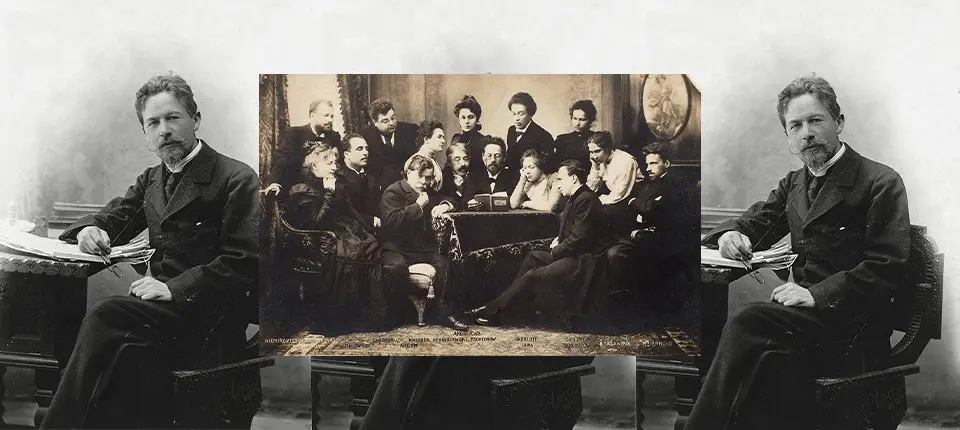
This Day in Literary History: The Painful Birth of a Masterpiece
Today marks a legendary anniversary in the annals of world drama. On this day in 1896, Anton Chekhov’s theatrical masterpiece The Seagull premiered at the Alexandrinsky Theatre in St. Petersburg and was met with a resounding, humiliating flop. The audience’s restless rejection of the play was so absolute, and the production so poorly managed, that a devastated Chekhov retreated backstage, nursing wounds to his artistic pride so deep that he famously declared, “Not if I live to be seven hundred will I write another play.”
Fortunately for world literature, Chekhov’s despair proved temporary, and his partnership with Constantin Stanislavski and the Moscow Art Theatre soon resurrected the play into a triumph that forever changed modern drama. Yet, the raw panic of that initial St. Petersburg opening night remains a universally relatable touchstone for writers, artists, and creators who have ever faced the daunting abyss of public rejection.
Exploring Craft, Storytelling, and Contemporary Fiction
Moving from the historical stage to the mechanics of contemporary narrative, recent discussions across the literary web have dug deeply into the various ways authors construct and deconstruct a single story. Adam Johnson recently sat down with fellow acclaimed author Amitav Ghosh to discuss The Wayfinder, examining the complex architecture required to guide readers through expansive fictional landscapes.
At the same time, novelists are reflecting on the physical and emotional toll of their craft. In recent interviews, authors have pulled back the curtain on the messy realities of creation. Bonnie Garmus spoke with Jane Ciabattari about her upcoming work, Peck & Peck, exploring the nuances of writing a coming-of-age novel deeply rooted in poets and poetry. Meanwhile, Will Maclean offered a visceral look at the physical labor of writing, describing the chaotic process of completely "fucking up a notebook" in order to finally give birth to a novel. For those navigating the modern publishing ecosystem, conversations also turned toward the bizarre paradox of the industry itself—noting with sharp irony how major publishers routinely sue big tech companies over copyright concerns while simultaneously embracing artificial intelligence tools with the other hand.
History, Witness, and Cultural Reckoning
Beyond the purely creative sphere, writers and intellectuals this week have engaged in profound reckonings with history, geopolitics, and cultural memory. Ongoing discussions have explored how the devastation and genocide in Gaza have fundamentally reshaped the political and social fabric of the Middle East, altering the landscape of international relations and human rights discourse.
Historical inquiries have also turned inward and backward to examine systemic injustices and forgotten narratives. Scholars and historians have revisited medieval Europe to analyze the systemic slaughter and persecution of nonconformist women during historical witch hunts. Closer to home, cultural chroniclers have celebrated figures like Biddy Mason, highlighting the essential legacy of the Black matriarch who helped build Los Angeles. Other writers have investigated deeply personal histories, such as E. L. Shen’s exploration of how the act of writing helped her finally come to understand her assassinated ancestor.
In the realm of international literature and witness, Oksana Lutsyshyna offered a vital guide to the work of contemporary Ukrainian writers, spotlighting essential new literature from authors such as Artur Dron, Andriy Lyubka, and Lena Lyagushonkova. These works serve as a stark reminder of the power of art to document conflict, preserve identity, and bear witness in the face of devastation.
Society, Environment, and the Modern Landscape
As contemporary society grapples with rapid technological and economic shifts, literary platforms have hosted critical examinations of everyday life. Urban and economic analysts have probed the root causes of runaway housing costs, pointing the finger at greed-driven corporate algorithms that artificially inflate rent across metropolitan areas. Environmental writers have turned their attention to the overlooked beauty and ecological fragility of boglands and peatlands, arguing passionately for the urgent need to preserve these vital ecosystems.
Cultural commentary has also challenged rigid modern aesthetics and social pigeonholing. Critics have questioned the widespread suburban obsession with minimalist interior design, offering a compelling case against the endless sea of blank walls and white paint. Meanwhile, sociologists and cultural essayists have worked to dismantle persistent cultural tropes, examining how rural American life defies tired stereotypes and holds vastly different meanings for the diverse individuals who inhabit it.
Poetry, Reviews, and the Written Word
The week’s literary bounty naturally extends into the realm of verse, criticism, and long-standing reading lists. Readers can dive into new poetry, such as Eric Amling’s evocative new piece "Cruise Control," or explore how three recent films have shaped and reflected public perceptions of poets and the poetic life.
For those looking to expand their nightstands, critics have rounded up the five essential book reviews of the week alongside the latest Independent Press Top 40 Bestsellers for both fiction and nonfiction. Readers seeking specialized guides can also explore curated lists on everything from North Korea’s cult of personality, expertly recommended by Jonathan Cheng, to essential volumes on the Venetian ghetto and Jewish history, as well as Bonnie Jo Campbell’s chilling selection of literary ghost stories guaranteed to haunt readers long after the final page. Whether through the lens of a rescued raccoon teaching unexpected lessons about the self, a photographer documenting the radical shifts of the 1960s and 70s counterculture, or the simple comfort of cooking and care in a Cantonese-American household in Southern California, the literary internet continues to map the vast, unpredictable contours of the human experience.