Today’s focus centers on a monumental figure in Scandinavian literature and European poetry, whose birth more than a century ago continues to resonate deeply with readers, scholars, and writers around the globe. As we navigate the digital currents of today’s literary web, we take a moment to honor the enduring legacy of one of Sweden’s most celebrated literary voices.
Remembering Karin Boye on Her Birthday
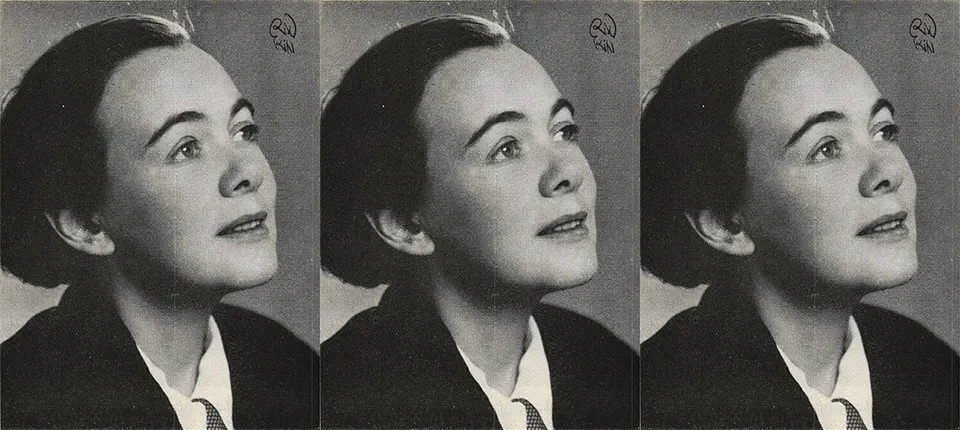
Today marks the anniversary of the birth of the renowned Swedish poet and novelist Karin Boye, who was born on this day in 1900. Over the course of her remarkable yet tragically short life, Boye emerged as one of the most prominent and influential figures in modern Swedish literature. Her profound contributions to poetry and prose captured the complex psychological landscapes of her time, grappling with themes of alienation, identity, searching, and the eternal tension between individual freedom and societal control.
Born in Gothenburg, Sweden, Boye moved with her family to Stockholm as a teenager, an environment that would eventually foster her intellectual and artistic development. She pursued her higher education at Uppsala University and later at Stockholm University, where she studied languages, literature, and philosophy. Immersed in the intellectual currents of the early twentieth century, Boye quickly found her voice through verse. She published her debut poetry collection, Cloud (Moln), in 1922 to critical acclaim, establishing herself immediately as a distinct and powerful new voice in Nordic letters.
Throughout the 1920s and 1930s, Boye continued to publish poetry that resonated deeply with readers across Scandinavia. Her work was characterized by a rare combination of formal mastery, emotional intensity, and philosophical depth. She explored the depths of human longing and spiritual crisis with a clarity and lyricism that set her apart from many of her contemporaries. As a member of the influential literary magazine Clarté and part of the Swedish modernist movement, she engaged deeply with the political and social transformations shaking Europe during the interwar period.
Beyond her celebrated poetry, Boye secured a lasting international literary legacy through her groundbreaking dystopian novel Kallocain, published in 1940. Written against the darkening backdrop of totalitarianism in Europe and the outbreak of the Second World War, the novel presents a chilling vision of a futuristic, highly regimented world state where citizens’ thoughts are continuously monitored and controlled through a truth serum known as Kallocain. Often compared to other classic dystopian masterpieces of the twentieth century, such as George Orwell’s 1984 and Aldous Huxley’s Brave New World, Boye’s novel offers a deeply human exploration of the resilience of the inner life, conscience, and love in the face of absolute tyranny.
The impact of Karin Boye’s life and work extends far beyond her native Sweden. Her poems continue to be translated, studied, and recited around the world, appreciated for their universal emotional resonance and stark beauty. Literary societies, cultural institutions, and readers continue to revisit her texts to find insight into the enduring challenges of human freedom and integrity. On this day, as we celebrate her birth in 1900, the literary internet pauses to recognize a writer whose vision remains as vital, penetrating, and essential today as it was during her lifetime.