This is the story of a social worker and a builder who, facing the physical and financial pressures of modern British life, chose to abandon the endless cycle of debt and property upkeep in favor of a simpler, more peaceful existence in Eastern Europe.
How It All Began
In their late fifties, the couple was living in an idyllic village in the south of England. On the surface, their lives looked comfortable, but beneath the veneer of rural charm lay the quiet exhaustion of a busy professional life. She was working as a social worker, while her husband, Jeff, operated his own business in the building industry. As they looked around at their lives, they began to question what they were truly working toward. Was it really a new conservatory? Was it more debt and more worry?
The seeds of their eventual escape had actually been planted a decade earlier. Following messy divorces after 25 years of marriage—in which both of their former partners had left them for other people—the couple had experienced their own midlife crisis. Her divorce from a headteacher husband had been particularly traumatic, especially from a financial standpoint, forcing her at the age of 45 to start all over again.
Soon after they married, Jeff received a £12,000 redundancy payment from a previous job. Rather than opting for the sensible financial route of paying down their mortgage, they decided to do something rash and treat themselves to something they had both always wanted: a holiday home in the sun. Psychological studies frequently highlight that one of the most common deathbed regrets is failing to pursue one’s dreams, and owning a home in the sun had always been high on their list.
Where Can You Buy a Property for £12,000?
The immediate challenge, however, was finding a property that fit their modest budget. Traditional sun-drenched destinations like France and Italy were quickly ruled out, as real estate prices in those countries were far beyond their reach.
The turning point came when Jeff’s father suggested they look at Bulgaria. The country had recently joined the European Union, and property prices remained remarkably low. His father believed that values would eventually rise substantially, mirroring the trajectory seen in neighboring Romania. Intrigued by the prospect, the couple decided to take a look.
The Property Surpassed Our Wildest Dreams
Carrying the cash in a suitcase, they made their first journey to the country. While acknowledging that buying real estate in a country you have never visited before is hardly standard advice, their impulsive venture paid off in ways they never expected.
They discovered a large, detached property that completely surpassed their wildest dreams. Along with the main house, the plot included a collection of traditional outbuildings, featuring a donkey shed, a barn, a chicken coop, a wash house, and a smokehouse.
Although the property required significant renovation, they were not deterred. Jeff’s extensive experience in the building trade gave them the confidence to tackle the project themselves. Looking back, while they would never recommend buying unseen property to others, they viewed it as a product of their midlife pivot—one that ultimately worked out better than they could have hoped.
For the next nine years, they maintained a routine of traveling to their Bulgarian home twice a year. They would spend one week working on renovations and another week simply enjoying a holiday. Over time, they grew deeply fond of the local village life and came to appreciate the stark contrast between the unhurried pace of rural Bulgaria and the overwhelming pressures of everyday existence in England.
Why Did We Leave England?
That contrast came sharply into focus nearly a decade after their initial purchase, when life in England began to deteriorate rapidly. She was facing serious health problems, while Jeff was confronting severe financial difficulties within his building business.
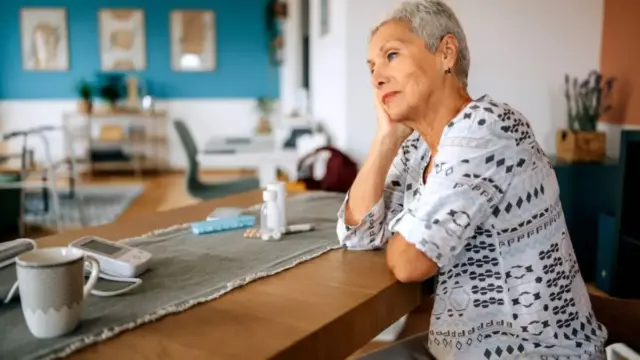
As a social worker, professional stress was an occupational hazard, but the strain had reached a critical threshold. She was forced off work with dangerously high blood pressure. Compounding the professional strain was her severe visual impairment. Recent changes to her workplace computer system had rendered her specialized accessibility software inoperable, making it increasingly difficult to perform her job and leaving her future entirely uncertain.
The definitive turning point arrived one afternoon while she was sitting in her back garden, listening to the radio. A posthumous interview with British politician Tony Benn was being broadcast, centering on the concept of slavery throughout the ages. When asked if slavery still existed in the modern world, Benn offered a response that triggered an immediate epiphany.
"If you have a mortgage, then you are a slave to that mortgage," Benn said.
Those words struck a deep chord. She had spent nearly her entire working life struggling simply to keep a roof over her head—a fundamental security that her former husband had never shared. Following her traumatic divorce at 45, which had left her practically homeless, she had spent the subsequent decade fighting to rebuild her financial footing.
Sitting in her garden that afternoon, a simple question crystallized in her mind: What was she working herself to exhaustion for?
She already owned a home in the sun. The logical answer was staring her in the face.
That realization set the wheels in motion for their permanent transition to Bulgaria, trading the stress of the British rat race for a quieter chapter abroad.