

For nearly two decades, the upsides have been abundantly clear. Having the unprecedented freedom to raise a son from the day he was born well past his eighteenth birthday without career compromises stands out as a primary triumph. Beyond parenting, thousands of hours have been poured into other cherished pursuits, including family, health, friends, travel adventures, building projects, and writing. There are no regrets regarding these accomplishments, and the lifestyle has largely delivered on its initial promise.
Yet, even an ideal life comes with a distinct set of modern challenges. The central paradox of complete financial freedom is that an individual never has to do anything they do not want to do. To most people trapped in the traditional workforce, this sounds like an absolute dream come true—a non-stop playground of self-actualization funded by accumulated wealth. In reality, however, the outcome depends entirely on the psychological makeup of the individual.
Financial independence and an abundance of time do not automatically create productivity or happiness; instead, they act as an amplifier, revealing a person’s true strengths and weaknesses. The resulting spectrum spans from the absolute passivity of spending days consuming substances on a couch, all the way to founding and managing complex networks of nonprofit foundations dedicated to medical breakthroughs and clean energy.

For a long time, achieving a healthy balance felt natural. While the responsibilities of fatherhood were intense during the first decade, there was still sufficient bandwidth to build and restore neighborhood houses, take ambitious trips, produce videos, and publish hundreds of informative essays. However, as the pace naturally slowed in recent years, maintaining that internal drive and focus became increasingly difficult.
Instead of staying active on construction sites or locking into a deep, focused writing session at the keyboard, early retirement began to reveal its hidden friction. Days increasingly drifted toward retreating to the couch earlier in the afternoon, seeking trivial distractions on mobile devices, and wishing for the lost energy and focus required to complete more fulfilling projects.
To combat this stagnation, a deep dive into health, wellness, and neurobiology followed. Extensive study went into uncovering methods to boost daily energy, improve focus, and cultivate motivation, leading to previously published articles on daily habits and the dangers of excessive comfort. While these physiological tools genuinely work when applied, a persistent behavioral bottleneck emerged. Knowledge accumulated rapidly, yet effective strategies were eventually abandoned as the brain invented subtle excuses to slip back into comfort, leaving a wide gap between understanding and actual achievement.
Eventually, the root cause became clear: the very advantage that was supposed to liberate life was actually being weaponized to avoid discomfort. Freedom is transformative when it rescues a worker from leaving their children before dawn, enduring grueling traffic, and sitting in an office building for nine hours. But that same freedom is entirely wasted if children are subsequently parked in front of endless cartoons while a parent zones out on social media. True freedom requires utilizing reclaimed time for pursuits even more valuable than the job left behind; otherwise, keeping conventional employment might be just as productive.
This self-deception manifested as a tendency to focus on easy tasks—such as light household chores or socializing with nearby friends—while aggressively avoiding tasks requiring higher levels of planning, energy, or focus. Even though those challenging tasks form the foundation of a genuinely satisfying life, they were systematically sidelined.

Workouts serve as a prime example of this behavioral trap. On a minute-for-minute basis, physical training remains one of the most impactful investments an individual can make, drastically improving every other domain of existence. Despite knowing this fundamental truth, a predictable cycle of procrastination routinely took hold. The internal dialogue typically involved acknowledging the desire for a strong weight training session, immediately recognizing an aversion to the hard effort required, and attempting to engineer the perfect external conditions to make it painless. This meant waiting for an ideal time of day, optimal weather, peak personal energy, and meticulously setting up the home gym the night before in anticipation of a golden moment that rarely arrived consistently.
Some weeks yielded two or three solid workouts, while others vanished behind a wave of busyness and rationalizations like "at least I walked a lot today." Reviewing workout logs often revealed jarring gaps where more than a week had elapsed between genuine training sessions, producing predictable results: lackluster fitness and stalled physical development.
A breakthrough finally arrived upon recognizing a much more direct approach to executing necessary tasks. Replacing meandering, conditional internal negotiations with a stark realization changed everything. Catching the moment of hesitation—acknowledging the lack of desire to work out, identifying it immediately as self-sabotage, and instantly putting on shoes to walk out the door—shattered the paralysis.
While physical training provides the clearest illustration, this exact behavioral shift applies universally to any worthwhile endeavor that faces chronic procrastination. The core mechanism involves monitoring one’s own psychology like an eagle, specifically identifying the exact moment of hesitation, and transforming that hesitation from a trigger for excuses into a direct trigger for immediate action.
Initially, this approach feels counterintuitive because hesitation inherently creates mental discomfort. Yielding to hesitation damages long-term potential, yet the ultimate remedy rarely involves running away from difficult tasks. Instead, confronting the resistance head-on unlocks forward momentum, proving that hesitation itself can serve as a rigorous life coach when properly managed.

Using Extremely Badass People as Fuel
Testing these concepts among friends initially yielded mixed reactions. Roughly half of the peer group related deeply to feelings of underachievement and a desire to accomplish more. The other half found the premise absurd, feeling they were already overextended with multiple children, businesses, and rigorous mountain endurance training.
These overachievers navigate life in a state of high-intensity momentum accompanied by constant stress. Their demanding schedules held little appeal, just as an overly relaxed retirement schedule failed to impress them. Both groups could arguably benefit from moving toward a more balanced center.
The definitive catalyst, however, arrived through a podcast interview featuring David Goggins, widely recognized as one of the world’s most extreme examples of pushing past human limitations. Growing up amid severe childhood abuse and profound psychological hurdles, Goggins developed a unique coping mechanism: a compulsive drive to seek out and conquer extreme hardship on an unimaginable scale.
His journey includes surviving brutal selection processes for the Navy SEALs, enduring physical trauma such as running 240 miles across four days without sleep, and setting a world record by completing 4,025 pull-ups in 24 hours until his hands were severely damaged. While such extreme feats far exceed the aspirations of most people, exposure to his story reframes everyday barriers. It demonstrates that the vast majority of human limitations are entirely mental rather than physical or structural.
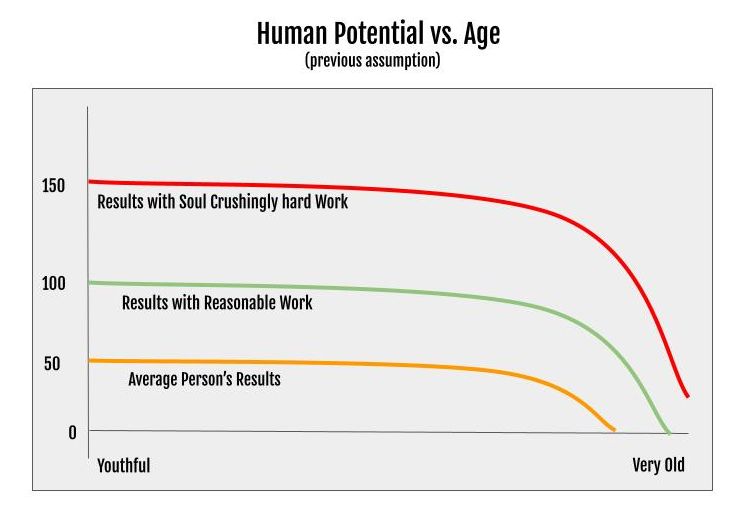
Rather than viewing life’s starting points and capabilities as fixed boundaries, recognizing that most obstacles exist purely in the mind opens up a dramatically broader perspective on personal potential.
Ongoing Inspiration
Equipped with this sharpened mindset, a concise summary of the core philosophy—a blunt reminder that the necessary actions are already well known—was pinned directly to a bathroom mirror. The immediate behavioral change enabled consistent daily workouts by treating both the desire to train and the reluctance to train as identical triggers to begin immediately.
When sustained effort finally replaced intermittent attempts, physical gains followed swiftly. Over the course of four months, ten pounds of lean muscle mass were added, restoring the strength and flexibility of early adulthood while dramatically improving joint mobility.
This same "catch yourself at hesitation" technique was successfully applied to increase running frequency, ramp up coworking visits, and sit down at the computer to write. While excessive internet work carries its own pitfalls, maintaining a healthy, disciplined output requires active willpower when competing against easier, more immediately gratifying leisure activities.
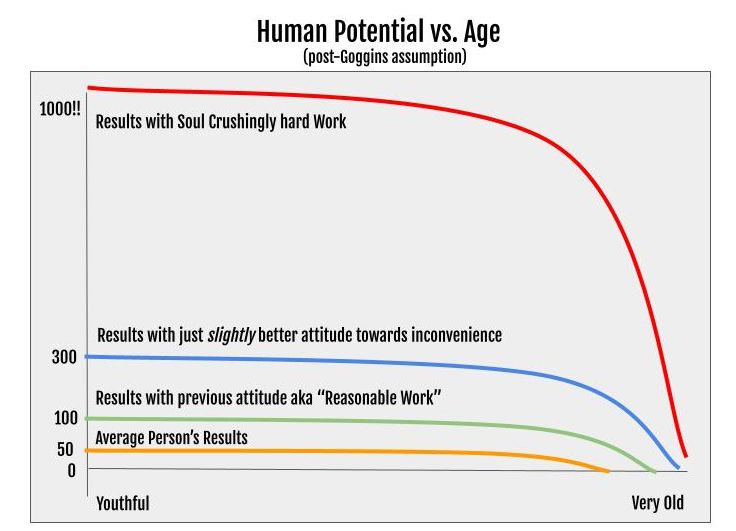
To sustain this momentum, the habit of regularly feeding the inspiration tank was established. Listening to audiobooks by endurance figures and wellness experts during morning walks provided a steady stream of mental reinforcement. While critics frequently debate the merits of modern health podcasters or fitness culture, absorbing the practical elements that drive personal accountability while discarding the rest remains an effective strategy for mid-life productivity.
Ultimately, surrounding oneself with powerful reminders of discipline and physical vitality helps extract greater value from every single day, aligning personal output with the specific phase of life at hand.