


Addressing this wave of market sentiment, veteran financial commentator and early retirement advocate Mr. Money Mustache has recently shared insights from a newly developed presentation—debuted at the Camp FI Midwest event and slated for the upcoming Bogleheads conference in November. Drawing on more than two decades of personal retirement and his firsthand experience surviving the dot-com boom and the Great Financial Crisis, the long-running internet financial personality explores whether the current artificial intelligence frenzy poses a genuine threat to long-term financial security, or if investors are simply falling prey to a cyclical pattern of human fear.

To understand contemporary market anxieties, it is helpful to look back nearly twenty years to a similar period of widespread economic hand-wringing. In 2006, investors were shadowed by a completely different set of concerns. At that time, public discourse was dominated by fears surrounding the U.S. housing bubble, geopolitical instability in the Middle East, escalating national debt, inflation, and the threat of widespread job outsourcing to nations like India and China. There was also a fierce global debate over "peak oil," wherein forecasters predicted imminent societal collapse due to rising fossil fuel consumption outstripping supply.

Yet, looking back at the ensuing two decades reveals a different trajectory. Despite the severe economic shock of the Great Financial Crisis—triggered by irrational exuberance in housing and overly complex mortgage leverage—long-term equity markets demonstrated remarkable resilience. A historic perspective shows that even major downturns, including the 2020 pandemic-induced crash, appear as temporary dips when viewed across a twenty-year horizon, where broad market indexes have historically continued to compound wealth. Simultaneously, global living standards saw massive improvements, with extreme poverty rates dropping significantly, infant mortality rates cut in half, and clean energy technologies scaling up exponentially as solar power and electric vehicles became mainstream fixtures of the global economy.

Despite these historical realities, financial media continues to capture audiences with dystopian narratives regarding modern economic threats, ranging from soaring national debt levels to the speculative excesses of the AI sector, or even existential fears regarding superintelligent systems. However, these pessimistic outlooks often overlook a fundamental economic principle: true societal prosperity is not merely a byproduct of financial markets or computerized ledger numbers, but rather originates from human productivity.

The underlying framework of modern capitalism is inherently volatile, characterized by regular cycles of expansion and correction. Beneath the volatile waves of the stock market, however, human innovation and labor continue to generate real-world inventions and efficiency gains. History demonstrates that financial systems are fundamentally human constructs; when systems fail or face structural crises, societies routinely adapt, restructure, and resume productivity. Standard of living, economic growth, and the viability of early retirement strategies are ultimately anchored to sustained increases in productivity rather than short-term market sentiment.

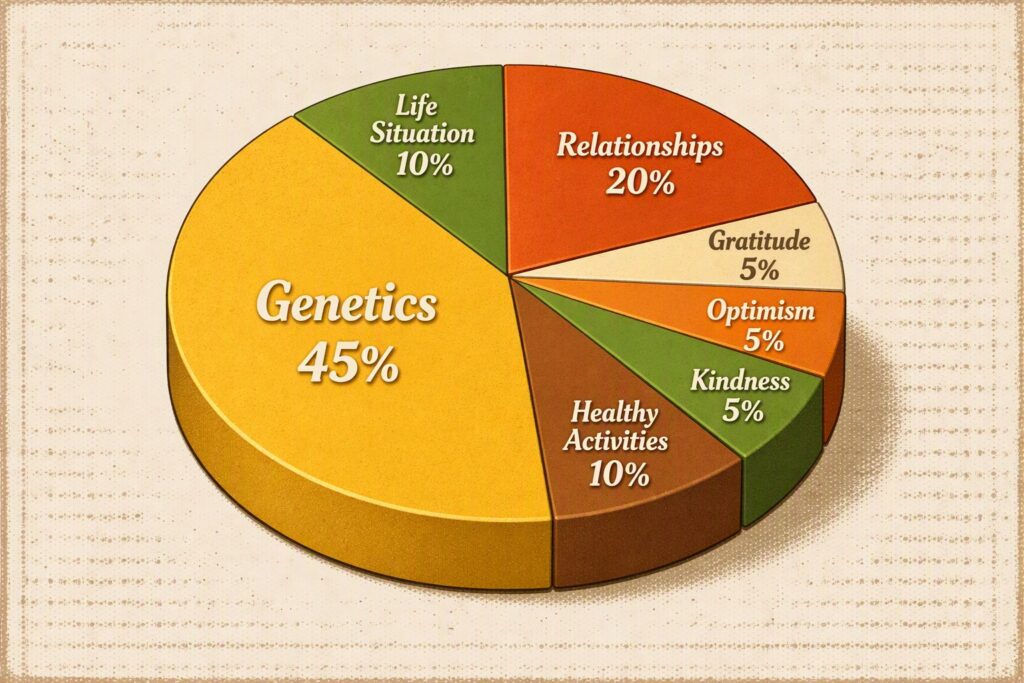
Beyond economic metrics, broader psychological research indicates that once a society achieves a certain baseline standard of living, human happiness relies heavily on non-financial factors. Psychological studies and general observations suggest that lifelong contentment is largely dictated by individual mindset, meaningful personal relationships, a philosophy centered on gratitude and optimism, and regular engagement in healthy, active lifestyles. Nevertheless, even among financially secure individuals who understand these principles, a pervasive background anxiety often persists.

This persistent apprehension can largely be attributed to human evolution. As a species, humans evolved as highly sensitive danger detection machines designed to ensure survival in hostile environments. When traditional threats such as predators, scarcity, and disease are mitigated, this psychological machinery does not simply turn off; instead, it adapts and shifts its focus toward new anxieties. Individuals move sequentially from worrying about basic survival to fretting over social standing, financial comparison, tax strategies, and even administrative regulations like Required Minimum Distributions.

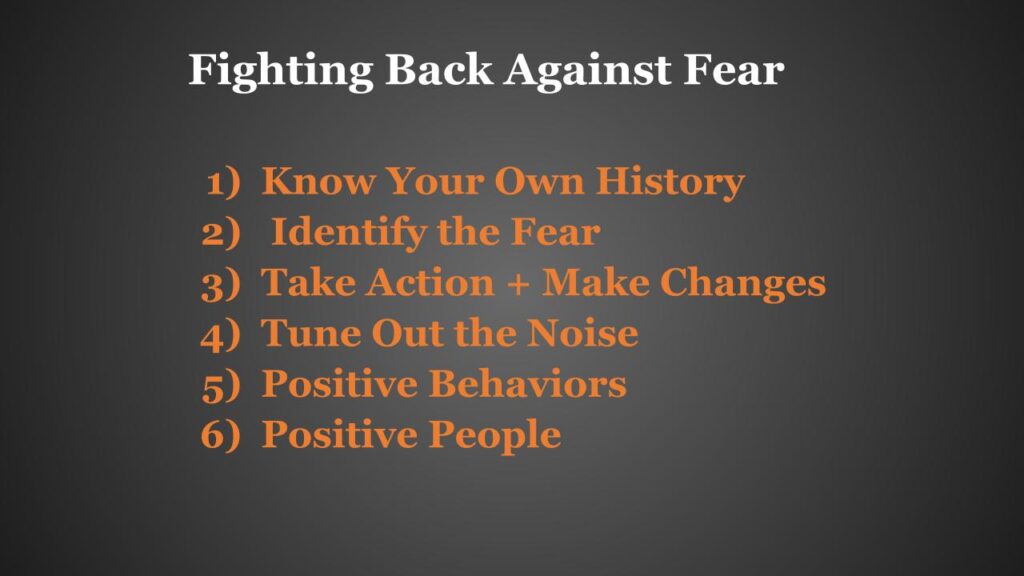
Combatting this innate fear requires deliberate self-awareness and rational evaluation. Examining personal history—such as childhood experiences with scarcity or historical family trauma—often sheds light on the root causes of financial anxiety in adulthood. By directly identifying specific fears and evaluating worst-case scenarios, individuals can ground their thinking in objective reality rather than emotional forecasting. Taking concrete action remains one of the most effective ways to neutralize fear, transforming the unfamiliar into the familiar and building long-term personal resilience.
Furthermore, managing mental well-being requires actively filtering out sensationalized media consumption. Modern media outlets frequently rely on hand-picked stories of crisis and catastrophe, which can easily poison an individual’s mental diet. True engagement with the world relies not on passive media consumption, but on positive behavioral actions, physical activity, and building connections with optimistic, forward-thinking communities. Viewing life transitions through the lens of experimentation—whether navigating a new career move, personal relationship, or lifestyle shift—helps reframe uncertainty from a source of terror into an opportunity for exploration.

Applying this experimental mindset to the current artificial intelligence landscape offers a constructive alternative to doom-scrolling. While technological revolutions invariably cause disruption and displace specific job categories—particularly in entry-level administrative, financial, and technical roles—they simultaneously function as a powerful cognitive tool that amplifies human efficiency. Much like the advent of the internet and mobile computing, artificial intelligence serves as a major driver of productivity, ultimately paving the way for broader economic prosperity and the creation of entirely new industries, even as the resulting rewards concentrate among innovative enterprises and their shareholders.
Ultimately, navigating the uncertainties of modern financial markets and emerging technologies requires looking past short-term volatility and fear-based narratives. By understanding the evolutionary roots of anxiety, focusing on real-world productivity, and approaching change as an ongoing experiment, individuals can better manage their financial futures and pursue a balanced, fulfilling life.