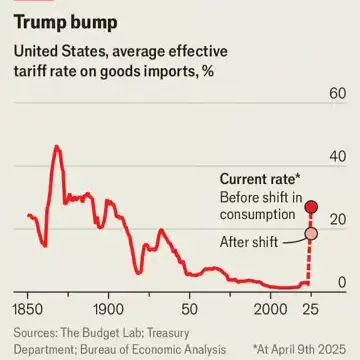

This unprecedented trajectory has sparked widespread debate across the financial community. Market observers and individual investors alike are increasingly asking whether current valuations reflect genuine, sustainable economic growth or if the market is being driven by a speculative bubble, particularly fueled by the recent frenzy surrounding artificial intelligence.

To evaluate the current state of the stock market, financial analysts often return to the fundamental mechanics of what a stock actually represents: a corporate ownership share, comparable to owning a rental property. When an investor owns a rental house, the primary financial return is derived from the collection of rent. After covering maintenance and operating expenses, the remainder constitutes net profit. While rising property sale prices look favorable on paper, they do not automatically increase incoming cash flow unless the property is sold—at which point an investor must typically purchase another asset at similarly inflated market rates.
An investor’s actual income remains tied to the profitability of the asset. When real estate prices double while rental income increases only marginally, the price-to-earnings ratio expands significantly. This dynamic creates a less favorable environment for incoming buyers, who must pay more upfront for the same stream of future income.

A strikingly similar phenomenon has unfolded in the broader stock market. Investors who deployed capital into a representative basket of equities in 2019 and reinvested their dividends have seen substantial gains in portfolio value. However, the underlying share of company earnings generated by those same portfolios has grown at a much slower rate. Consequently, the overall price-to-earnings ratio of the market has shifted upward from historical averages near 20 to approximately 30. Just like rental property owners navigating a market where purchase prices outpace rental income, equity investors must adjust their expectations, anticipating lower future yields relative to their total portfolio values when buying at elevated price levels.
Of course, asset prices can justifiably rise if future earnings are projected to accelerate dramatically. For instance, if an investor knows that a major commercial development is slated to be built near a rental property, driving up local demand and rental rates for years to come, paying a higher initial price can be a rational decision. This principle explains why individual company stocks rally when positive operational news emerges. During the pandemic, temporary surges in demand for home-exercise equipment drove up valuations for companies like Peloton, though prices eventually corrected as consumer habits normalized.

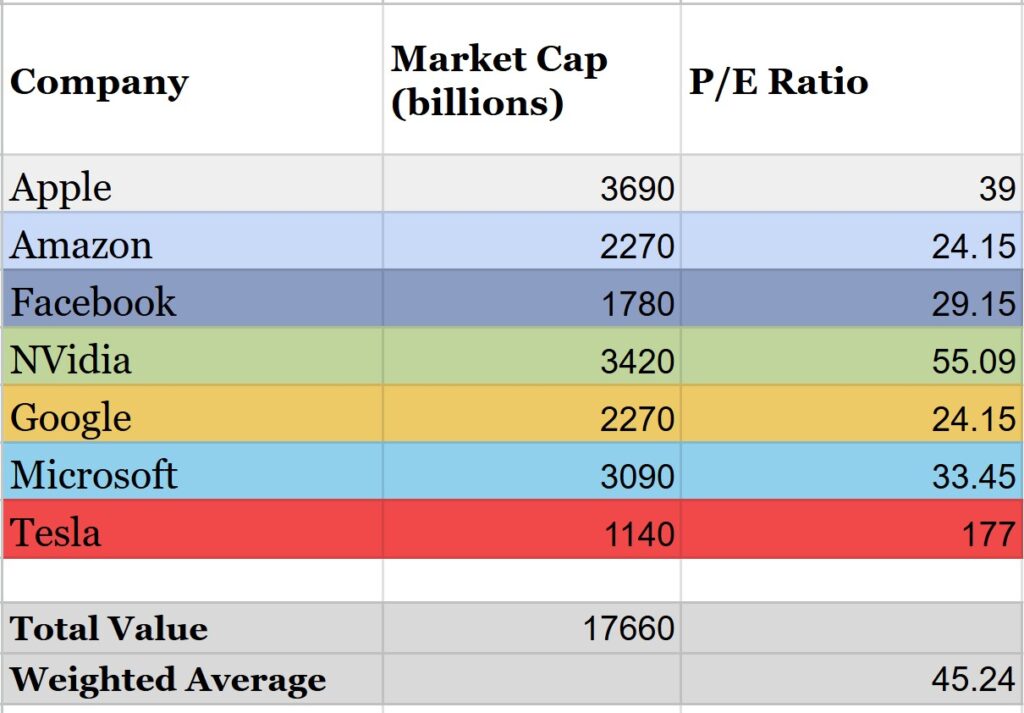
However, when the entire equity market experiences a simultaneous expansion, the underlying drivers require closer examination. A detailed look at the S&P 500 reveals that the bulk of recent market growth—roughly three-quarters of it—has been concentrated among just seven massive technology corporations: Apple, Nvidia, Microsoft, Amazon, Alphabet, Meta, and Tesla. Often referred to as the "Magnificent Seven," these highly profitable firms command a massive share of total market capitalization, exceeding 25 percent of the entire market value, and trade at significantly higher price-to-earnings multiples, averaging around 45. Excluding these industry giants, the remaining 493 companies in the index trade at a more moderate, though still elevated, price-to-earnings ratio of approximately 20. This divergence indicates that while the broader U.S. economy is projected to maintain steady performance, market participants are pricing in exceptionally rapid, outsized growth specifically for the tech sector.
This tech-centric boom is closely tied to recent, rapid advancements in artificial intelligence. Breakthroughs in software capabilities—enabling systems to process complex data, generate human-like reasoning, and handle diverse professional tasks—have ignited a wave of enterprise spending. Major technology conglomerates are committing hundreds of billions of dollars to construct extensive infrastructure projects housing advanced supercomputers, creating a massive wave of demand that has disproportionately benefited hardware manufacturers like Nvidia.
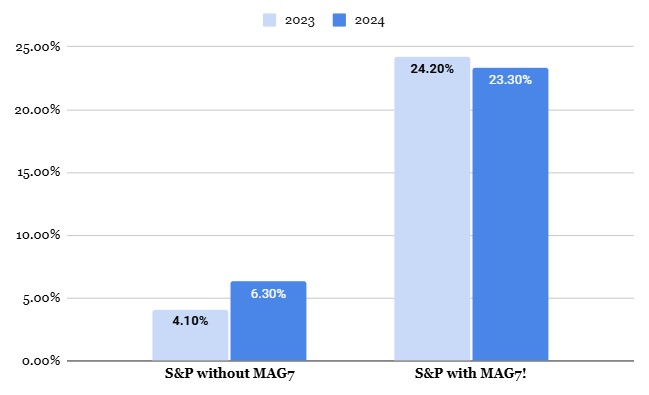
Beyond the initial infrastructure layer, businesses across nearly every sector are anticipating a new era of enhanced productivity. From analyzing legal documents and identifying medical conditions from imagery to accelerating drug discovery and developing advanced robotics, proponents argue that artificial intelligence could effectively remove historical constraints on human labor and intellectual output. Whether these technological capabilities will translate directly into the corporate profits currently forecasted by investors remains one of the central questions facing the global economy. Potential variables include rising operational costs, regulatory hurdles, intensified competition, and broader labor market shifts.
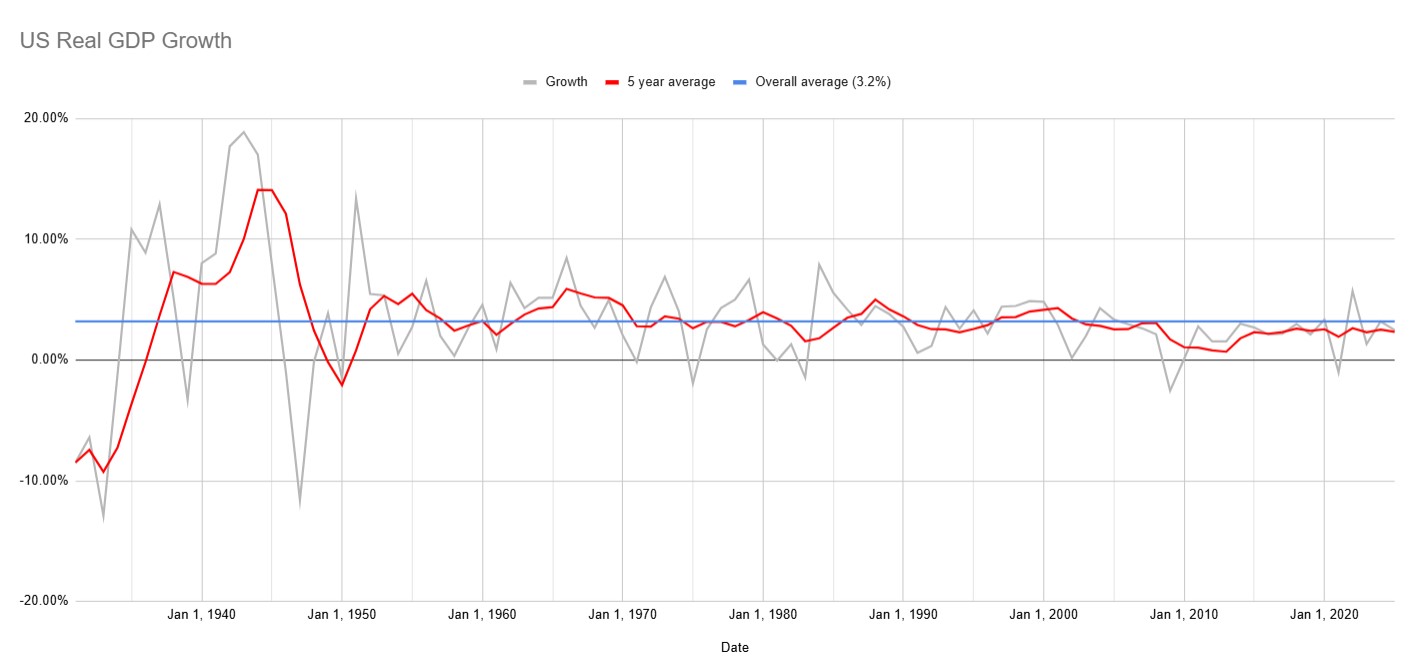
Despite these uncertainties, historical economic data reveals a remarkably consistent baseline. Over the long term, U.S. economic growth adjusted for inflation has hovered around a steady 3 percent per decade, even as industries and technologies underwent profound transformations. Interestingly, recent decades have actually recorded slightly slower-than-average growth, providing further context to the current valuation levels seen in public equities.
While market cycles will inevitably feature periods of volatility, financial professionals continue to emphasize that attempting to time market peaks and valleys remains an unreliable strategy. Even if stock valuations eventually normalize toward historical averages, the underlying economy and corporate earnings are expected to continue expanding over extended horizons.
Broader investment strategies offer additional perspectives on global asset allocation. Major institutional forecasters, including Vanguard, periodically publish long-term return projections suggesting that international equities and fixed-income assets could potentially outperform domestic U.S. stocks over the coming decade. This outlook is partly grounded in valuation disparities, as international markets feature significantly lower average price-to-earnings multiples compared to U.S. indexes. However, domestic markets have continued to outperform international counterparts in recent years, heavily buoyed by the concentration of technology and artificial intelligence enterprises based in the United States.

Similarly, diversified advisory platforms and robo-advisors maintain mixed asset allocations encompassing international equities and bonds, resulting in weighted average valuations that sit below domestic market peaks. Meanwhile, legendary investors like Warren Buffett have signaled caution regarding current market pricing, maintaining substantial cash reserves within Berkshire Hathaway as attractive investment bargains become increasingly scarce.
For individual property owners, decisions surrounding debt management also reflect changing economic conditions. While maintaining a fixed-rate mortgage while investing surplus cash in index funds has historically proven advantageous over long periods, rising interest rates have narrowed the gap between market returns and guaranteed debt reduction. Choosing to pay down a mortgage functions similarly to securing a guaranteed fixed return, offering psychological peace of mind for homeowners prioritizing debt-free living over market exposure.
Ultimately, long-term financial strategies consistently point toward maintaining a disciplined approach: maintaining regular investment habits, focusing on personal financial fundamentals, and tuning out short-term market noise in favor of long-term perspective.