The challenge of incorporating a new active exfoliant into an existing regimen is particularly high for individuals managing reactive complexions or concurrent treatments. For many, skin that is dry, sensitive, and marked by persistent post-pregnancy hyperpigmentation or melasma requires a delicate balancing act. Introducing powerful active ingredients can easily trigger irritation, particularly for those who already rely on prescription-strength topical treatments like tretinoin.

While prescription retinoids remain a gold standard for cell turnover and skin smoothing, maintaining consistent application can sometimes feel like a chore. Factors such as specific storage requirements or simple nighttime fatigue often lead users to skip applications. This friction point is precisely where convenient, pre-soaked exfoliating pads find their appeal. Requiring minimal effort and zero guesswork, they offer an accessible method to incorporate chemical and physical exfoliation into a weekly schedule without the mess of traditional toners and cotton rounds.
Exfoliating pads are hardly a novel concept in the modern skincare market, meaning a product’s success ultimately hinges on its formulation. Elemis approaches this challenge through a patented tri-enzyme technology, combining papain, protease, and subtilisin with lactic acid, a gentle alpha hydroxy acid.

Dermatologists note that enzymes and acids operate through distinct yet complementary mechanisms. While acids rely on their chemical pH to loosen the bonds holding dead skin cells to the surface, enzymes target and break down the specific proteins connecting those cells, allowing them to shed more easily. Utilizing a dual-mechanism approach can optimize exfoliation without demanding excessively high concentrations of either single ingredient, potentially yielding smoother skin with a lower risk of irritation.
Lactic acid itself is widely regarded by skincare professionals as one of the more forgiving alpha hydroxy acids for sensitive skin types. Because its molecular structure is larger than that of glycolic acid, it penetrates the epidermis more gradually, preventing sudden, aggressive reactions. Furthermore, lactic acid functions as a natural humectant, meaning it draws and retains moisture to support skin hydration even while the resurfacing process takes place.

To further safeguard against moisture loss, the Elemis formulation incorporates additional hydrating agents and skin-conditioning ingredients. Glycerin, betaine derived from sugar beets, butylene glycol, and methyl gluceth-20 work collectively to maintain moisture retention and prevent the parched sensation frequently associated with exfoliating treatments. Emollients such as shea butter and non-drying fatty alcohols like behenyl and stearyl alcohol help soften the skin barrier, while Lactococcus ferment lysate, a postbiotic ingredient, contributes supplementary support for overall skin renewal.
While the inclusion of added fragrance is a standard choice in luxury formulations, dermatologists advise individuals with extreme scent sensitivities to patch-test the product prior to full application, especially given the presence of active exfoliating agents.

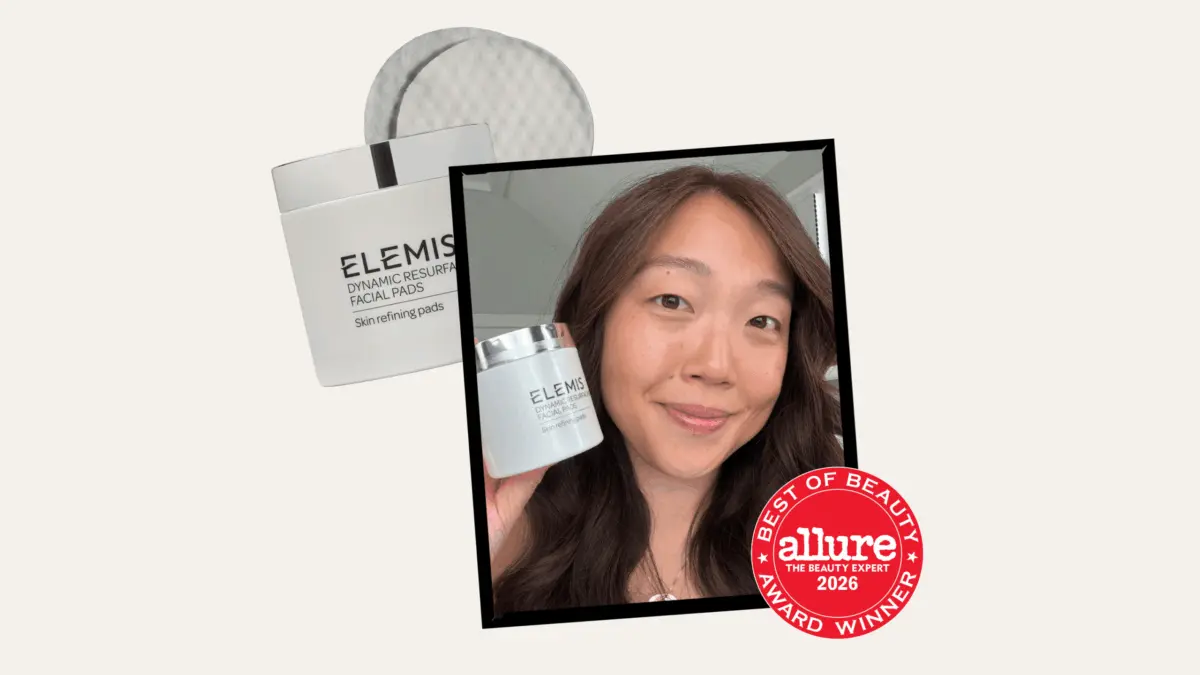
Practical application highlights the convenience of the product’s design. The pads feature a dual-sided texture, offering light physical exfoliation via a textured side alongside a smoother side for a softer touch. Dermatologists caution users against aggressive scrubbing, emphasizing that the physical texture is primarily meant to complement the chemical and enzymatic activity rather than act as a mechanical scrub. A gentle swipe across clean skin is sufficient to distribute the active ingredients evenly across the face.
For individuals with reactive complexions, dermatologists recommend starting slowly—using the pads just a couple of times a week—rather than jumping immediately into the brand’s suggested twice-daily regimen. This gradual introduction helps monitor tolerance, particularly for users who may already utilize retinoids or other active treatments in their daily lives.

Real-world testing among Allure editors with diverse skin concerns revealed generally positive outcomes. Users with dry and combination skin types reported that the pads delivered a noticeable boost in radiance and smoothness without leaving the skin feeling uncomfortably tight or stripped of moisture. While stubborn deep-seated pigment conditions like melasma require comprehensive, multi-layered dermatological interventions that exfoliation alone cannot fully resolve, regular use has been linked to improvements in overall skin texture, surface brightness, and the gradual fading of superficial post-breakout marks.
Editors managing everything from eczema-related hyperpigmentation to general dullness noted that the formula provided a reliable shortcut to refreshed skin. For many, the ability to achieve a glowing, smooth complexion without triggering stinging or prolonged redness proved that the luxury brand’s spa-level efficacy translates remarkably well to everyday home care.