
Across generations and cultures, these versatile looks share a common fundamental purpose: they keep both hands and harsh environmental elements away from the natural hair. According to Cataanda James, a New York-based cosmetologist and curly hair expert, protective hairstyles are specifically designed to shield the hair from physical damage, over-manipulation, heat styling, environmental stressors, and anything else capable of compromising the structural integrity of the hair shaft. Because the natural oils produced by the scalp have a significantly more difficult time traveling down fragile, tightly wound strands to fortify them, curly and coily hair types are inherently more delicate and prone to damage. By minimizing daily manipulation, wearers drastically reduce friction and, by extension, breakage. Consequently, natural hair is able to retain length and remain healthy over time, notes Kia Harper, a professional braider based in California.
Practically any aesthetic choice that safely tucks away natural hair can be categorized as a protective style. Industry professionals frequently cite traditional braids, twists, locs, crochet styles, sew-ins, Bantu knots, and even wigs as primary examples. Rashuna Durham, a professional hairstylist based in Binghamton, New York, notes that even a simple tucked bun can serve a protective function. Nevertheless, a handful of overarching categories dominate the protective hair landscape today.

The Most Popular Types of Protective Styles
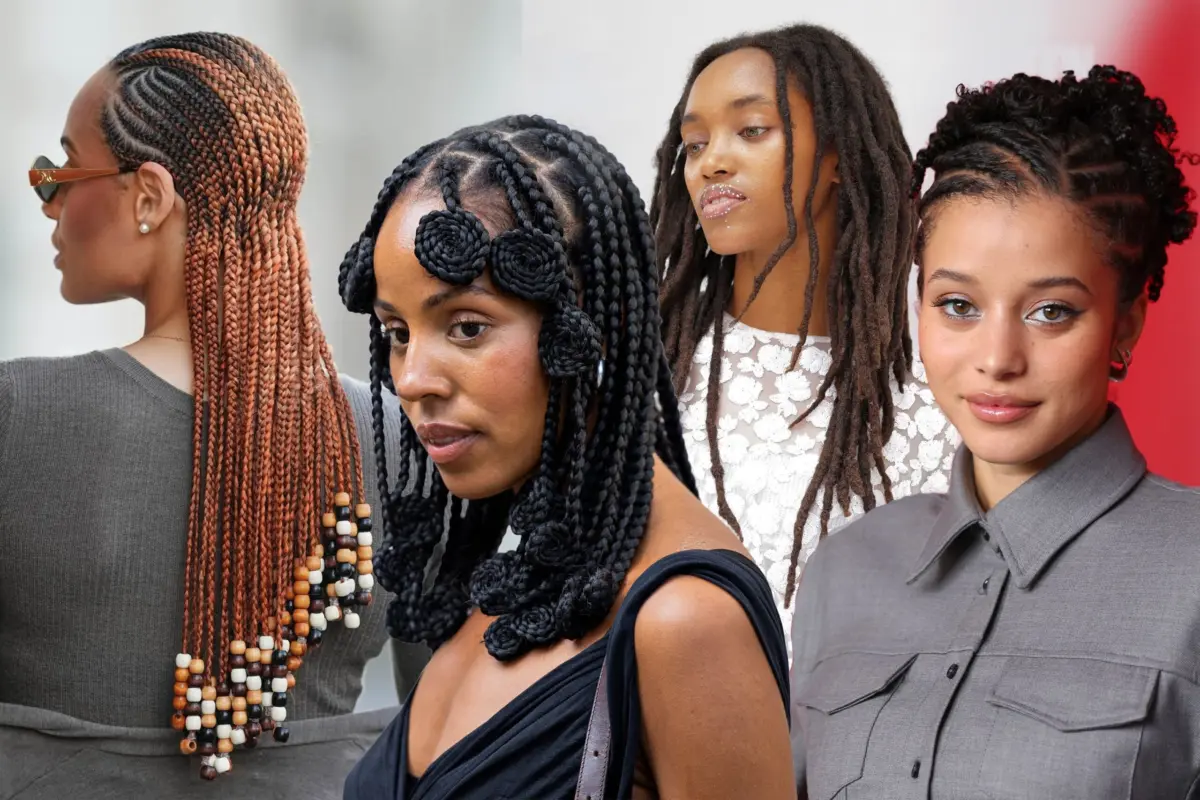
Braids remain the quintessential protective style, typically formed by weaving three or more sections of hair over and around one another in a precise pattern. Hailed as the poster child of the category for their remarkable versatility, many braided styles can be effortlessly restyled into elevated buns, high ponytails, or intricate updos, allowing individuals to extract multiple distinct looks from a single installation, explains Ladosha Wright, an Ohio-based professional hairstylist. Furthermore, braids are perennial fan favorites due to their impressive longevity—some styles easily last well over a month—and the seamless option they provide to add fullness and length through supplemental extension hair.
When it comes to the vast universe of braids, the options are practically limitless. Some of the most widely requested variations include cornrows, which involve braiding the hair very tightly and closely to the scalp, frequently in neat, straight lines. Fulani-inspired styles are another major trend, characterized by cornrows in the front that elegantly cascade into loose plaits down the back. Box braids also command a massive following, falling under an umbrella that now includes knotless variations, trendy goddess aesthetics, and boho styles. In these modern iterations, the added hair is gradually fed directly into the plait as it forms, rather than being tightly secured at the base via a heavy knot. Durham points out that these particular techniques are exceptionally popular because they create a notably lighter, more flexible, and comfortable feel when installed by a skilled professional.

While twists may not always command the exact same level of mainstream spotlight as their three-section braided counterparts, they remain an equally trustworthy and enduring choice. Twists are traditionally created by wrapping two distinct sections of hair around each other. Whether installed with or without added hair, twists offer a profoundly natural-looking and versatile aesthetic, notes Wright. Classic two-strand twists—where the natural hair is sectioned, wrapped around itself, and left to hang down in soft plaits—are remarkably easy to do at home and function as the hair equivalent of a two-for-one deal. Mateo Kirkpatrick, a Dallas-based hairstylist, explains that wearers can enjoy the twists for weeks and then subsequently unravel them to reveal a defined twist-out texture, effectively yielding two distinct styles from a single process.
Alongside the classic two-strand twist, popular extension-free twist techniques include flat twists, which sit flush against the scalp in a manner similar to cornrows, and mini twists, which utilize very small, intricate sections of hair. When clients opt to incorporate extensions, Senegalese twists, passion twists, and Marley twists emerge as the most frequently requested options, according to Wright.

Locs represent another deeply rooted category, created as sections of hair intentionally intertwine and form together organically over time, explains Durham. There are several distinct pathways to initiating a loc journey, one of which involves booking a comb coil appointment with a professional loctician. During this process, the stylist meticulously sections clean, gelled hair based on the client’s natural density and parting preferences, utilizing a tapered barber comb to coil each individual section. Wright outlines that clients are typically placed under a hooded dryer for thirty to forty-five minutes, with a setting spritz applied during the final fifteen to twenty minutes to lock the style in place. Once thoroughly dry, the loc journey officially commences.
Alternatively, individuals can choose to twist their hair and leave it largely undisturbed in a semi-freeform state, or simply allow loose hair to begin the locking process entirely on its own through free-form methods. Regardless of the chosen initiation method, the underlying mechanics remain consistent for naturally coily hair types: the strands naturally continue to matrix and loc upon themselves as growth occurs. Standard styles within this domain include wicks, Sisterlocks, and microlocs. For individuals who admire the aesthetic of locs but are hesitant to commit to a permanent process—since true locs require significantly more time and intricate effort to remove than most other protective styles—faux locs and soft locs offer a temporary alternative that mimics the look without permanently altering the natural hair structure.

Bantu knots, named after the diverse Bantu-speaking peoples of Sub-Saharan Africa, offer another culturally rich option. These sculptural buns are formed by winding sections of hair tightly—though never painfully—upon themselves after the hair has been initially parted and secured into individual twists or braids. They can be styled in small, medium, or large configurations on either natural hair or with the assistance of extensions. Beyond their distinct visual appeal, Bantu knots are celebrated for providing a secondary style option. Once unraveled, they leave behind defined, heatless waves and help preserve natural curls overnight, as hairstylist Monae Everett has previously noted.
Weaves and extensions also serve as foundational protective styles. James defines a weave as an installation method that interlocks, attaches, connects, or weaves extension hair—typically human hair—into a client’s natural hair. While there are countless installation techniques, the sew-in method remains the most popular choice for individuals with coily hair. In this process, the natural hair is first braided into a foundation of cornrows, and the extension hair is securely sewn directly into the braids. James asserts that from her professional experience, a sew-in is arguably the most protective way to add substantial length and fullness because the natural hair is completely braided, tucked away, and shielded beneath the weave with minimal exposure.

Wigs, encompassing partial styles, half wigs, and full wigs, can similarly qualify as protective options, provided they are not worn indefinitely. James cautions that full wigs covering the entire head, including both scalp and hair, can restrict the flow of oxygen and essential nutrients to the hair follicles, which may eventually impede healthy growth. Consequently, while wigs certainly count as protective measures when removed on a daily or periodic basis, traditional weaves generally represent a more viable long-term strategy for continuous protection.
Is There Anyone Who Should Avoid Protective Styles?
Despite their widespread popularity and numerous benefits, protective styles are not universally appropriate for every individual. If hair is currently compromised, fragile, or severely damaged, board-certified dermatologist Dr. Jeanine Downie advises focusing efforts on restorative hair health and foundational growth rather than diving straight into protective styling. She similarly recommends bypassing these styles for individuals who are at risk for, or have a documented medical history of, traction alopecia. Furthermore, anyone managing underlying skin conditions such as seborrheic dermatitis or eczema must exercise extreme caution to avoid triggering painful flare-ups.

Skin sensitivities extend beyond pre-existing medical conditions. Dr. Downie warns that the chemical treatments utilized in certain synthetic extension hairs can provoke allergic reactions or irritations in otherwise healthy skin. Individuals with sensitive skin types are therefore encouraged to invest in 100% human hair when opting for styles that require added length or volume.
Potential Downsides to Protective Styles
Across the broader protective styling community and among industry experts, two primary drawbacks consistently emerge: excessive tension and inadequate product buildup management. Harper emphasizes that excessive physical tension, heavy extension materials, accumulated product residue, and improper takedown procedures can collectively trigger severe breakage, thinning, and persistent scalp irritation.

Tension is a critical factor that requires constant monitoring. When a hairstyle is installed too tightly or features overly heavy extensions, it exerts severe mechanical traction on the scalp, effectively disrupting the normal hair-growth cycle and potentially causing irreversible scarring and permanent follicular damage, Dr. Downie explains. Recognizing the physical warning signs of excessive tightness is vital. Visible indicators include small red or white bumps forming at the base of the braids, which clearly signal an adverse inflammatory reaction within the follicle. Furthermore, persistent physical discomfort should never be ignored. Dr. Downie notes that even a dull, lingering pain is a definitive sign of trouble, while Harper echoes that natural hair should never genuinely hurt during the installation process.
Regarding product buildup, experts stress that wearing a protective style is never a valid excuse to abandon a consistent cleansing routine. Dr. Downie recommends washing and conditioning the hair frequently—ideally on a weekly basis—and incorporating a detoxifying cleanser. For those able to access their scalp easily through braids or twists, thorough cleansing remains crucial, though James acknowledges that not everyone possesses the dexterity to wash their hair without disrupting the underlying pattern. For those individuals, she recommends specialized scalp sprays and braid sprays formulated to address common protective style concerns.

Following a wash, Dr. Downie advises steering completely clear of exceptionally heavy, occlusive waxes, recommending lightweight, fragrance-free, and more water-soluble oils instead, such as pure jojoba oil.
Ultimately, the consensus among professionals centers on mindful maintenance and timely removal. Harper reiterates the importance of scheduling adequate resting periods for the natural hair between consecutive styling installations to ensure the hair underneath remains robust. At the end of the day, a protective style should faithfully safeguard hair health rather than quietly compromise it.