Yet, amid the standard political bickering, a persistent cloud of economic misinformation requires a firm grounding in reality. Money, overall economic health, and national wealth remain central talking points for candidates attempting to sway undecided voters in critical swing states. Unfortunately, modern political discourse frequently relies on irrational emotional appeals rather than sound economic fundamentals, particularly when describing the current condition of the United States economy.
A prime example involves opposition attacks characterizing the current administration’s record as a failure defined by a "bad economy." In stark contrast to these political narratives, macroeconomic indicators show that the United States economy is exceptionally robust, supported by historically low unemployment rates. It is difficult to imagine a more favorable baseline operational environment, and the recent bout of elevated inflation primarily serves as a lagging indicator that the economy was expanding at a pace requiring mild deceleration through higher interest rates.
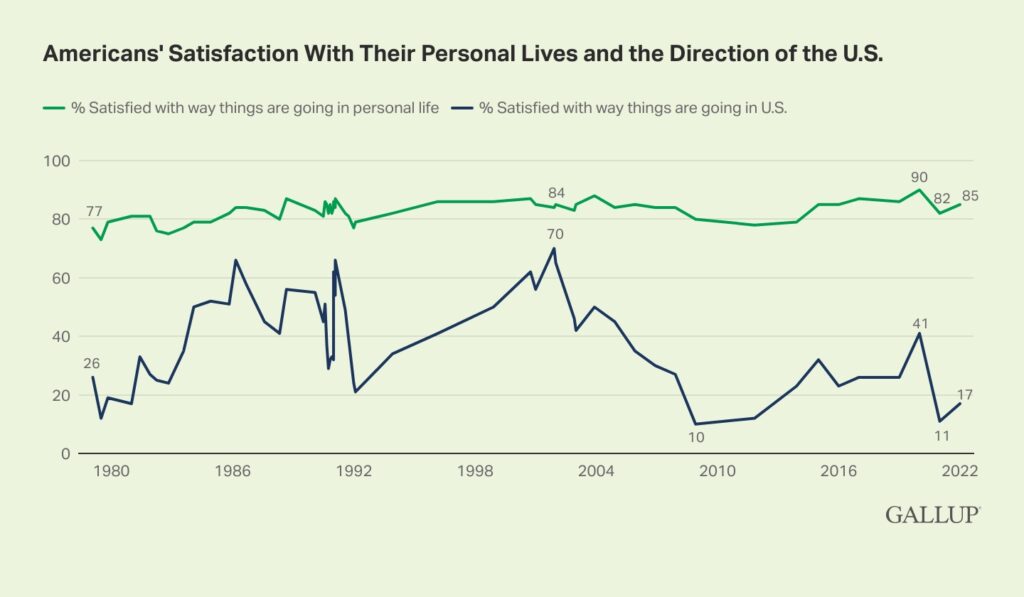
Despite these positive metrics, public perception remains heavily skewed. Recent Gallup polling data reveals a striking disconnect: while roughly 85 percent of individuals report that their personal financial situations are performing quite well, only 17 percent believe the broader national economy is healthy. Mathematically, this widespread pessimism presents a contradiction, as an economy where the vast majority of participants are thriving is, by definition, a strong economy. Observers note that this widespread divergence from statistical reality correlates closely with the amplification of economic misinformation across digital and social media platforms.

While ignoring political rhetoric entirely remains an option, maintaining an accurate understanding of macroeconomic mechanics yields tangible power. Comprehending how the economic engine truly operates dispels manufactured panic and encourages sound financial decision-making. To clear up the prevailing confusion, several core economic myths frequently promoted by political figures warrant careful examination.
The Myth of Presidential Economic Control
During election cycles, opposition parties routinely attribute economic recessions directly to the sitting president, while incumbent administrations enthusiastically claim personal credit for periods of expansion. In reality, the United States economy operates on a scale far too massive—and far too decentralized—for any single executive to control or decisively manipulate.
The domestic economy functions as a colossal machine converting labor and raw materials into complex goods and services, ranging from modern technology to foundational infrastructure. While the United States remains the largest single economy globally, accounting for roughly 26 percent of worldwide gross domestic product, it remains heavily influenced by the remaining 74 percent of economic activity generated by billions of people across the globe.
Standard economic expansion and contraction cycles are primarily driven by shifts in human behavior, oscillating between periods of irrational exuberance and speculative greed, such as the lead-up to the 2007 housing boom, followed by contractions driven by widespread caution and pessimism. While government policies regarding taxation and regulation certainly exert influence, the effects of these policy adjustments are typically delayed and unpredictable. Drawing a direct, immediate line of causation between today’s executive branch and today’s macroeconomic indicators ignores the complex, global nature of modern commerce.
Misunderstandings Surrounding Monetary Policy and Interest Rates
Candidates frequently express deep sympathy for middle-class Americans grappling with increased borrowing costs on consumer credit, automotive loans, and residential mortgages, often promising to unilaterally force interest rates downward. Some political figures have even suggested challenging the operational independence of the Federal Reserve Board, a crucial institution designed to function free from direct political interference.
In practice, monetary policy serves as a powerful macroeconomic brake and accelerator when managed by independent experts. Centralized interest rate adjustments are designed to cool overheating markets to prevent rapid inflation or to stimulate activity during downturns. Leaving monetary controls directly in the hands of a sitting political executive risks severe destabilization, a phenomenon observed in historically mismanaged foreign economies.
Inflation, Purchasing Power, and Corporate Behavior
The narrative surrounding post-pandemic inflation has likewise become a central pillar of political messaging. Following the global disruptions of the COVID-19 era, rapid inflation emerged due to a rare convergence of supply chain bottlenecks, factory closures, remote work transitions, and substantial fiscal stimulus combined with historically low interest rates. These pressures have since subsided, bringing annualized inflation down toward standard historical norms.
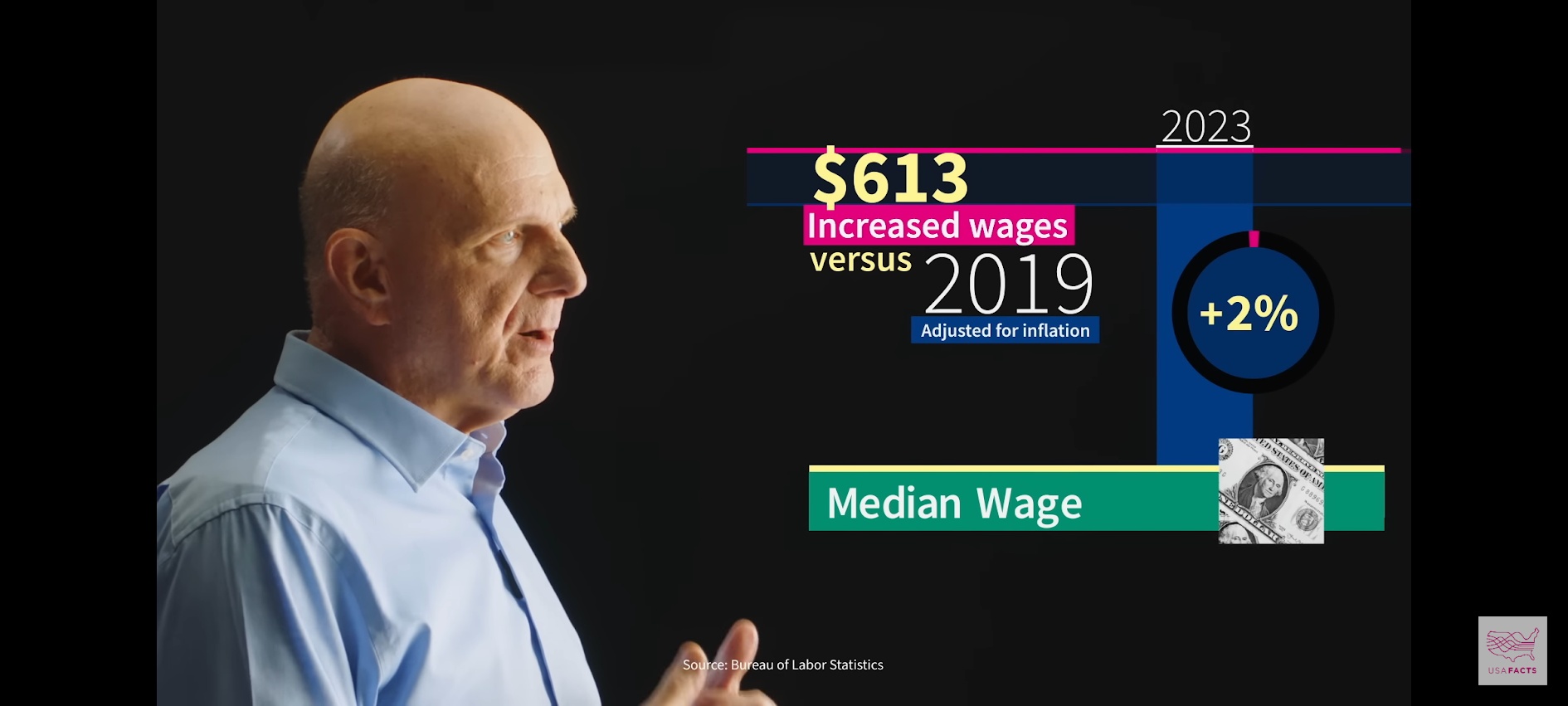
Crucially, broader economic data demonstrates that overall wage growth has outpaced cumulative inflation over the medium term. Since 2019, general consumer price increases have been eclipsed by overall increases in compensation, meaning nominal purchasing power for the average household remains resilient. Despite this data, political platforms frequently frame inflation as an ongoing catastrophe, occasionally promising policies intended to artificially reverse price levels—a concept fundamentally at odds with stable monetary growth.
Concurrently, political rhetoric frequently targets corporate profit motives as the primary driver of consumer price increases. However, extensive independent analysis of retail and grocery sectors demonstrates that corporate profit margins have remained stable, disproving assertions that widespread "greedflation" has fueled long-term price surges within competitive market environments.
Housing Market Pressures and Supply Constraints
Housing affordability represents a genuine economic challenge, with residential purchase prices and rental rates having outpaced general consumer inflation and wage growth over the past decade. Elevated interest rates intended to cool borrowing have compounded the issue by increasing monthly mortgage servicing costs, creating a dual challenge for prospective buyers.
However, proposed political remedies often lean toward demand-side interventions, such as first-time homebuyer subsidies or artificial interest rate reductions, which risk exacerbating price pressures. Economists and housing advocates argue that the sustainable solution lies in expanding housing supply by dismantling regulatory hurdles. Reducing costly municipal permitting delays, easing restrictive building codes, reforming suburban-style single-family zoning laws, and limiting local regulatory pushback could drastically reduce construction costs and improve inventory over the long term.
The Persistence of Fossil Fuel Fixations
Gasoline prices remain a staple of political discourse despite representing a diminishing share of typical household expenditures. When adjusted for inflation, retail gasoline prices remain comparable to historical averages observed decades ago. Furthermore, modern household budgets allocate only a small fraction of disposable income directly to motor fuel, often spending substantially more on overall vehicle maintenance, insurance, and financing costs.
The ongoing focus on internal combustion fuel prices overlooks the broader technological transition already well underway across the transportation sector. The maturation of electric vehicle markets offers consumers viable alternatives that significantly reduce ongoing operational and maintenance expenses. Debating legacy fuel prices in modern political campaigns resembles arguing over the operating costs of obsolete office equipment, ignoring structural shifts in consumer technology.
Perspective on National Wealth and Well-Being
Ultimately, much of the anxiety surrounding economic indicators stems from a misplaced focus on incremental luxury rather than foundational security. Advanced industrialized nations surpassed the threshold of basic material sufficiency decades ago. While wealth inequality remains a legitimate policy concern that justifies progressive taxation to maintain social cohesion, economic data confirms that accumulating wealth beyond the point of basic sufficiency yields diminishing returns regarding personal well-being.
As the election cycle draws toward its conclusion, voters are left to weigh competing narratives against verified economic data. Recognizing the distinction between partisan hyperbole and empirical reality allows individuals to tune out unproductive noise, participate responsibly in the democratic process, and maintain focus on personal financial resilience.