
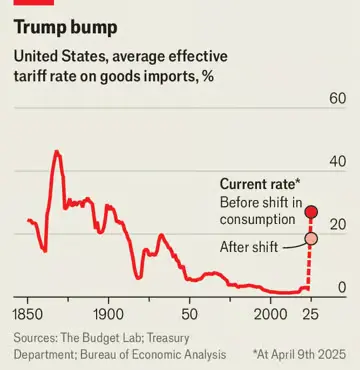
While stock market volatility rarely comes with a single, neatly labeled explanation, financial observers point to one clear catalyst behind the recent turbulence: tariffs. As the U.S. government unleashed a series of aggressive trade measures and fluctuating threats worldwide, businesses began bracing for massive disruptions. Currencies and interest rates reacted in tandem, leaving everyday retail and retirement investors wondering what the future holds for their long-term funds. Conversations among everyday citizens and investors currently span the emotional spectrum, ranging from dismissive takes that the drama is a giant nothingburger to apocalyptic warnings that the entire financial system is heading for a severe contraction.

To understand the root of the economic anxiety, it is necessary to examine the fundamental mechanics of what a tariff actually is. At its core, a tariff functions as a sales tax levied by a national government on goods imported from abroad. These duties are paid directly by the importing entity—whether that is an individual consumer ordering a specialty item directly from an overseas manufacturer or massive retail corporations like Amazon, Walmart, and Apple bringing in goods by the container ship.
Ultimately, these taxes are not absorbed by foreign nations or multinational conglomerates; instead, they are passed directly down to the end consumer. When a retailer faces inflated costs on imported goods, prices rise to protect profit margins. Tariffs also disrupt industrial operations and construction sectors directly. Major corporate investments, such as building a new distribution center or developing heavy infrastructure, become significantly more expensive when tariffs are slapped on imported steel, copper, lumber, and countless other manufacturing components. Because many modern building materials originate from various parts of the globe, these trade policies inevitably drive up the cost of housing and commercial development alike.
On a macroeconomic level, widespread tariffs act like a broad-based sales tax, driving up consumer prices, slowing overall economic activity, and reducing household spending power. While the collected revenue flows directly into government coffers to potentially help fund national budgets or reduce deficits, economists warn that the broader economic drag rarely justifies the fiscal intake. A healthy government requires a balanced and predictable mix of tax revenues to function effectively, but the primary requirement for sustained economic growth is stability. Taxation levels must remain low enough to keep the country running smoothly while being fair and predictable, ensuring that individuals and businesses retain the incentive to work hard and plan far into the future.

The current tariff regime, however, has broken away from predictability. The administration has repeatedly thrown around extreme, arbitrary tariff numbers as immediate threats, only to walk them back or alter them on a nearly daily basis. This constant state of uncertainty makes long-term corporate planning exceptionally difficult.
Proponents of tariffs often argue that they serve a vital strategic purpose by protecting domestic industries from foreign competition. For instance, placing a steep tax on imported vehicles grants domestic automakers an immediate competitive advantage, driving up their sales and keeping domestic manufacturing plants humming. While consumers lose out through higher vehicle prices and narrower market selections, domestic manufacturers and their workers benefit from the sheltered environment.
Historically, targeted

tariffs can serve strategic national security interests, such as protecting domestic aerospace manufacturers to ensure a reliable supply of defense equipment. However, they can also devolve into politically motivated protectionism designed to reward powerful industry lobbyists. This protectionist approach has spanned multiple administrations across party lines. Previous leaders also utilized tariffs in attempts to secure political favor in crucial swing states, such as imposing heavy taxes on imported solar panel components and related manufacturing materials. Economists frequently criticize these moves, pointing out that cheap energy inputs lower the overall cost of living and boost industrial competitiveness, making it counterproductive to block the flow of affordable resources across borders.
Examining the mechanics of job creation reveals the fundamental trade-offs inherent in protectionist policies. If a heavy tax is levied on imported automobiles, many buyers will pivot toward domestic alternatives to save money. Consequently, domestic automakers see a surge in sales, prompting them to hire more factory workers and potentially expand production lines. Yet, this localized boom comes at a steep price for the rest of the economy. Every other consumer and business must pay more for slightly more expensive or less efficient transport. Logistics companies face higher fleet maintenance costs, prompting them to raise prices across their entire service networks.
At the same time, shielded from intense international competition, domestic manufacturers face fewer incentives to innovate, streamline operations, or improve efficiency. This broader friction is why the consensus among economists is that tariffs should be deployed sparingly. While they can occasionally safeguard critical national priorities like food security or defense, they generally cause unexpected economic damage, reduce overall employment efficiency, and slow down long-term growth.
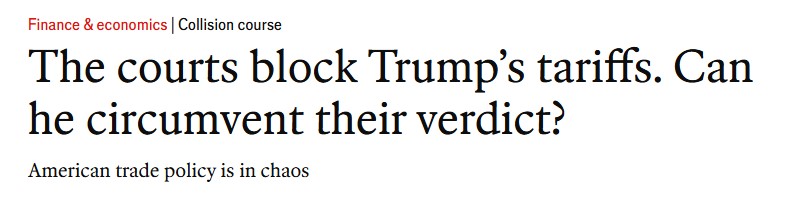
This tension has left many observers baffled by the administration’s aggressive embrace of protectionism. Public statements from political leaders frequently frame tariffs as a mechanism to generate national wealth, focusing heavily on the immediate, first-order benefits of protected domestic sectors while ignoring the widespread efficiency losses felt across the rest of the economy. Yet, market reactions tell a very different story. Whenever larger tariffs are announced, share prices immediately decline as corporate leaders and institutional investors recognize the inevitable squeeze on profit margins. Conversely, when tariff threats are paused or rolled back, stock prices rebound.
This disconnect has fueled speculation that aggressive tariff threats are primarily utilized as negotiating leverage rather than permanent economic policy. Regardless of the underlying strategy, the U.S. economy remains subject to the immediate policy shifts of a single executive leader. This concentration of power has sparked intense legal battles across the federal court system, mirroring historic struggles by presidents to expand executive authority beyond constitutional boundaries and the traditional separation of powers.
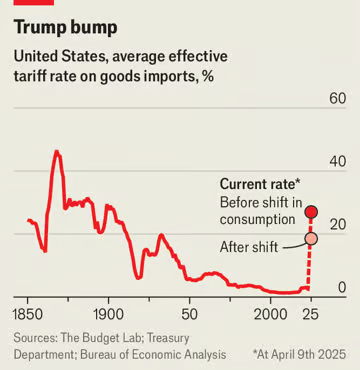
Despite months of dramatic rhetoric, actual implementation levels remain far above the historical norms of the past three quarters of a century. The modern American economy is structured around low tariffs and relatively free trade, meaning these abrupt policy shifts represent a sharp departure from decades of established commercial norms.
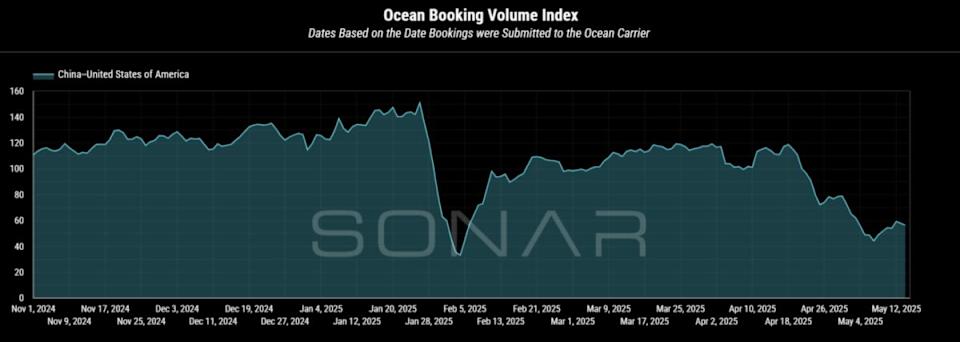
Consumers have not yet experienced widespread price shocks largely because the U.S. economy functions with deep inventory buffers. Importers heavily anticipated the coming trade friction, placing massive advance orders to stockpile goods before the duties took full effect. Consequently, maritime shipping indices show a significant drop in incoming cargo as businesses burn through existing stockpiles. While consumers may easily weather temporary shortages of non-essential imported goods, a prolonged cutoff of core industrial machinery and manufacturing components could trigger much harsher economic consequences as the year progresses.
Looking forward, economists and market analysts generally agree that the current period of trade disruption will eventually yield to a more stable equilibrium, though the exact path forward remains uncertain. If crazy-high tariffs were to somehow become permanent fixture of U.S. policy, businesses would be forced into a painful structural reorganization, relocating supply chains away from historical trade partners and passing permanent cost increases down to consumers.
However, a more probable outcome is that these aggressive measures serve primarily as a high-stakes negotiating tactic, ultimately leading back toward a framework of low tariffs and normalized international trade. Just as domestic prosperity relies heavily on open borders and free commerce across fifty individual states, friendly nations benefit mutually from the unimpeded exchange of goods and services. Collaborative respect among trading partners historically fosters shared economic growth and higher standards of living.
In the wake of recent market drops and subsequent recoveries, the U.S. stock market has climbed back toward historic highs. This resilience suggests that investors ultimately expect a return to predictable international trade policies rather than a permanent trade war. Long-term investors who resisted panic and maintained their portfolios through the volatility have been rewarded as the market bounced back from its steep spring lows.
Ultimately, navigating modern economic storms requires a healthy skepticism toward sensationalized media headlines. In an era where commercial media outlets rely heavily on click-driven revenue, fear and outrage often take precedence over accurate, measured reporting. By focusing on long-term fundamentals and tuning out the daily noise of political and financial journalism, investors and everyday citizens can better weather the inevitable ups and downs of the global economic landscape.