
The Gateway Arch: A Stainless Steel Tribute to American Pioneers
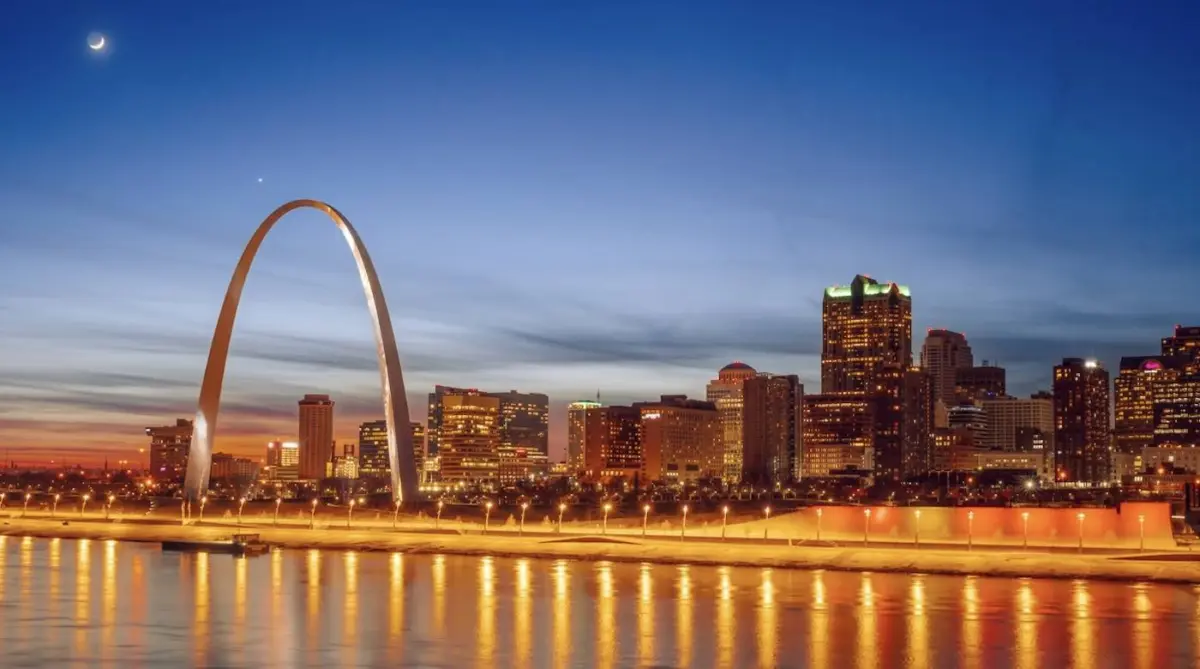
Sixty-one years ago today, construction was officially completed on the iconic Gateway Arch in St. Louis, Missouri. Standing proudly at a breathtaking 630 feet, this stainless steel monument holds the title of the tallest monument in the Western Hemisphere. Situated strategically on the west bank of the Mississippi River, the arch serves as a grand and lasting tribute to the great westward explorers Meriwether Lewis and William Clark, alongside the countless other pioneers who began their grueling overland treks from the bustling port city of St. Louis.
Designed by visionary architect Eero Saarinen, the arch was engineered with a remarkable flexibility that allows the massive structure to sway a full 18 inches in high winds. Beneath its gleaming exterior lies a hollow interior built to accommodate the four million tourists who visit the site every year. Visitors can ascend to the top to gaze out through high windows that look down at a dramatic 30-degree angle—a perspective that can present quite a fright for anyone with a severe fear of heights. Observers have long written that Saarinen’s masterpiece represents the boundless spirit of American optimism, constructed according to a striking simplicity that guarantees timelessness.

The Cuban Missile Crisis: Six Days That Saved the World
Sixty-four years ago today, the entire global community breathed a profound sigh of relief as the perilous Cuban Missile Crisis came to a peaceful resolution. The terrifying standoff reached its turning point when Soviet Union leader Nikita Khrushchev agreed to dismantle and remove Soviet nuclear missiles from Cuba. In exchange, President John F. Kennedy offered a commitment to remove NATO’s Jupiter missiles from Turkey and Italy. With contemporary geopolitical tensions and the persistent risk of nuclear escalation surrounding the conflict in Ukraine, revisiting this chapter serves as a stark reminder that Washington and Moscow have navigated these treacherous diplomatic waters before.
During the height of the crisis, the Executive Committee of the National Security Council, known as ExComm, presented President Kennedy with three stark courses of action. One alternative involved virtually erasing Cuba from the map using nuclear weapons, while a second proposed a full-scale combined arms military invasion. Kennedy ultimately selected the third path, which was described as a limited action for a limited purpose: the implementation of a naval blockade to prevent the delivery and further installation of offensive weapons on the island.

Subsequent historical investigations, heavily informed by secret audio recordings made during ExComm meetings by Robert F. Kennedy, have revealed that the political and military pressure on the president to launch a preemptive nuclear strike was immense. Ultimately, delicate diplomatic channels operating behind the scenes—facilitated by communications between a Kremlin official and Robert Kennedy—paved the way for the Soviet Union’s decision to pull back its assets and ease international tensions.
Oxi Day: Greece’s Defiant Stand Against Fascist Aggression
Marking its 86th anniversary today is the historic moment when Greece responded to foreign fascist demands with an emphatic and unforgettable refusal. The date commemorates the courageous rejection by Greek Prime Minister Ioannis Metaxas, following an ultimatum delivered in the pre-dawn darkness at three o’clock in the morning by Italian dictator Benito Mussolini. Mussolini demanded that Axis forces be granted strategic access to Greek territory for military occupation, warning that refusal would mean immediate war. The story of that night echoes through history in Greece’s single-word response: "Oxi," meaning "No."

Following the rejection, Greek forces successfully fought off invading Italian troops at the rugged Albanian border, marking the very first major tactical setback for the Axis powers in the Second World War. That unexpected resistance shattered the myth of Nazi-fascist invincibility. For a small country to stand up so resolutely against the overwhelming demands of the Axis military machine provided a powerful beacon of hope during the darkest early days of the conflict.
Later that same morning on October 28, the Greek population poured into the streets across the nation, putting aside political divisions to proudly shout "Oxi" in unison. International leaders of the era, including Franklin D. Roosevelt, Joseph Stalin, Winston Churchill, and even Adolf Hitler, ultimately paid tribute to the Greeks for their extraordinary and unexpected resistance. Today, Oxi Day is celebrated as a cherished national holiday.

The Statue of Liberty: Welcoming Millions to New York Harbor
One hundred and forty years ago today, the Statue of Liberty was officially unveiled and opened to the public in New York Harbor. Conceived as a magnificent gift to the United States from the people of France, the monument was originally envisioned by a French professor who sought to honor the ideals of the American Revolution while simultaneously inspiring a similar democratic movement within his own country.
Officially titled Liberty Enlightening the World, the colossal sculpture depicts a robed female figure representing Libertas, the ancient Roman goddess of freedom. In her left hand, she cradles a tablet inscribed with the date of the American Declaration of Independence: July 4, 1776. At her feet lies a broken shackle and chain, symbolizing the universal rejection of tyranny and slavery. Affectionately known to generations as "Lady Liberty," the statue stood as a breathtaking, hopeful sight for millions of immigrants arriving from foreign shores in search of a new beginning.