As history reflects upon that fateful October day, anniversaries of cultural icons, cinematic masterpieces, and monumental political figures also mark this date, offering a sweeping look back at the milestones, memories, and turning points that continue to shape modern society.
The Depth Charges of October 1962: Inside the B-59 Submarine
On October 27, 1962, the world was locked in the harrowing grip of the Cuban Missile Crisis. In the Caribbean Sea near Cuba, a task force consisting of eleven United States Navy destroyers and the aircraft carrier USS Randolph detected a Soviet diesel-powered submarine, the B-59. Although the submarine was operating in international waters, the U.S. Navy initiated a series of signaling depth charges designed to force the vessel to surface so its nationality could be definitively identified.
Unbeknownst to the American surface vessels, the B-59 had been completely cut off from radio communication with Moscow for several days. Trapped deep underwater in oppressive heat and mounting tension, the submariners had no way of knowing whether a full-scale global war had already broken out. When the concussive force of the American depth charges began rocking their hull, the submarine’s captain, Valentin Grigoryevich Savitsky, grew convinced that hostilities had commenced. Believing they were under attack in an active war, Captain Savitsky prepared to retaliate by launching a nuclear-armed torpedo.

Under standard Soviet naval protocols at the time, submarines armed with what the military referred to as the "Special Weapon" required authorization from both the captain and the political officer to launch a nuclear strike. However, the B-59 carried an additional high-ranking official: the chief of staff of the submarine flotilla, Vasily Arkhipov. Because of Arkhipov’s presence and rank, any decision to deploy the nuclear torpedo required a unanimous vote of three officers rather than the usual two.
A fierce, high-stakes debate erupted inside the cramped, sweltering control room. Captain Savitsky favored launching the weapon, and the political officer concurred. Only Arkhipov stood firmly against the launch. Through intense persuasion, calm reasoning, and steady leadership, Arkhipov managed to convince Captain Savitsky to rescind the order, surface the submarine instead, and await proper instructions from Moscow.
His refusal to yield effectively averted a nuclear exchange that military historians agree would have triggered a devastating worldwide conflict. Despite the magnitude of his actions, upon returning to the Soviet Union, the crew of the B-59 was largely met with official disapproval and professional disgrace, a reflection of the rigid political climate of the era. Nevertheless, Arkhipov continued his naval career with dedication, eventually rising to the rank of Rear Admiral.
Decades later, the true gravity of the incident came to light. In 2002, Russian officials held a historic press conference officially declassifying the fact that the B-59 had indeed been armed with nuclear torpedoes, and that Arkhipov was the solitary reason they remained unlaunched. In a 2012 PBS documentary titled The Man Who Saved the World, his wife, Olga Arkhipov, remembered him as an exceptionally intelligent, polite, and remarkably calm man. In recognition of his extraordinary restraint and heroism, Arkhipov was posthumously awarded the inaugural "Future of Life Award" in 2017, presented directly to his grieving yet proud family.

Celebrating the Life and Career of John Cleese
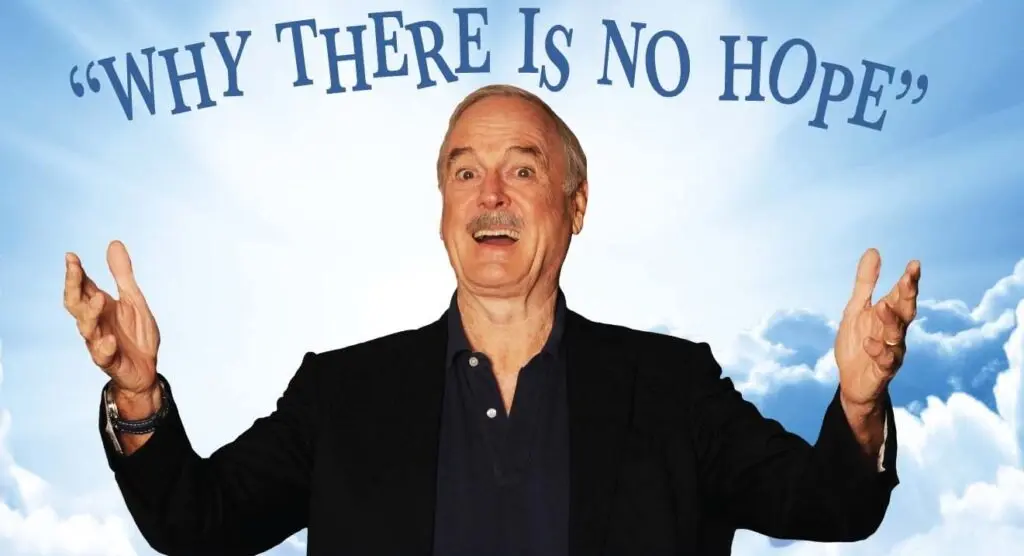
Shifting from the harrowing tensions of the Cold War to the enduring power of laughter, the date also marks the birthday of legendary comedic actor, writer, and satirist John Cleese. Turning 87 years old, Cleese maintains a relentless professional schedule, working across stage, screen, and print with the same vigor that defined his youth. Reflecting on his longevity and creative drive, Cleese has remarked, "I feel like I’m about 43."
Following delays brought on by the global pandemic, Cleese recently completed a successful comedy tour titled Why There Is No Hope, which featured an extended satirical monologue followed by a stand-up set performed by his daughter, comedian Camilla Cleese. His creative output shows no signs of slowing down. Alongside a musical adaptation of his celebrated film A Fish Called Wanda and a stage version of Monty Python’s Life of Brian, Cleese has continued to provoke public discourse through television.
He hosted a provocative British television series titled John Cleese: Cancel Me, which explores the complex cultural landscape of cancel culture. The program features candid interviews with individuals who have experienced being "canceled" alongside those who advocate for accountability. Cleese has long used his platform to question whether genuinely daring comedy can survive in an environment where avoiding offense is paramount, pondering aloud what society’s growing appetite for silencing dissenting viewpoints reveals about modern culture.
Cleese’s journey into comedy began while he was studying law at Cambridge University. Joining the university’s renowned theater club because he discovered he could "make people laugh," he crossed paths with his future writing partner, Graham Chapman. Within four years, they connected with the rest of the visionary collaborators who would form the iconic troupe Monty Python. Their groundbreaking sketch comedy television program, Flying Circus, ran for four critically acclaimed seasons, cementing itself as an instant classic and paving the way for four influential feature films.

Over a career spanning more than six decades, Cleese has authored numerous books, screenplays, and plays, including his frank and witty autobiography, So, Anyway. He also published a creative guide titled Creativity: A Short and Cheerful Guide, continuing to share his unique philosophy on art, humor, and human expression with new generations of fans.
The Enduring Legacy of President Theodore Roosevelt
The date also commemorates the birth of one of America’s most dynamic and transformative leaders, President Theodore Roosevelt, who was born 168 years ago. A prolific writer, military veteran, and passionate conservationist, Roosevelt served as president from 1901 to 1909, becoming the driving political force behind the Progressive Era in the United States.
As a child, Roosevelt suffered from severe, debilitating asthma and frail health. Rather than accepting his physical limitations, he famously embraced a strenuous, active lifestyle designed to build his strength and resilience—a personal philosophy of perseverance that ultimately led to his likeness being carved into the granite of Mount Rushmore. Taking office at the age of 42 following the assassination of William McKinley, he remains the youngest person to ever assume the American presidency.
Roosevelt campaigned on a platform promising a "Square Deal" to the average citizen, aiming to restore economic fairness through aggressive antitrust legislation, the regulation of powerful railroad monopolies, and the introduction of consumer protection laws such as the Pure Food and Drug Act. Recognizing the rapid industrialization threatening America’s wilderness, he made conservation a cornerstone of his administration, establishing numerous national parks, federal bird reservations, national forests, and national monuments to protect the nation’s natural resources for posterity.

His diplomatic achievements were equally significant. In foreign policy, his successful mediation to end the Russo-Japanese War earned him the Nobel Peace Prize in 1906, marking the first time an American president received the prestigious international honor.
The Cultural Impact of Rebel Without a Cause
Cinema history also shares this anniversary, marking 71 years since the theatrical release of Rebel Without a Cause, the landmark American drama starring James Dean and Natalie Wood. Directed by Nicholas Ray, the film explored the emotional confusion, alienation, and moral angst of American youth during the 1950s, offering a searing critique of contemporary parenting styles and the emotional disconnect between fathers and sons.
Over the decades, the film has achieved legendary status, largely due to the magnetic, culturally defining performance of James Dean. Fresh off his breakout, Oscar-nominated role in East of Eden, Dean captured the restless spirit of a generation, though he tragically died in a high-speed automobile accident at the age of 24, just one month before the movie premiered.
Despite its immense artistic merit and cultural resonance, the film initially faced controversy and was temporarily banned in countries like New Zealand and Spain out of official anxieties that its raw depiction of youthful rebellion might incite widespread delinquency. Alongside Dean’s iconic performance, Natalie Wood, supporting actor Sal Mineo, and director Nicholas Ray all received Academy Award nominations, cementing the picture’s place as an enduring touchstone of American cinematic history.