
In a recent video essay exploring the mechanics of memory, the core focus centers on the power of retrieval practice—the act of actively recalling information from memory rather than passively reviewing source material. Despite its proven efficacy in laboratory and classroom settings alike, students consistently underrate retrieval practice, often opting for more visually elaborate, yet ultimately less effective, study techniques. Understanding why these traditional methods fall short, and how to calibrate the cognitive effort required for genuine learning, remains a vital pursuit for educators and learners alike.
Are Mind Maps a Waste of Time?
Among the most popular tools in contemporary studying are mind maps. Visually appealing and intuitively structured, they allow learners to branch out concepts, color-code themes, and connect disparate ideas on a single page. However, as they are typically practiced—often while staring openly at a textbook or lecture notes—they underperform retrieval practice by a wide margin.
When this comparison is raised, a common objection from defenders of mind mapping is that traditional experiments testing retrieval practice tend to focus narrowly on rote memorization. Critics argue that mind maps are fundamentally designed to foster deeper comprehension and conceptual understanding rather than mere recall.
However, cognitive science suggests a different narrative. If genuine understanding is good for anything, it is the ability to reason flexibly about complex material and apply that knowledge to answer novel, untaught types of questions. Empirical research directly addresses this distinction, demonstrating that retrieval practice consistently beats mind mapping even when tested on complex inference questions—those requiring deep conceptual application rather than simple facts that could be pulled directly from a text.
Memory may theoretically be distinct from complete understanding, but it is always necessary. A learner cannot truly understand something they cannot recall when needed. Consequently, the methods that reliably boost memory performance are frequently the exact same methods that enhance overall comprehension and cognitive flexibility.
Another frequent objection is that studies comparing open-book concept maps to retrieval practice ignore a potentially superior third alternative: combining concept maps directly with retrieval practice to achieve synergistic effects that surpass either method on its own.
Fortunately, researchers have rigorously tested that exact hypothesis. In a landmark study led by cognitive psychologists, researchers evaluated the combination of concept mapping and retrieval practice. The findings revealed that adding retrieval practice to mind mapping yields the exact same boost to memory performance as free recall practiced entirely on its own.
In practical terms, while retrieval practice combined with mind mapping outperforms open-book mind mapping, the active ingredient driving the educational efficacy is the act of retrieval itself—not the visual structure of the mind map.
Even with these findings, mind maps are far from completely useless. They retain considerable value in helping learners organize their initial thinking around a vast, sprawling topic. Furthermore, the very process of organizing one’s thoughts to build a map often necessitates internal retrieval, meaning mind mapping can sometimes serve as an incidental, albeit indirect, pathway to practice active recall. The true takeaway from this body of cognitive research is not that visual aids are entirely pointless, but rather that retrieval practice is a robustly useful, remarkably powerful mechanism that deserves a central place in any learning routine.
Is Harder Learning More Efficient?
Retrieval practice is undeniably effortful. Because dragging information out of the recesses of the mind requires mental exertion, it naturally leads to vastly superior long-term learning compared to less demanding, passive approaches. Observing this dynamic, it is tempting to conclude as a broad generalization that more-effortful forms of studying are inherently more effective across the board. Many commentators discussing cognitive research suggest this as an obvious, self-evident truism.
However, cognitive science shows that this assumption is fundamentally incorrect.
The specific kind of cognitive effort involved in retrieving knowledge can strengthen neural pathways and memory traces far more effectively than passive review. But this does not imply that all books, lectures, or traditional forms of passive instruction are automatically inferior to active mental engagement in every learning context.
Indeed, a robust body of literature now demonstrates that studying worked examples actually outperforms open-ended problem-solving during the critical early phases of acquiring a brand-new skill. When novices are confronted with problems that are too complex before they have foundational knowledge, high cognitive load impedes learning. Similarly, when psychological and mental difficulty exceeds a certain precise threshold, standard study effects—such as the proven efficacy of retrieval practice—can break down entirely, sometimes even reversing their benefits.
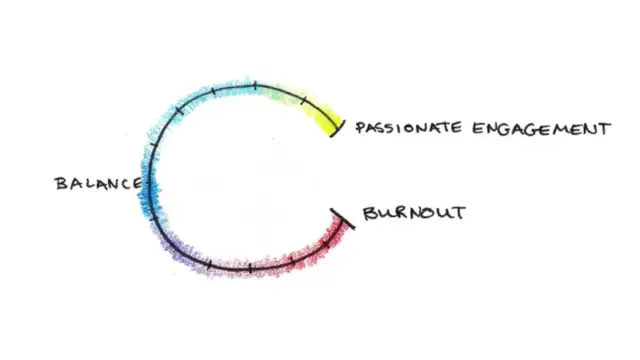
This nuanced reality suggests that the ultimate key to successful, efficient learning is about optimizing cognitive effort, rather than mindlessly maximizing it. A much more accurate maxim for students and educators alike might be that effective learning is inherently effortful, but not all effort is equally effective.
Retrieve, Don’t Re-Re-Read
Despite these important caveats and the need to calibrate mental exertion carefully, retrieval practice remains one of the absolute most powerful learning strategies to have in any academic or professional toolkit. Human memory is not a passive recording device; it is a biological system that strengthens through active use. Learners will consistently recall significantly more information over the long term if they actively strive to remember it from within, rather than simply settling for the comfortable illusion of competence provided by continuous re-reading.