In the second category, work is simply work. While an individual in this position may earn a respectable living and even enjoy the daily tasks required of them, few people would make this type of employment the central purpose of their existence.
Which kind of occupation do you think is more likely to trigger severe burnout?
If you had posed this question to workplace researchers or psychologists a year or two ago, many observers might have intuitively guessed the second type. After all, human beings do not live by bread alone, and it would be logical to argue that careers offering the allure of prestige, a higher sense of purpose, and intellectual challenge would naturally make work energizing and fulfilling.
Yet, contemporary organizational research increasingly reveals the exact opposite to be the case. While individuals stuck in grueling, low-wage, or objectively terrible jobs certainly experience exhaustion, the psychological phenomenon of professional burnout was first documented in—and is most frequently found among—professions that are widely considered to be desirable, noble, and deeply rewarding. Doctors, teachers, community activists, and university academics appear with striking regularity in case studies examining the depths of occupational burnout.
Why Burnout?
Why do people who hold enviable, high-status jobs experience burnout with such frequency?
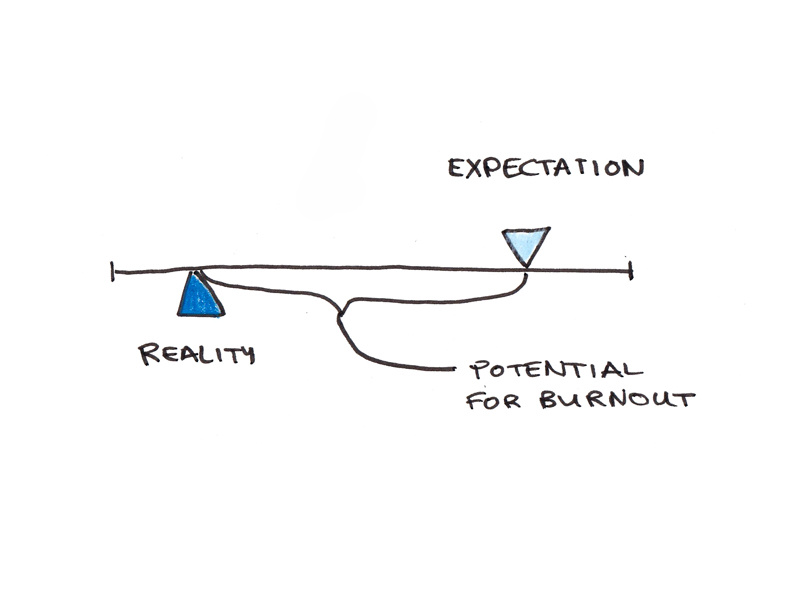
The most compelling explanation for this counterintuitive finding is articulated by Jonathan Malesic in his widely discussed book, The End of Burnout. According to Malesic, burnout occurs not merely from hard work or long hours, but when the gap between the expectations of a job and its day-to-day reality becomes fundamentally irreconcilable. Individuals who pursue "dream careers" face higher rates of burnout, not necessarily because their working conditions are objectively worse than other jobs, but because these careers naturally attract deeply idealistic expectations.
Malesic’s own personal and professional trajectory provides a vivid case study of this dynamic. Previously a tenured academic in the field of theology, Malesic entered academia because his early formative experiences in college led him to believe that a life spent teaching students about the deeper mysteries of the universe would be profoundly satisfying, intellectually engaging, and socially important.
Yet, even after achieving the coveted milestone of tenure—itself notoriously recognized as a burnout-inducing quest within higher education—he discovered a starkly different reality. Most of his students showed little to no interest in the material he was teaching, the scholarly papers he spent months writing were largely ignored by the broader academic community, and he found himself barely able to muster the energy to drag himself to class each morning.
The lofty expectations Malesic held for his work—the unwavering belief that it would remain intellectually stimulating and deeply meaningful every single day—crashed violently against the mundane and difficult realities of bored students, departmental politics, academic squabbling, and thankless administrative service work.
In reflecting on his career path, Malesic often contrasts his time in academia with a much earlier period in his life when he worked as a parking lot attendant. Even though most people would classify a parking attendant role as a menial, low-status job, none of his coworkers experienced burnout. They arrived at the lot, performed their assigned duties, collected their paychecks, and went home to engage in "real life," which often involved rich pursuits outside of work that genuinely imbued their lives with meaning and purpose.
The Opposite of Burnout
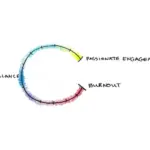
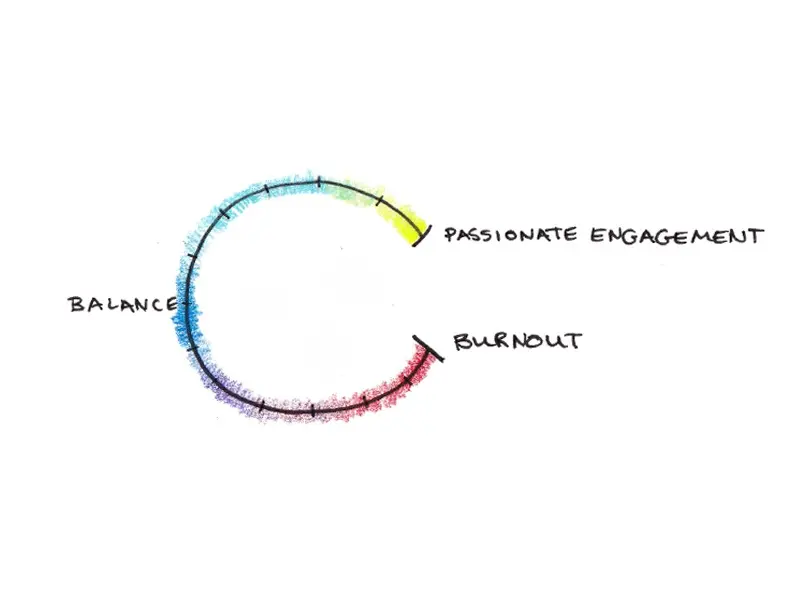
All of this evidence suggests that the true opposite of burnout is not simply passionate engagement. Ironically, intense passionate engagement—along with the unrealistic, perfectionistic expectations it frequently fosters—can often inadvertently create the ideal psychological conditions for burnout to take root.
Of course, this realization does not suggest that trapped in a dead-end, low-paying job is somehow the cure for professional fatigue. Good things are inherently good. All other factors being equal, it is objectively better to have a job that provides greater financial compensation, comprehensive benefits, and societal prestige than one that lacks these securities. Just as the gap between lofty expectations and a mediocre reality can trigger a psychological crash, even minimal expectations of a basic, healthy work environment can be shattered when an employee is trapped in a genuinely toxic workplace.
Instead, the true opposite of burnout is balance. Achieving professional balance means having expectations for your career that are reasonably well-matched by the actual, day-to-day realities of your job, alongside a healthy surplus of other external sources of meaning and resilience in life. These external anchors typically include strong personal relationships, engaging hobbies, healthy physical habits, and a reliable network of social support.
A persistent irony in the modern workplace is that maintaining balance is frequently far more productive over the long term than an obsessive, all-consuming devotion to work. The ambitious individual who devotes themselves entirely to their career may achieve rapid success and high output in the short run. However, that hyper-focused lifestyle inherently creates structural instability. If the steady stream of professional rewards, praise, or milestones eventually fails to meet their exceptionally lofty expectations, the resulting psychological crash can be severe and exceptionally difficult to recover from.
Conversely, the individual who approaches their career as merely one vital piece of a multi-faceted life—alongside family, community, and personal pursuits—builds an inherent psychological buffer against burnout. This sustainable approach allows a worker to continue performing good, steady work far longer and with greater consistency, which ultimately accumulates into a more meaningful and productive contribution over the course of a lifetime.