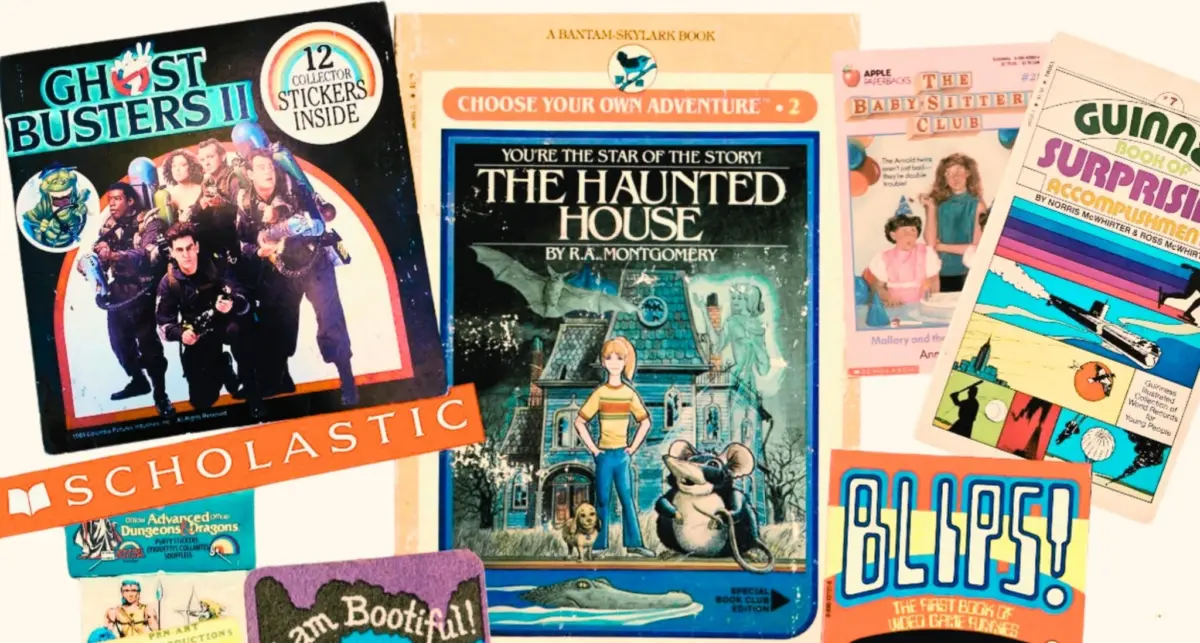
However, the cultural status of this venerable institution has recently come under sharp scrutiny. Writing in The Walrus, cultural critic Michelle Cyca recently revisited the book fair experience, contrasting her own fond Millennial memories—complete with order forms and Animorphs box sets—with the reality of a current catalog brought home by her young daughter. Rather than inspiring nostalgia, the modern fair elicited a profound sense of sorrow.
Cyca observed that many of the titles featured in contemporary school fairs have devolved into mere extensions of toy or television franchises, such as Lego, Pokémon, and Paw Patrol. More troublingly, these offerings appear to market themselves not on the intrinsic merits of imaginative storytelling, but rather on their proximity to more stimulating, screen-based entertainments. This shift raises pressing questions, particularly against the backdrop of an ongoing national reading crisis. Is the traditional school book fair truly dead? Is this modern iteration just another loss for cultural quality, or are critics simply viewing the past through rose-colored glasses?
To understand the current debate, some historical context is necessary. Scholastic launched its pioneering teen-targeted book clubs back in 1948, introducing its Pocket Book program to allow students access to affordable literature by ordering directly from magazines stationed in the classroom. The physical book fairs themselves officially kicked off in 1982. Early iterations gave foundational Scholastic properties—such as the beloved Clifford the Big Red Dog series—immense room to flourish. In subsequent decades, the fair proved instrumental in fueling the explosive growth of other young adult and children’s publishing phenomena, including R.L. Stine’s Goosebumps and Suzanne Collins’s The Hunger Games.
Yet, a closer look at the history of the institution reveals that neither commercial spin-offs nor merchandise are entirely new inventions. Franchise tie-ins can be reliably traced back through the fair’s history to at least 2002, a year when the Scholastic Arrow Top 10 bestseller list prominently featured a Pokémon guide.
Beyond its primary objective of fostering a love of reading, the Scholastic Book Fair has always served a vital fiscal purpose within the educational ecosystem. Across North America, the fairs function as a crucial supplemental funding pipeline for under-resourced public schools. A Scholastic representative recently told Fox 13 that these book fairs have successfully helped raise more than $2 billion for American schools over the last decade alone. In an era marked by tight educational budgets and economic pressures, finding fault with a program that generates such substantial funding is difficult, even if observers feel the quality within the stacks has been compromised.
For critics like Cyca, however, the primary appeal of the earlier fair lay in its perceived purity of experience. Describing the famous catalog, she noted that the order form elicited a buzz of wholesome consumerism, offering the distinct freedom of penciling in carefully deliberated choices like Animorphs, historical novels by Scott O’Dell, or horror series that promised weeks of sleepless nights.
Yet, acknowledging that those cherished titles often spawned their own television adaptations complicates any strict attempt to separate K.A. Applegate’s series from contemporary novelizations based on Paw Patrol or Minecraft. Furthermore, the experience of the book fair was rarely uniform for all students. At many public schools, the fair’s vibrant consumerism functioned less as a wholesome literary exercise and more as a distinct class stressor. While some children arrived with ample funds to spend on premium items like Snoopy backpacks, others had only their basic lunch money, which could stretch at best to a solitary sticker sheet.
For students unable to afford anything at all—or whose families were unfamiliar with the social dynamics of the event—the fair could transform into a genuinely painful rite of passage. If a child lacked the resources to purchase a desired title, the experience risked echoing the literary misfortune of Amy March in Little Women, left crying over unfulfilled wishes.
Danika Ellis, an editor at Book Riot and a former bookseller, highlighted this fundamental tension in an interview with the CBC, noting a long-standing skepticism toward the model. Ellis pointed out the jarring juxtaposition of children walking away with towering stacks of books, posters, and toys alongside peers who can afford little or nothing at all. If the primary objective is to celebrate literature and cultivate enthusiasm for reading among all students, questions naturally arise as to whether a commercial, for-profit book fair is the most equitable mechanism for achieving that goal.
This observation underscores the fair’s enduring paradox: purchasing books has never been identical to reading them. Cyca herself acknowledges this reality, noting in her essay that the program has historically exacerbated both micro and macro socioeconomic inequalities. If the book fair has always been an imperfect educational tool, then much of the contemporary critique risks becoming primarily aesthetic.
For many adults, missing the analog library aesthetic is natural. Yet, purely aesthetic nostalgia can sometimes obscure the broader economic and social realities of the past. For many who grew up attending these fairs, the appeal was never solely about curating refined literary tastes. The heavily marketed, commercial offerings—often purchased precisely because parents would never otherwise approve them—were just as central to the experience as critically acclaimed literature. The thrill of circling titles featuring Garfield, The Babysitter’s Club, or the Teenage Mutant Ninja Turtles was part of a broader cultural moment. The underlying reality was that the fair was never entirely fair.
At its core, this nuanced critique extends beyond the modern offerings of the book fair and touches on its overall cultural vibe, reflecting a broader sense of systemic degradation. This phenomenon aligns closely with what author and critic Cory Doctorow has termed "enshittification"—the process by which user experiences degrade sharply as value is systematically extracted from the user base, often seen as a symptom of late-stage corporate capitalism.
While Doctorow originally applied the term primarily to the tech industry and digital platforms, the underlying concept has proven broadly applicable to many consumer products and cultural touchstones. The systemic drive to prioritize corporate profitability over consumer experience can explain why many familiar products and experiences simply feel diminished over time, even when the exact mechanisms of decline are difficult to pinpoint.
As cultural critic Kyle Chayka observed in a review for The New Yorker, while such terminology provides a satisfying explanation for modern frustrations, identifying a systemic problem does not automatically provide a solution. Complaining about cultural decline often goes hand in hand with romanticized nostalgia. Lamenting the loss of an idealized past can ultimately serve as a distraction from addressing the underlying economic structures that shape modern consumer culture.
Ultimately, evaluating the modern Scholastic Book Fair reveals a complex mix of genuine educational utility, commercial schlock, and capitalist mechanics. Whether the current iteration represents a distinct decline or simply the continuation of a long-standing, fraught commercial frenzy, the shifting perception may say as much about the aging audience of readers as it does about the catalogs themselves.