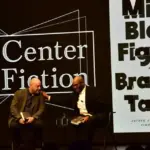
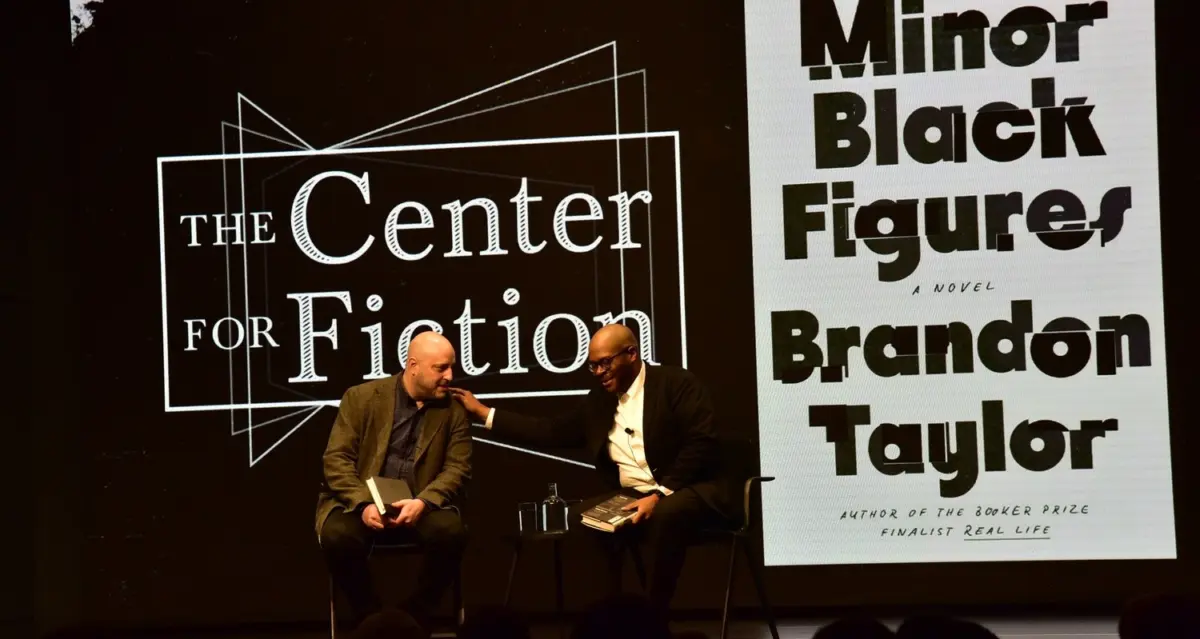
In Minor Black Figures, Taylor turns a sharp, analytical gaze toward the contemporary New York art scene through the perspective of Wyeth, a young Black painter navigating the intense and exhausting trials of creative struggle. As Wyeth searches for authentic inspiration, he must confront the fraught relationship between Black and white art while wrestling with the complex ways in which the Black body is perceived, commodified, and represented within elite spaces. Alongside these artistic tensions, he also faces the difficult compromises demanded by both artmaking and the simple, daily act of living.
The conversation between Sitman and Taylor immediately homed in on the structural choices underpinning the novel, beginning with Taylor’s decision to make his protagonist a visual artist rather than a writer. Sitman noted that framing the narrative through a painter allowed Taylor to brilliantly riff on, write about, and think through the creative process in a different mode. He drew particular attention to the dynamics surrounding Wyeth’s identity as a Black painter within the elite Soho gallery scene, reading aloud a poignant line from the novel that captures the weight of these systemic realities.
In the book, Wyeth tells Chloe that every Black painter effectively has two distinct careers: one among their Black contemporaries and another among their white contemporaries. Although Wyeth hates that logic, recognizing that some Black painters are marginalized simply because they are bad artists, he ultimately concedes that the statement holds a troubling ring of truth. Sitman asked Taylor whether he felt this dual-career logic applied to his own experience as a writer, prompting an instantly characteristic, quick-witted response from the author.
"Gonna get me in trouble. I’m gonna get canceled," Taylor joked, acknowledging Sitman’s playful admission that courting controversy was part of the goal.
Delving deeper into the subject, Taylor explained that he certainly feels the pervasive nature of this dual-track reality. He noted that there is always a distinct conversation about how a work of art or literature is conceived, received, conceptualized, and contextualized among Black peers when the creator is Black. Writers and artists of color are frequently discussed in the context of how their work fits into various discourses surrounding Black art. Simultaneously, a separate conversation takes place regarding how that same work intersects or integrates into larger artistic discourses about America and the contemporary moment as a whole.
Taylor pointed out a persistent cultural imbalance in how these conversations unfold, suggesting that when contemporary Black art is discussed, it feels as though two parallel conversations are happening. The "Black contemporary" is rarely permitted to signify that outer, larger conversation for reasons rooted in history, social structures, and systemic racism. By choosing to make Wyeth a painter, Taylor was able to explore a wide range of subjects while maintaining a deliberate distance from the endless discourses surrounding his own work and the work of his peers.
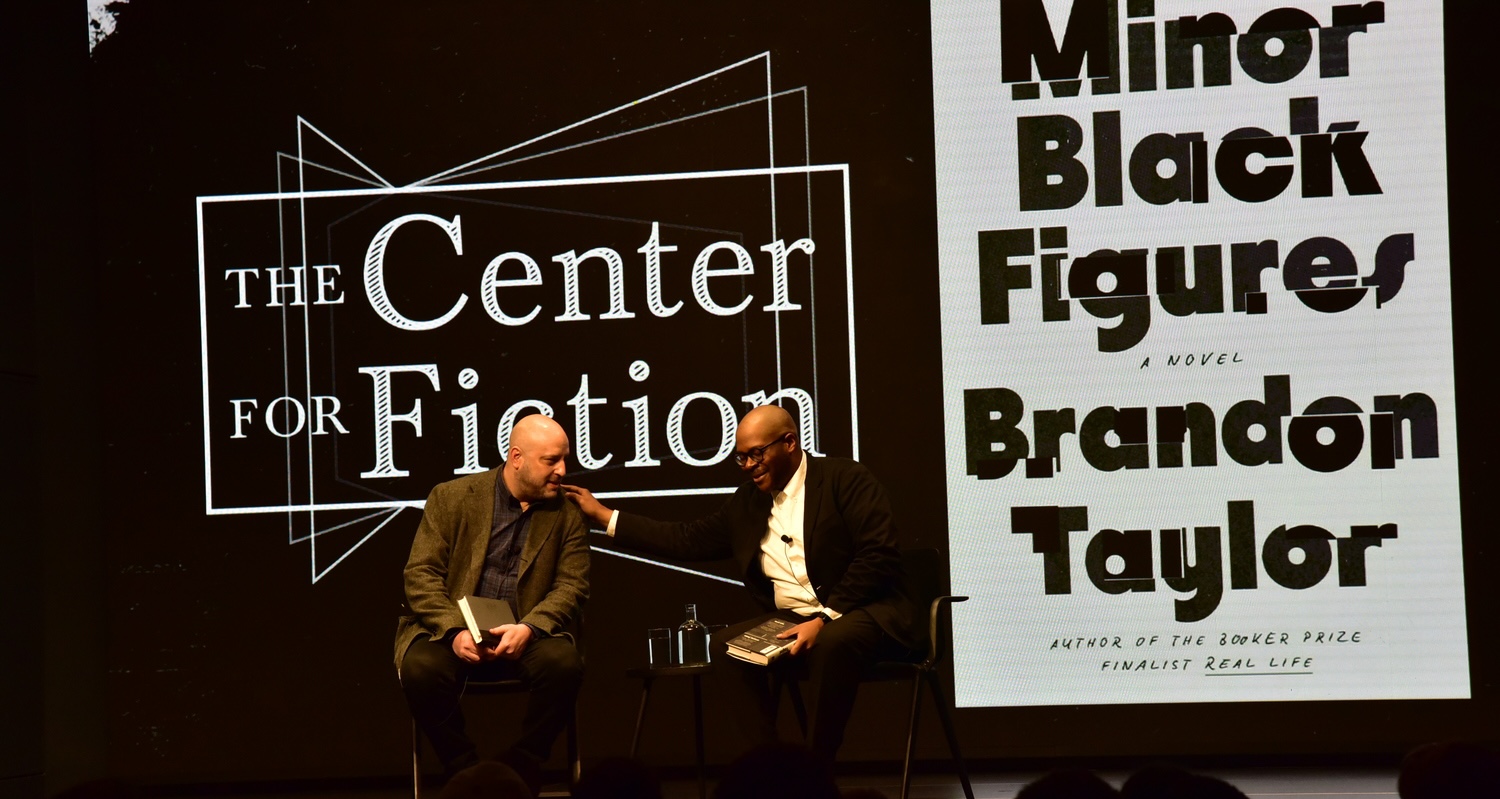
This narrative distance allowed the author to closely examine how discourses around Black art function across different media and forms. Ultimately, Taylor found that these conversations are strikingly similar, regardless of the medium. The dynamics remain identical whether the artist is working in literature, painting, or another creative field, proving that the surrounding conversation often operates independently of the actual art being produced.
Taylor questioned whether a Black artist in America is ever truly allowed to have their own aesthetic reasons, or if they are permanently conscripted into serving as a representative for a larger cultural conversation. He expressed frustration that a Black artist could paint a simple red circle, a blue square, or an octopus and still have critics and audiences project the exact same predetermined narratives onto the work, rendering the actual art immaterial to the broader discourse. Describing this phenomenon as reductive and intellectually vacant, Taylor explained that his new novel attempts to unpack the ways even well-meaning, progressive discourses rely on an underlying racist, essentialist logic.
The discussion also touched upon the clever and sharply observed satirical elements of the novel, particularly how it engages with social media, contemporary political events, and the digital hysteria of the spring of 2020. Sitman brought up a fascinating narrative wrinkle in Wyeth’s career: a moment during the Black Lives Matter protests when one of his paintings suddenly goes viral on Instagram.
Taylor admitted he was cackling while writing those scenes, tapping into a very real phenomenon from the spring of 2020 when social media feeds were flooded with elaborate statements and sudden, performative solidarity from figures who had previously shown little engagement with racial justice issues. In the novel, Wyeth’s artistic practice involves taking scenes from European cinema—such as the works of Ingmar Bergman—and simply inserting Black people into the tableaux without any grand political agenda. He is motivated purely by aesthetic interest, knowing what Black people look like and enjoying the classical composition of those scenes.
During his art school days, Wyeth’s Black classmates criticized him for engaging in what they called "European fanfiction" while people were dying in the streets, while his white classmates were confused as to why he was placing Black people into pristine European settings. However, when Wyeth uploads a Bergman-inspired painting during the height of the 2020 protests, online audiences misread the image as a profound commentary on the precarious nature of Black life and the murder of Black men.
The painting goes viral, attracting lucrative financial offers from wealthy buyers who praise the work’s supposed political depth. When Wyeth attempts to demur by explaining that the piece is simply Bergman, prospective buyers mistake his honesty for modesty or a clever conceptual strategy, convincing themselves that the art is even more brilliant precisely because he refuses to take credit for its political weight. This leaves Wyeth trapped in a paranoid spiral, terrified that he will be exposed as a fraud who lacks a grand sociopolitical project.
Sitman praised how effectively the novel captures the frustrating, "can’t win" nature of this predicament. Taylor noted that he relished putting his protagonist into such an inescapable vice and turning the crank, acknowledging that neither he nor Wyeth has a definitive answer for how an artist can escape these confining cultural machinery. In the end, the novel leaves readers to wrestle with the same uncomfortable questions about autonomy, representation, and the heavy toll of cultural projection.
The event concluded with a reminder of the literary community fostered by The Center for Fiction, a Downtown Brooklyn-based nonprofit dedicated to supporting readers and writers of all ages and histories. Through its year-round calendar of public events, reading groups, writing workshops, and its physical home featuring a bookstore, café, library, and writers studio, the organization continues to serve as a vital cultural hub for New York City’s literary scene.