In the second category, work is approached simply as work. While an individual in this tier earns a living and may even find moments of enjoyment in the daily tasks, few elevate this type of occupation to the central, defining purpose of their existence.
Faced with these two contrasting environments, conventional wisdom would suggest that the second type of job—the repetitive, unglamorous, or poorly compensated labor—is far more likely to grind down an employee and create severe burnout. For generations, society has operated under the assumption that man does not live by bread alone, leading to the logical conclusion that careers offering the promise of prestige, a higher sense of purpose, and intellectual challenge would inherently act as a powerful source of daily energy and motivation.
Yet, contemporary sociological and psychological research increasingly points to the exact opposite conclusion. While individuals trapped in objectively terrible jobs do indeed experience burnout, the phenomenon was first formally documented in—and continues to be most frequently found among—professions that are widely considered to be deeply desirable and socially rewarding. Doctors, teachers, community activists, and academics appear with striking regularity in case studies examining chronic professional exhaustion.
Why Burnout?
This counterintuitive reality raises a fundamental question for modern labor researchers, organizational psychologists, and workers alike: Why do people with enviable, high-purpose jobs experience burnout with far greater frequency than those in routine occupations?
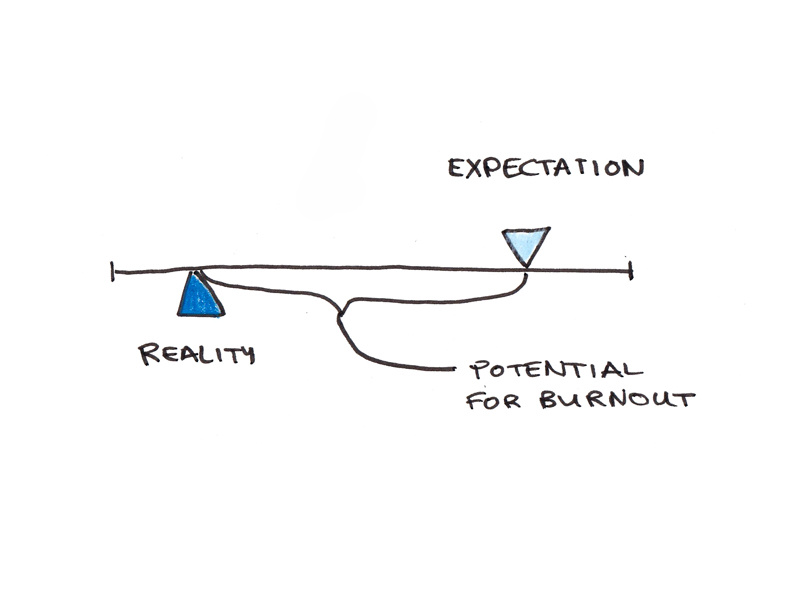
The most compelling explanation for this phenomenon comes from Jonathan Malesic in his book, The End of Burnout. According to Malesic’s research and analysis, burnout does not simply stem from working long hours or performing heavy physical labor. Instead, burnout occurs when the gap between the expectations of a job and its daily reality becomes fundamentally irreconcilable. Individuals who pursue "great" careers find themselves vulnerable to burnout not always because their working conditions are objectively worse than others, but because those prestigious fields naturally attract deeply idealistic expectations.
Malesic’s own professional background offers a clear illustration of this dynamic. Previously a tenured academic specializing in theology, Malesic was initially drawn to his career path because his formative college experiences convinced him that a life spent teaching students about the deeper mysteries of the universe would be profoundly satisfying and socially vital.
However, even after achieving tenure—a milestone that is itself frequently the culmination of a grueling, burnout-inducing professional quest—he discovered a stark disconnect between his ideals and his environment. Most of his students proved indifferent to the teachings, the academic papers he labored over were largely ignored by the broader academic community, and he eventually found that he could barely summon the motivation to drag himself to class.
The lofty expectations Malesic held for his work—the unwavering belief that it would be intellectually stimulating and inherently meaningful—collided violently with the everyday reality of bored students, departmental squabbling, and the relentless, often thankless nature of institutional service work.
To understand the mechanics of this exhaustion, Malesic often reflects on a different chapter of his life: the period he spent working as a parking attendant prior to entering academia. Even though most people looking in from the outside would classify a parking lot job as menial, low-status labor, none of the attendants suffered from burnout. They arrived at their shifts, performed their assigned duties, collected their pay, and went home to resume their real lives. Those lives outside the workplace frequently involved hobbies, community connections, and personal pursuits that imbued their existence with genuine meaning and stability.
The Opposite of Burnout
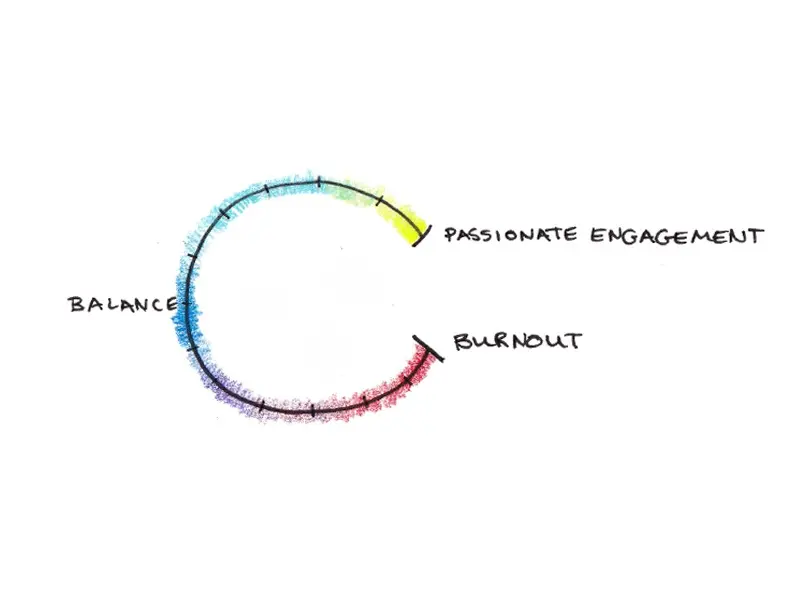
This dynamic suggests a profound shift in how professionals must understand workplace exhaustion: the true opposite of burnout is not simply passionate engagement. Ironically, passionate engagement—along with the unrealistic, perfectionistic expectations it frequently generates—can actively create the ideal psychological and structural conditions for a severe professional crash.
Of course, this realization does not imply that trapped in a dead-end, low-paying job is somehow a cure for psychological distress, nor does it romanticize impoverished labor conditions. Positive material outcomes remain undeniably beneficial. All else being equal, any worker is better off with higher pay, robust health benefits, and societal prestige than without them. Just as the chasm between lofty expectations and a mediocre reality can trigger a psychological crisis, minimal expectations of a basic, healthy work environment can easily be shattered when an individual is trapped inside a genuinely toxic or dysfunctional workplace.
Instead, the true opposite of burnout is balance. Achieving genuine balance means ensuring that a person’s expectations for their employment are reasonably matched by the actual realities of their daily job duties, supplemented by an abundance of alternative sources of meaning and resilience outside the office. These external buffers typically include strong personal relationships, engaging hobbies, healthy physical habits, and a reliable social support network.
A striking irony emerges from this equilibrium: approaching work with measured balance is frequently far more productive over the span of a career than an obsessive, all-consuming devotion to professional output. An individual who sacrifices every aspect of their personal life entirely to their career may achieve accelerated success in the short run, but they simultaneously construct an unstable foundation. If the steady drip of institutional rewards, praise, or professional milestones eventually fails to meet their exceptionally lofty expectations, the resulting psychological crash can be devastating and exceptionally difficult to recover from.
Conversely, the individual who approaches their job as merely one vital piece of a multi-dimensional life—balancing professional responsibilities with active personal pursuits—builds a durable buffer against the pressures of the modern workplace. This psychological insulation allows a worker to continue performing high-quality labor far more consistently and over a much longer timeline, which ultimately accumulates into a greater overall impact and a healthier, more sustainable career.