
For years, the narrative surrounding the Financial Independence, Retire Early (FIRE) movement has focused heavily on the incredible upsides of leaving the traditional workforce. Proponents champion the ability to reclaim one’s time, avoid grueling daily commutes, and eliminate corporate bureaucracy. In his own life, the author has frequently celebrated these exact benefits, noting the profound privilege of raising a son from birth well past his eighteenth birthday without having to make professional compromises. Beyond parenting, that same freedom allowed him to pour thousands of hours into other core values, including family, health, friendships, outdoor adventures, construction projects, and writing.
However, after nearly nineteen years of steering his own ship without external obligations, he has confronted a subtle, paradoxical flaw that accompanies total autonomy—a classic case of first-world problems where a person literally never has to do anything they do not actively want to do.
To most wage-earning individuals trapped in standard forty-hour workweeks, absolute freedom combined with financial security sounds like a utopian dream—a non-stop playground of self-actualization and leisure. Yet, as the author reflects, the reality is far more nuanced and depends entirely on the psychological makeup of the individual. Total freedom and accumulated wealth serve as a magnifying glass, revealing a person’s true strengths, weaknesses, and internal discipline. At one extreme of this behavioral spectrum lies total stagnation and self-destructive comfort, while at the other lies relentless productivity, such as creating and managing global philanthropic foundations focused on medical research and clean energy.
For the majority of his retirement journey, maintaining a healthy equilibrium came somewhat naturally. The first decade was heavily anchored by the intensive demands of fatherhood. Simultaneously, he managed to build and renovate several neighborhood homes, embark on challenging wilderness trips, produce public talks and videos, and author hundreds of blog articles.
In recent years, however, a noticeable shift occurred. As he began to slow down, marshaling the necessary focus and energy to drive these projects became increasingly difficult. Instead of maintaining his historical momentum—constantly working on construction sites or locking into laser-focused writing sessions at the keyboard—he found himself sliding into passive habits. Afternoons increasingly featured early retreats to the couch, digital distractions on his smartphone, and a lingering sense of frustration that he lacked the internal drive to pursue the activities he theoretically loved.
Determined to correct course, he dove deep into the literature of health, wellness, and neurobiology. Over the years, his blog has documented these explorations, highlighting the importance of daily habits, the dangers of excessive physical comfort, and strategies for cognitive optimization. Yet, while these educational frameworks undeniably worked in theory, a recurring behavioral bottleneck emerged. He would learn effective strategies, successfully implement them for a brief period, and then slowly allow his brain to generate rationalizing excuses. Gradually, the consistency would fade, leaving him with an abundance of theoretical knowledge and far too little tangible accomplishment.
A few months ago, a critical self-reflection led to a breakthrough: he realized he was inadvertently sabotaging his own progress by misusing his primary life advantage. Instead of leveraging his freedom to pursue challenging, highly rewarding endeavors, he was using that exact same freedom as a shield to avoid anything that felt uncomfortable or inconvenient in the moment.
Freedom, he points out, is profoundly valuable when it rescues an individual from waking up at dawn, navigating miserable traffic jams, and sitting in an office building for nine hours. But that freedom is entirely squandered if the newly reclaimed hours are merely used to park children in front of cheap cartoons while retreating to a corner to scroll through social media all day. True freedom requires utilizing time for pursuits even more valuable than the career left behind; otherwise, an individual might as well keep the job.
This behavioral trap manifested clearly in his daily routines. While he consistently maintained easy, low-friction habits like tidying the house or socializing with nearby friends, he systematically avoided tasks requiring deeper planning, sustained energy, or intense focus—even though those very tasks reliably produced his highest levels of life satisfaction.
Physical fitness serves as a prime illustration of this dynamic. Recognizing that minute-for-minute, weight training is arguably the single most effective investment of time an individual can make to improve overall well-being, he routinely fell into a predictable cycle of procrastination. He would wake up wanting a good workout, quickly realize he did not feel like enduring the physical discomfort, and subsequently attempt to engineer the "perfect" environmental conditions to grease the wheels. He would wait for ideal weather, ensure his energy levels were optimal, and meticulously set up his home gym the night before, waiting for the golden moment of alignment to finally take action.

Unsurprisingly, that idealized moment rarely materialized consistently. Some weeks saw two or three successful sessions, while others were swallowed by vague excuses about walking more or staying busy elsewhere. Reviewing his training journal would often reveal disheartening gaps of over a week between serious workouts, yielding entirely predictable results: lackluster physical fitness.
The turning point arrived when he recognized the flaw in this meandering, hesitation-driven internal dialogue and replaced it with a starkly direct approach. When the familiar internal voice whispered that he wanted to work out today but did not feel like doing it, he learned to catch the self-sabotage in real-time, treating that precise moment of resistance as an immediate trigger to put on his shoes and head straight to the gym.
By monitoring his own mental hesitations like an eagle, he transformed a trigger for avoidance into a trigger for execution. While the sensation of hesitation feels uncomfortable in the moment and can severely limit personal potential if indulged, running directly toward the avoided task proved to be the ultimate antidote.
Using Extreme Inspiration as Fuel
To test these behavioral concepts, the author discussed them with friends, encountering a stark divide in perspectives. Roughly half related deeply to his feelings of underachievement, while the other half viewed his concerns as absurd, pointing to their own hyper-busy lives raising multiple children, managing multiple businesses, and training for mountain triathlons. These high-achieving peers, while undeniably productive, often appeared chronically stressed—a lifestyle state the author found entirely unappealing. At the same time, his own relaxed schedule seemed overly comfortable to them. Both groups, he concluded, could likely benefit from moving slightly toward the center.
The definitive catalyst that flipped the switch, however, came from listening to a podcast interview featuring one of the world’s most extreme examples of human endurance and mental toughness: David Goggins.
Goggins’ life story, marked by severe childhood trauma and a subsequent obsession with confronting extreme hardship, initially inspired a mix of awe and horror. From surviving near-death experiences during Navy SEAL training and fracturing bones through continuous exertion—such as running 240 miles in four days without sleep—to setting a world record of 4,025 pull-ups in twenty-four hours, Goggins routinely operates far beyond standard human assumptions.
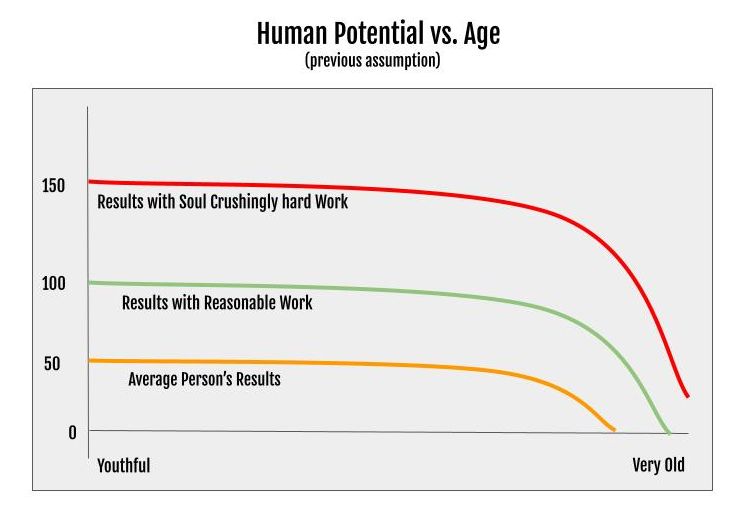
While the author made it clear that he has zero desire to replicate Goggins’ extreme athletic feats, exposure to such an uncompromising mindset fundamentally shifted his perspective on personal limitations. It underscored the reality that nearly all perceived barriers are entirely psychological rather than physical or environmental. Rather than viewing life through a lens of fixed starting points and rigid limitations, he began to view capabilities as vastly more expansive—a realization that opened up new mental horizons.
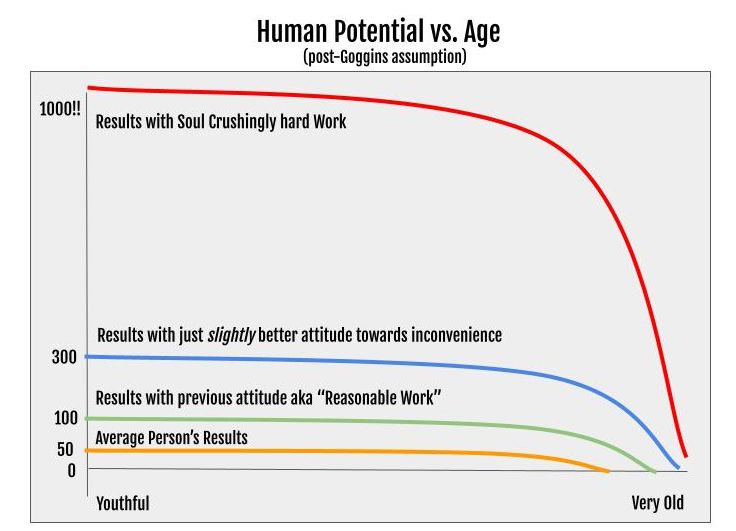
Armed with this fresh perspective, he adopted a concise mantra inspired by the podcast—"You already fucking know what to do"—and plastered it on a piece of cardstock on his bathroom mirror, immediately putting it into practice.
The results were swift and dramatic. By treating both the desire and the lack of desire to work out as immediate triggers to train, he achieved remarkable consistency. Over a four-month period, this adjusted attitude yielded a ten-pound gain in lean muscle mass, restoring the strength and flexibility he enjoyed at age twenty-five and leaving his joints feeling remarkably resilient.
He subsequently applied this same "catch hesitation" technique to other areas, significantly increasing his frequency of outdoor runs after returning to Colorado, organizing more collaborative work sessions at his coworking space, and committing to regular writing. While acknowledging that excessive online work and blogging can be counterproductive, he found the right sustainable balance, supported by the discipline required to push past competing, easier distractions.
To maintain this momentum, he continues to refill his inspiration tank, working through audiobooks by David Goggins, as well as health and leadership texts like Peter Attia’s Outlive and Jocko Willink’s Extreme Ownership. While academic critics occasionally debate the merits of modern health podcasters or question their intensity, the author remains pragmatic, choosing to absorb the motivational messaging that serves his personal growth while leaving the rest behind. Finding figures who inspire higher achievement, he notes, remains a powerful tool for navigating the middle years of retirement—helping ensure that absolute freedom remains a vehicle for fulfillment rather than an excuse for comfort.