This Day in Literary History: The Disastrous Premiere of Chekhov’s The Seagull
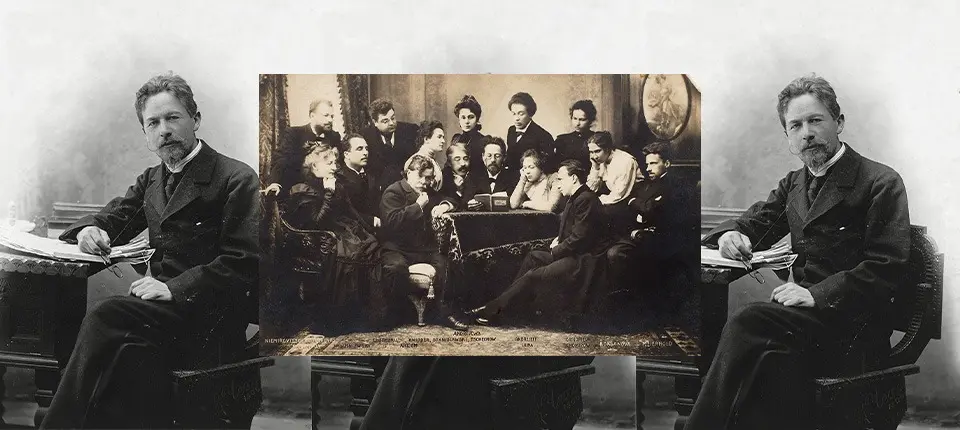
Every week brings its own reminders of the precarious nature of artistic creation, and few historical anecdotes illustrate this better than the events of October 1896. It was on this day that Anton Chekhov’s masterwork The Seagull premiered at the Alexandrinsky Theatre in St. Petersburg, a debut that culminated in a catastrophic theatrical flop.
The production was plagued by a hostile audience, inadequate rehearsal time, and a tone that entirely misconstrued the delicate tragicomedy Chekhov had carefully crafted on the page. The reception was so brutal and bruising that a demoralized Chekhov vowed to abandon playwriting altogether, famously declaring in a letter, “Not if I live to be seven hundred will I write another play.” Fortunately for the history of world theater, the playwright did not stick to his vow. Just two years later, the Moscow Art Theatre, under the visionary direction of Constantin Stanislavski, rescued the play with a legendary staging that understood its rhythmic nuances and psychological depth, cementing The Seagull as a cornerstone of modern drama and proving that even the most enduring masterpieces can face rocky beginnings.
Conversations on Craft and Contemporary Storytelling
Moving from the dramatic missteps of the nineteenth century to the complex narrative structures of today, literary discussions this week delve deeply into the mechanics of storytelling. In a compelling dialogue on Lit Hub, Adam Johnson sits down with fellow acclaimed author Amitav Ghosh to discuss The Wayfinder, exploring the myriad ways a single story can be told, fractured, and rebuilt across different cultural and historical landscapes.
Craft discussions also stretch into the practical and physical realities of writing. In reflections on the creative process, authors examine the raw materials of literature—such as the deliberate messiness of filling and ruining a notebook entirely in pursuit of a novel, as shared by Will Maclean. Similarly, Bonnie Garmus, author of Peck & Peck, sits down with Jane Ciabattari to discuss the delicate art of writing a coming-of-age novel centered around poets and poetry, examining how verse and rhythm shape character development. These explorations of craft are further enriched by considerations of reading culture, including Peter Brown, author of The Wild Robot, sharing insights on what transforms a text into a truly great read-aloud book for audiences of all ages.
History, Witness, and Cultural Memory
Beyond individual works of fiction, this week’s literary commentary places a heavy emphasis on historical reckoning, cultural memory, and the vital role of witnessing. In the realm of international literature, Oksana Lutsyshyna offers a curated guide to essential contemporary Ukrainian literature, highlighting the vital work of writers like Artur Dron, Andriy Lyubka, and Lena Lyagushonkova, whose words serve as a testament to endurance and resilience amid ongoing conflict.
Historical investigations span continents and eras, exploring how communities are shaped by those who came before them. In a deep dive into American history, readers are introduced to the remarkable legacy of Biddy Mason, the Black matriarch who played an instrumental role in helping to build early Los Angeles. Other historical reflections examine the systemic persecution and tragic witch hunts directed against nonconformist women in medieval Europe, while cultural retrospectives turn the lens to the 1960s and 1970s through the evocative documentary photography of Jean-Pierre and Eliane Laffont, who captured the radical shifts of American counterculture. Further expanding our understanding of marginalized histories, new essays explore the rich Jewish history of the Venetian ghetto through five essential books, and E. L. Shen reflects on how the act of writing helped her bridge the generational divide to understand an assassinated ancestor.
Politics, Society, and Modern Anxiety
The literary internet is never divorced from the socio-political realities of the modern world, and this week’s essays confront some of the most pressing systemic issues of our time. Discussions range from the geopolitical consequences of the ongoing devastation in Gaza, which has fundamentally reshaped the political and human landscape of the Middle East, to domestic economic anxieties. Among these, commentators examine how greed-driven corporate algorithms have exacerbated the housing crisis, driving rental prices to unprecedented heights.
Technology and its discontents also take center stage, particularly regarding the publishing industry’s paradoxical relationship with the digital age. Observers critically question why major publishers are currently suing big tech companies over copyright and intellectual property while simultaneously embracing artificial intelligence tools within their own operations. Additional cultural commentary examines the unseen implications of everyday choices, such as the hidden meanings behind the ubiquitous choice of white paint on interior walls, and the complex realities of rural American life that continually resist simplistic, media-driven stereotypes.
Poetry, Reviews, and New Voices
As always, the week rounds out with a celebration of verse, criticism, and new additions to the cultural conversation. Readers can explore Eric Amling’s newly published poem, "Cruise Control," alongside critical examinations of how contemporary cinema shapes public perception of poets and poetry. For those looking to expand their reading lists, critics provide essential reading recommendations, including five must-read book reviews of the week, David Naimon’s latest additions to his "To Be Read" pile, and the Independent Press Top 40 Bestsellers for both fiction and nonfiction.
Whether examining the quiet tragedy of a forgotten historical figure, navigating the turbulent waters of modern technology, or diving into the latest independent press bestsellers, the literary internet this week continues to serve as a vital mirror to the complexities of the human experience.