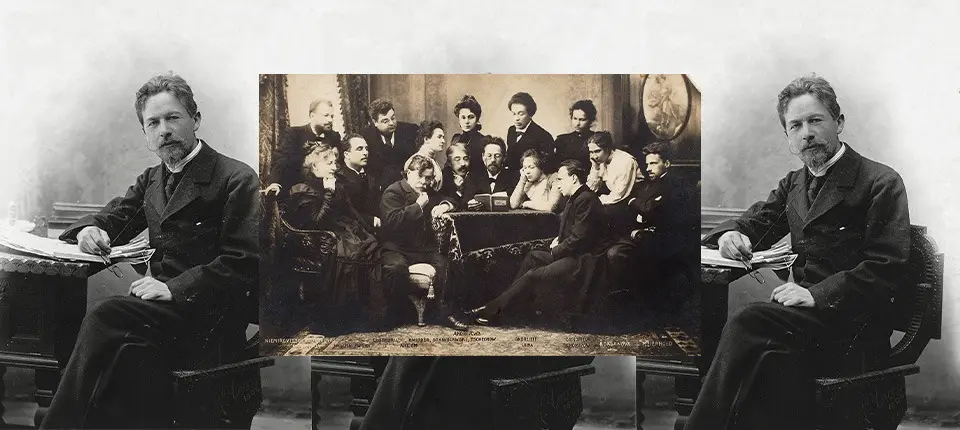
Today marks the anniversary of a fateful evening in theatrical history. In 1896, Anton Chekhov’s masterwork The Seagull premiered at the Alexandrinsky Theatre in St. Petersburg and suffered a thoroughly disastrous flop. The hostile reception from the audience and the critics stung the playwright so deeply that he famously declared in a fit of absolute frustration, "Not if I live to be seven hundred will I write another play." Fortunately for world literature, Chekhov’s vow of silence was short-lived, and his subsequent collaborations with the Moscow Art Theatre transformed him into one of the most revered dramatists in history.
This historic tale of resilience in the face of artistic rejection mirrors the diverse array of conversations, reflections, and deep dives circulating across the literary web this week, capturing everything from contemporary geopolitical shifts and publishing industry ethics to deeply personal essays and cultural critiques.
Among the prominent discussions making waves online is a compelling conversation between Adam Johnson and Amitav Ghosh regarding Ghosh’s latest work, The Wayfinder. The dialogue explores the multifaceted ways in which a single narrative can be constructed, challenged, and shared, offering readers a window into the complex mechanisms of modern storytelling. Meanwhile, public discourse continues to reckon with major global events, including how the ongoing tragedy and geopolitical fallout of the genocide in Gaza have fundamentally reshaped the social, political, and cultural fabric of the Middle East.
The literary community has also turned its attention inward through various reflections on craft, memory, and personal history. In a recent feature, authors stepped up to participate in the Lit Hub Questionnaire, offering candid and unfiltered insights into their writing lives with no wrong answers. For those drawn to the macabre and the uncanny, author Bonnie Jo Campbell curated a chilling selection of seven literary ghost stories capable of haunting even the most skeptical readers. Elsewhere, writer, professor, and pen pal Josefine Kals penned a moving tribute remembering the late writer Stephen Dixon, celebrating a literary life defined by uncompromising vision.
Nonfiction and contemporary cultural commentary are equally prominent across this week’s digital literary sphere. Jane Ciabattari sat down with acclaimed author Bonnie Garmus to discuss Peck & Peck, exploring the nuances of writing a coming-of-age novel centered around poets and poetry. In related cinematic discussions, critics have begun analyzing what three recent films reveal about contemporary societal views on poets and the poetic form itself, questioning how artists are framed within popular media.
Historical reflections continue to provide essential context for understanding modern societal structures. Scholars and journalists have examined how historical newspapers played a critical role in democratizing knowledge and fostering civic participation among the public. In contrast, other historians and essayists have cast a critical eye on darker chapters of the past, exploring the systemic slaughter of nonconformist women during medieval European witch hunts and examining the complex, multifaceted history of the Venetian ghetto and its enduring place within Jewish history.
On a broader cultural scale, modern writers are using the written word to process ancestral trauma, local history, and social justice. E. L. Shen shared her deeply personal journey of coming to understand her assassinated ancestor through the act of writing about him. Meanwhile, civic and civil rights narratives have taken center stage, highlighted by Anand Giridharadas’s examination of how the Reverend Al Sharpton has worked for decades to shape and guide the national narrative of justice. This remembrance is echoed by Al Sharpton himself, who recently penned a heartfelt tribute honoring his late mentor, Jesse Jackson, urging the public to keep hope alive in turbulent times.
The intersection of modern economics, technology, and everyday life has also sparked fierce debate among literary and cultural critics. Amid widespread housing anxieties, analysts have pointed a finger at greed-driven corporate algorithms as a primary culprit behind skyrocketing rent prices. In the tech and publishing sectors, a fascinating paradox has emerged, with industry observers questioning why major publishers are actively suing big tech companies over intellectual property violations while simultaneously embracing artificial intelligence tools within their own operations.
Environmental and regional concerns continue to inspire vital literary work. Writers have emphasized the urgent need to preserve fragile boglands and peatlands, highlighting both their unlikely ecological beauty and their hidden environmental dangers. Moving past tired cultural clichés, other essays have investigated the rich, varied realities of rural American life, demonstrating that small-town existence means something entirely different depending on who you ask.
Personal essays this week have leaned into the unexpected, ranging from the profound life lessons learned through forming a unique relationship with a rescue raccoon to Melissa King’s reflections on what cooking, care, and a Cantonese-American upbringing in Southern California truly meant. Poets and novelists alike have also shared intimate glimpses into their creative processes, including Will MacLeod’s candid thoughts on "fucking up a notebook" to finally write a novel, and Eric Amling’s new poem, "Cruise Control," which is now available for readers online.
As always, the week’s literary offerings are rounded out by vital resources for avid readers. Review roundups offer a guide to the five essential book reviews everyone should read right now, while the Independent Press Top 40 Bestsellers lists provide an up-to-date look at what readers are buying across both fiction and nonfiction categories. Whether through discovering new poetry, exploring the forgotten history of Biddy Mason—the Black matriarch who helped build Los Angeles—or diving into essential reading lists on North Korea’s cult of personality, the literary internet continues to prove that storytelling remains our most vital tool for understanding the world.