Today in literary history, we look back at a notable moment from November 3, 1871, concerning one of America’s most celebrated poets, Walt Whitman, and a remarkably passionate admirer who would go on to become one of his most important early critics and champions.
TODAY: In 1871, Walt Whitman Declines Anne Gilchrist’s Offer of Marriage
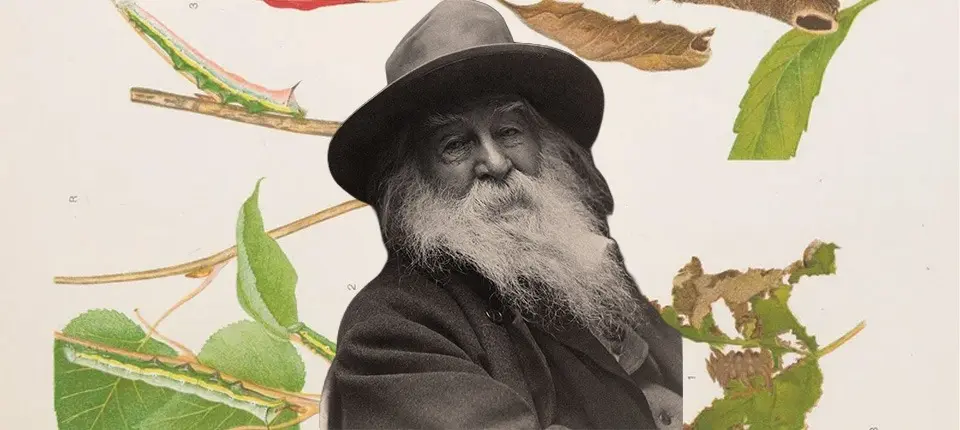
On this day in 1871, the celebrated American poet Walt Whitman formally declined a marriage proposal from the English writer Anne Gilchrist. The rejection marked a pivotal moment in a remarkably intense, one-sided trans-Atlantic correspondence that had blossomed from Gilchrist’s profound, almost spiritual devotion to Whitman’s masterwork, Leaves of Grass.
The story of their relationship remains one of the most fascinating chapters in nineteenth-century literary history. Anne Gilchrist, a talented essayist and the widow of Alexander Gilchrist—the biographer of painter William Blake—first encountered Whitman’s poetry in 1869 through a selection edited by Dante Gabriel Rossetti. While many Victorian readers and critics were scandalized by the raw sensuality, unconventional free verse, and democratic fervor of Leaves of Grass, Gilchrist experienced a profound revelation.
To Gilchrist, Whitman’s poetry was not merely art; it was a life-altering force that offered a radiant, liberating vision of human existence, body and soul. So deeply moved was she that she wrote an impassioned essay defending the poet and later took the extraordinary step of proposing marriage to a man she had never met, offering to pack up her family and move from England to the United States to share her life with him.
Whitman, protective of his solitude and his carefully cultivated persona as the solitary bard of America, responded kindly but firmly, advising her against the journey and attempting to temper her romantic expectations with caution. Despite the rejection, Gilchrist remained undeterred in her profound admiration. She eventually moved to the United States with her children in 1876, spending three years living near Whitman, developing a genuine friendship with him, and continuing to champion his work on both sides of the Atlantic. Her pioneering critical essay, A Woman’s Estimate of Walt Whitman, remains a landmark text in early Whitman scholarship, demonstrating how literature can bridge vast geographical and cultural divides to forge deep human connections.
As the literary world continues to examine the personal lives behind iconic texts, the episode between Whitman and Gilchrist reminds us of the profound, sometimes overwhelming power that books can hold over readers. It highlights an era when poetry was not just a quiet pastime, but a vital, disruptive force capable of inspiring fierce loyalty, intense devotion, and life-changing decisions.