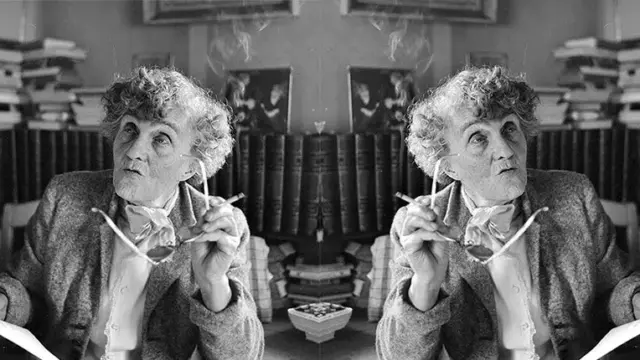
Owens not only lacked an undergraduate degree, but she performed poorly in school, where teachers frequently described her as a hopeless case. Her life path was forged far outside the traditional literary salons. Her first husband was a traumatized war veteran who self-medicated with alcohol, and with whom she had her first four children. Following his death at the age of forty-three, she supported her family by working as a typist, taking factory shifts, and cleaning houses. She later married again, had another three children, and finally, at the age of fifty-eight, published her debut story collection, Gentlemen of the West, in 1984.
Owens was discovered at her local writing group—which she famously remarked she joined simply to get out of the house—by the visiting writers James Kelman, Alasdair Gray, and Liz Lochhead, three towering figures of contemporary Scottish literature. A 2014 obituary in The Scotsman described her upbringing as “poor, but not uncommonly so,” a summary that echoes Kelman’s own description of the life his reviewers and detractors viewed as singularly appalling and raw: “My own background is as normal or abnormal as anyone else’s.” Among her contemporaries, Kelman stands out as Owens’s most direct literary antecedent.
Although formally distinct—Kelman writes the Glasgow dialect true to everyday speech to trap the reader inside his narrators’ monologues, while Owens employs staccato sentences reminiscent of Gertrude Stein, where aphoristic simplicity yields profound effects—both authors belonged to a literary movement that took politicized pride in the local. They were insistent on the validity of colloquialism in both style and substance, firmly rooted in socialist principles rather than a chauvinist brand of nationalism. Kelman, much like Owens, consistently refused the characterization that his work depicted life among the Scottish working class as something exhilaratingly foreign to the presumed reader.
The Return of A Working Mother and the Weight of Domestic Chaos
A Working Mother, published in 1994, marked Owens’s return to the literary scene following a devastating fallow period. This creative silence came in the wake of the 1987 death of her son, Patrick, who was murdered outside the family home at the age of nineteen. Perhaps relatedly, the novel is an intensely autobiographical work, reflecting on the exhausting chaos of raising and supporting children amidst substance-fueled turmoil.
The book is a brief shock of a narrative, veering effortlessly between the confining mundanity of its narrator Betty’s domestic life and the almost slapstick moments that intrude upon it whenever she ventures into the outside world to secure employment. Her husband, Adam, is too addled by trauma stemming from his service in the Second World War to hold down a steady job. He leaves their bed at night, crawling on all floors in his sleep while sweating out his wartime memories. Adam’s severe alcoholism and PTSD were directly modeled after Owens’s first husband.
The couple share an affection that is worn thin, bickering with real melancholy and malice. At other times, they function more like a companionable Punch and Judy show playing out before their two children, who erupt sullenly and spiritedly by turn. In one quintessential domestic clash, their son Robert screams, “I can’t eat no more of this rubbish,” and makes for the back door in protest of a dinner consisting merely of chips with no sauce.
The couple are never more animated than when sharing a bottle of “sweet, sickly, but somehow lovely South African wine.” The only improvement on getting drunk together at home is doing so at the local pub with their friend Brendan, an appealingly oafish character whom the couple treat as something between a pet and a foster child—and whom Betty secretly pursues as a lover. Conversations between Betty and Adam concerning the dire state of their lives are regularly peppered with punchlines that both mock and mitigate their poverty. Their exchanges establish a conspiratorial rhythm that is undeniably charming, revealing that they are bound together not merely by circumstance, but by a nihilistic, wearily comic bond.
“I’ve got a job,” Betty tells Adam in the novel.
“Good for you. I can now relinquish all responsibility for this household then?”
“And I can save up for a divorce.”
“So, let’s celebrate,” Adam replies.
Navigating Workplace Realities and Surreal Everyday Life
At work as a typist for a legal firm, Betty is confronted by a woman in even more desperate straits than her own. Mai, gauche and plainspoken, is an unwed single mother—too scandalous a situation to be openly discussed in a professional office. During shared lunch breaks of pie and beans, Mai laments her single status and voices her desire to be married with grim determination. She wears dramatic makeup, featuring spidery mascara and dyed jet-black hair. Betty is slightly excited by the novelty of going out with a woman who turns heads, and perhaps comforted by the presence of someone whose circumstances appear worse than her own. When she reluctantly agrees to take Mai to the pub to be introduced to the baleful Brendan, Betty is surprised, but not unduly worried, to discover that Mai ultimately prefers Adam’s company.
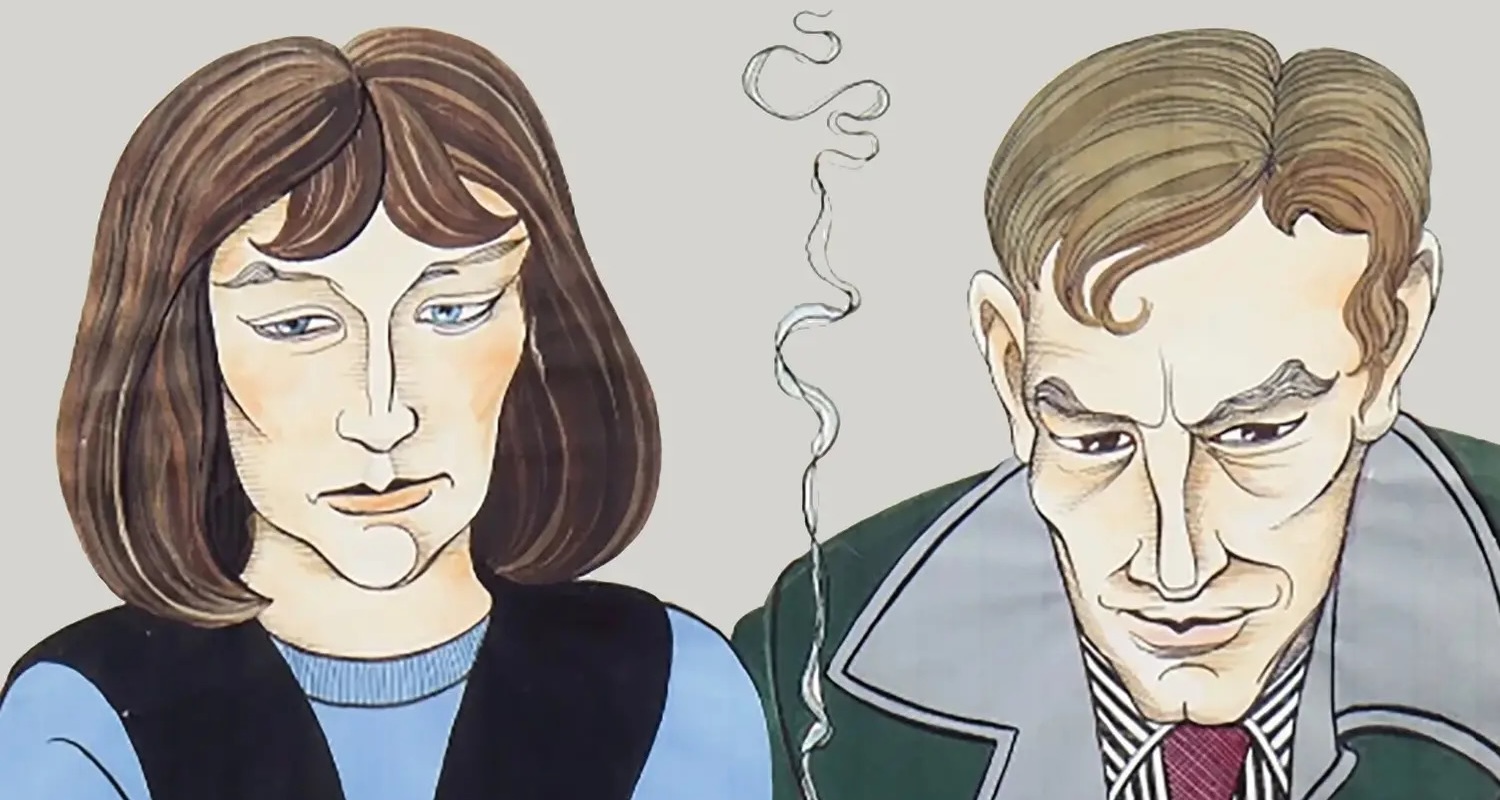
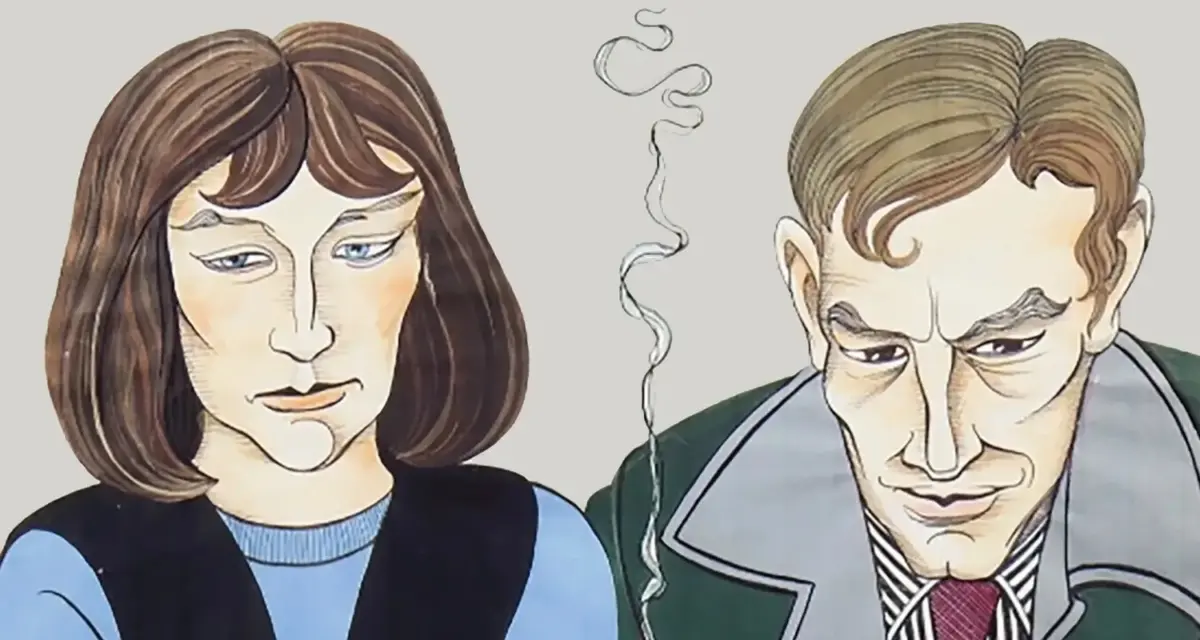
A Working Mother derives its singular tone largely from the way Owens distributes narrative weight with curious evenness. This is not to suggest flatness—the book is consistently engaging—but rather that Owens discovered a novel method for conveying the surrealness of everyday life. In her fictional world, running to the local shop for a bottle of alcohol is treated as an event just as pertinent as watching a workmate make romantic overtures toward your husband right in front of you.
Those events which usually serve as traditional narrative scaffolding are systematically stripped of inherent meaning. For Betty, losing a prized umbrella warrants just as much attention and emotional bandwidth as recalling her wedding day. Her affair with Brendan is similarly equivocal. She wonders idly why she might love a thuggish, unemployed laborer who is not even better looking than her own husband, but the question does not cause her deep agony. She observes the discrepancy between reason and action neutrally, willingly falling back into the wet grass of their sodden nighttime liaisons to meet him once more. This passivity in Betty becomes so pronounced that it transforms into a deliberate philosophy.
Although A Working Mother is frequently categorized as a book about a woman married to an alcoholic, Owens’s shrewd, ironic style resolutely refuses the obvious trappings and moralizing temptations of such a narrative. There is no misery porn here, no calculated attempt to move the reader by lingering over indignities, and nothing plaintive in the prose. The reader easily understands why Betty and Adam enjoy drinking together, and why they continue to do so with Brendan. If it is no mystery why their drinking ultimately leads to ruin, it is equally clear why they persist—escaping the single-note anguish that plagues conventional addiction narratives. The brutality of their existence is never negated or trivialized by comedic warmth; instead, the two simply coexist, exactly as they do in real life.
Unmasking Class Perceptions and Intellectual Condescension
Another major presence in A Working Mother is Betty’s boss, Mr. Robson, who takes a special interest in her and invites her to his home outside of work hours to help type his book, The Study of Human Behaviour in Animals. Mr. Robson is elderly, genteel, and flattering, yet his encounters with Betty harbor a sordid undercurrent. While he does not propose direct sexual contact, he routinely masturbates behind a folding screen while Betty patiently waits on the other side. Reflecting on these episodes, she notes, “As I wasn’t involved in this I considered I had been let off lightly.”
Mr. Robson’s attentions cause friction at home, as Adam appreciates the extra income but resents his wife’s diverted efforts. However, what is most troubling about Mr. Robson is not his carnal interest in Betty, but a seedier, more clinical curiosity. When she recounts trouble with Adam and his difficulties recovering from wartime trauma, Mr. Robson presses for specific details regarding its psychological and physical impact, patting her in a fatherly way above the knee before asking explicitly about sexual performance.
Later, Betty discovers that Mr. Robson has been observing her behavior and recording notes dispassionately, treating her as though she were a laboratory specimen. Looking back, his initial kindness reveals itself not as genuine pleasantry, but as a manifestation of a disdainful fascination with a working class he views as fundamentally bestial. She fascinates him—her reckless oscillations, her lust for Brendan, and her fatalism—as if she represented a peculiar new breed of animal.
When Owens’s son, John Crosbie, mentioned to his mother that he had read a critic describe the novel as an important book about alcoholism, Owens responded dryly that she was unaware she had written a book about alcoholism. Just as her narrator rejects Mr. Robson’s attempts to categorize her person, Owens consistently rejected the impulse of critics to neatly categorize her work.
During Owens’s lifetime, the unwritten rule of literature often dictated that an author could make art about the poor only if they maintained a safe distance, scrutinizing them and slotting them into socio-economic subheadings to illustrate various social ills or improvements. Literature demanded the feckless poor, the striving poor, the oblivious cheerful poor, the drug addict, and the drunk.
When James Kelman won the Booker Prize in 1994, the decision was met with disgust by the literary establishment, which was appalled by the profanity and informality of the Glasgow working-class life detailed within the novel. One prominent English columnist famously denounced Kelman as “an illiterate savage.” Meanwhile, Owens was told by a publisher that they had simply no interest in writing about poor people—the implicit message being that the condition of poverty cancels out the fundamental status of being a person.
In A Working Mother, Agnes Owens advanced the radical notion that an individual can be both poor and fully human, and that any given life richly rewards intelligent attention when depicted with the fine, funny, and incandescent brilliance that characterized her own worldview.