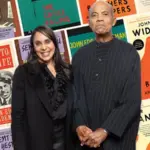
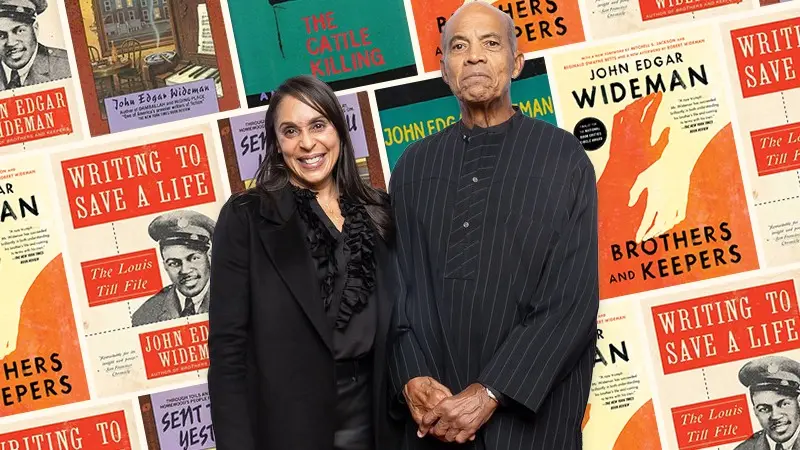
The accolade was presented at the second annual Harper’s Magazine Awards Ceremony, which took place on Monday, October 26, 2026, at the historic Morgan Library & Museum. The event brought together leading figures from the literary world to celebrate a career defined by artistic fearlessness, moral clarity, and an unwavering commitment to exploring the complex fabric of American society. Among the evening’s most poignant moments was a heartfelt tribute delivered by Pulitzer Prize-winning poet Natasha Trethewey, who reflected on Wideman’s monumental impact not only on the national literary canon, but on her own formation as a writer and thinker.
For nearly six decades, Wideman has maintained a prolific and vital literary output, publishing essential works that fearlessly grapple with the legacies of America’s troubled and fraught past. His writing navigates the intricate intersections of collective history, individual trials, race, culture, and politics. Across a vast and varied bibliography encompassing novels, short fiction, memoirs, and nonfiction, Wideman has consistently interrogated the ongoing quest for justice in a world that often swings unpredictably between equity and disparity. He approaches these monumental themes with a distinct ferocity and independence of mind, pairing a searing vision with absolute moral clarity.
Trethewey recalled that her introduction to Wideman’s work came in 1992 through Sent for You Yesterday, the third installment in his celebrated Homewood Trilogy and the book that earned him the first of his two prestigious PEN/Faulkner Awards. At the time, Trethewey was preparing to enter a Master of Fine Arts program at the University of Massachusetts. Although she had already dedicated herself to the writing of poetry, her primary aspiration was not merely to attend the institution, but specifically to study under the guidance of John Edgar Wideman.
Reflecting on that choice, Trethewey noted that it proved to be one of the most consequential and beneficial decisions of her life. The mentorship extended far beyond the brilliance of his published texts, which already served as a comprehensive tutorial in craft and conscience. Instead, the profound impact came from Wideman’s personal presence—his unique way of navigating the world with grace, dignity, wit, and a piercing intellect, even when confronted with personal hardship and suffering.
During her remarks, Trethewey shared a deeply personal memory from early in her graduate studies, a moment that fundamentally shifted her trajectory as an aspiring artist. Distraught and seeking guidance after a prominent poetry professor dismissed her work and her very motivations for writing, she had sought out Wideman in his office. The professor in question had curtly advised Trethewey to unburden herself of her racial identity, to unburden herself from the grief surrounding her mother’s tragic death, and to simply pour her unfiltered emotions into conventional verse.
Distressed by this rigid and dismissive pedagogy, Trethewey found an entirely different kind of listening in Wideman. As she detailed during the ceremony, he listened intently to her concerns, his gaze eventually turning toward the window. In that quiet gesture, it seemed to her that he was looking far beyond the immediate confines of the office, gazing simultaneously forward and backward across vast expanses of time and space. After a thoughtful pause, he offered a simple, declarative pronouncement: “You have to write what you have to write.”
Though remarkably concise, the declaration acted as an immediate turning point in Trethewey’s life. It carried the emotional and artistic weight of permission granted by the highest possible authority—a writer whose own courageous personal and familial reckonings were already well known to her through masterworks such as his memoir Brothers and Keepers. Trethewey noted that this lesson resonated even more deeply years later, when she was forced to confront her own family tragedies, including the incarceration of her brother and the divergent paths their lives ultimately took.
She described returning to Wideman’s work again and again for the enduring education it provided. In Brothers and Keepers, Wideman achieves a stunning mastery of form by seamlessly melding his own narrative voice with that of his brother, Robby. Trethewey characterized this literary achievement as a remarkable act of empathy, standing as a supreme example of the ethical responsibility required when an author presumes to write about the lives of other human beings, particularly those who have been denied a platform from which to tell their own stories.
Acknowledging the well-documented psychological and creative damage that can often be inflicted upon young writers within traditional academic graduate programs, Trethewey expressed her belief that Wideman acutely understood the transformative power of his own encouragement, particularly for young Black writers. She drew a parallel to the themes of Wideman’s deeply researched and imaginative meditation Writing To Save a Life, which examines the intertwined historical tragedies of Emmett Till and his father, Lewis Till. In that same spirit, Trethewey realized that Wideman intuitively understood her own fundamental artistic necessity: the need to write in order to save a life. This imperative encompassed not only saving her own existence in the immediate aftermath of profound trauma and tragedy, but also rescuing the lives of her loved ones—her people—from the constant threats of erasure, forgetting, marginalization, and diminution. She identified this realization as the single greatest lesson of her early career, a precious gift bestowed by a veteran author who has sustained a fierce, uncompromising reckoning throughout his remarkable life in letters.
Trethewey also recounted the profound impact of attending a reading for Wideman’s novel The Cattle Killing during her time at the University of Massachusetts. Sitting on the floor of a packed Memorial Hall, completely absorbed by the intense cadence of his language and his hypnotic, rhythmic prose, she experienced a profound awakening regarding the responsibilities of the artist. She came to understand the absolute necessity of contending with personal history alongside and directly through an active engagement with public history. That experience cemented her belief that the true role of a writer is to relentlessly pursue truth, to confront difficult and uncomfortable knowledge in the service of enlarging human understanding, and to utilize literature as a vital means of redress—which constitutes a profound form of justice in its own right.
As the author of more than twenty books spanning novels, short fiction, memoirs, and powerful nonfiction, Wideman has long been hailed by critics and peers alike as a master of language, a true generational talent, and one of the premier fiction writers in American history. Within the esteemed and often insular world of American letters, he is recognized not merely as a literary luminary, but as an indispensable architect whose groundbreaking work has actively shaped, and continues to define, what the American literary canon at its absolute best truly is and ought to be.