
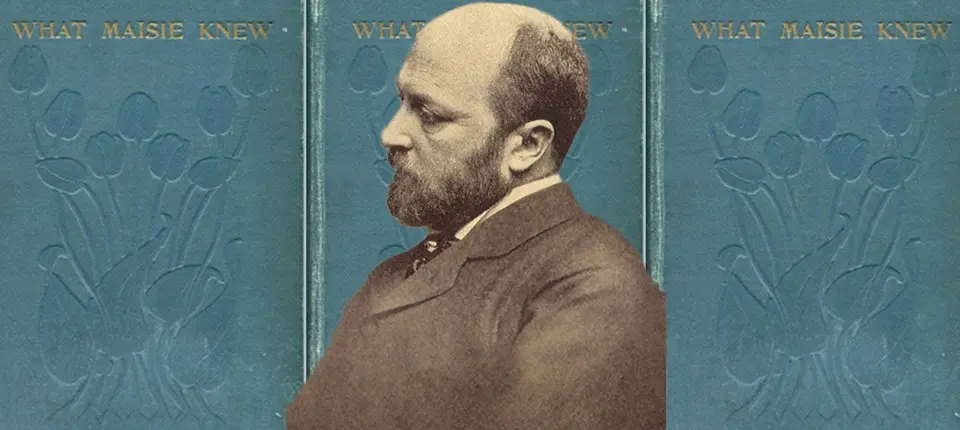
As we look back at the milestones that shaped contemporary reading and writing culture, today’s literary calendar brings us to September 18, 1897—the momentous day when Henry James’s acclaimed novel What Maisie Knew was officially published in book form. This publication milestone followed its initial reception as a serialized work, marking another major chapter in the illustrious and intricate career of one of literature’s most celebrated stylists.
The journey of What Maisie Knew from a serialized magazine piece to a standalone volume represents a fascinating period in late-nineteenth-century publishing and in the artistic development of Henry James himself. Serialization was a dominant mode of literary production during the Victorian era, allowing authors to engage audiences incrementally and build suspense over time. However, the transition to book publication often provided authors with the opportunity to present their work as a unified artistic vision, free from the segmented pacing required by periodical installments. For James, whose intricate prose style and deep fascination with the internal psychological landscapes of his characters demanded careful attention, the book format offered a permanent home for a story that would go on to challenge and captivate generations of readers.
Set against the backdrop of late-nineteenth-century London society, What Maisie Knew explores complex themes of innocence, corruption, and adult morality through the perceptive eyes of a young child. The narrative centers on Maisie Farange, a young girl caught in the bitter and acrimonious divorce of her deeply selfish parents, Beale and Ida Farange. As her parents remarry and introduce new stepparents into the fractured domestic dynamic, Maisie is shuttled between various households, forced to navigate an adult world defined by manipulation, neglect, and emotional volatility.
What elevates the novel, and what has cemented its enduring status in the canon of literary fiction, is James’s brilliant narrative strategy. Rather than presenting the sordid details of the marital discord from an omniscient or openly critical adult perspective, James restricts the narrative viewpoint primarily to what the young protagonist can observe, hear, and comprehend. This narrative lens creates a profound tension between the innocence of the child and the sophisticated corruption of the adults surrounding her. Maisie’s evolving understanding of the world around her unfolds subtly, revealing the moral failings of her caretakers not through explicit condemnation, but through the poignant accumulation of her observations.
Literary historians and critics have long regarded What Maisie Knew as a masterclass in narrative technique and psychological depth. Henry James was a pioneer of the psychological novel, deeply interested in the nuances of human consciousness, perception, and interpersonal dynamics. In this novel, he pushed the boundaries of limited point-of-view storytelling, demonstrating how a narrative could be deeply revealing precisely because of the limitations and filters imposed by its focal character. The novel anticipates many of the modernist concerns that would come to dominate twentieth-century literature, particularly the exploration of subjectivity and the fragile nature of childhood innocence in a complex, often hostile adult environment.
The legacy of What Maisie Knew extends far beyond its initial publication in the autumn of 1897. Over the decades, the novel has continued to inspire scholars, students, and contemporary writers who study James’s meticulous craftsmanship and his ability to mine high drama from the quiet, unspoken moments of domestic life. Its exploration of custody, parental alienation, and the emotional resilience of children remains startlingly relevant to modern readers, proving that James’s insights into human nature transcend the specific social conventions of the Victorian era.
As contemporary literary platforms, critics, and readers reflect on this historical anniversary today, the publication of What Maisie Knew serves as a reminder of the enduring power of narrative innovation. It highlights how a work born out of the serialized print culture of the late nineteenth century could evolve into a timeless exploration of consciousness, cementing Henry James’s legacy as a foundational figure in the history of the novel. From academic seminars analyzing Jamesian syntax to contemporary discussions regarding the representation of childhood in fiction, the echoes of Maisie Farange’s story continue to resonate across the literary landscape today.