
Throughout a lifetime of undertaking diverse learning projects, experienced self-directed learners have experimented with everything from sprawling, multi-year endeavors to intense, one-month sprints. What becomes clear over years of trial and error is that getting "good enough" is seriously underrated in modern culture. Society routinely lionizes mastery, celebrating the rare individuals who spend decades honing a hard-won, elite ability. That dedication is admirable and necessary for certain professional fields, but it represents an excessively high threshold for personal enrichment. Going from absolute zero to functional competence in a short period of time can be enormously satisfying, and it can end up having an outsized, transformative impact on your daily life, career versatility, and cognitive agility.
Refining the Strategy for Creating Successful, Short Learning Projects
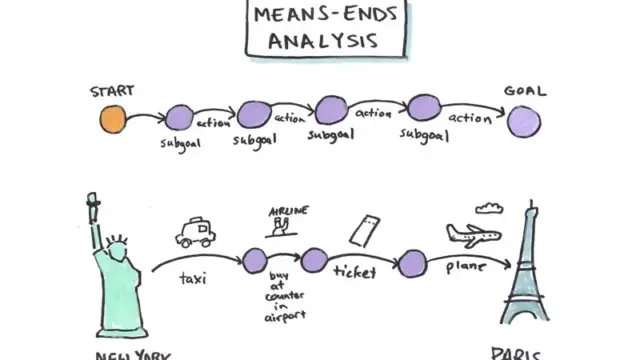
In a recent video essay exploring the mechanics of rapid skill acquisition, veteran self-education practitioners outlined a structured, three-step process designed to quickly get up to speed in a complex skill or academic topic. The fundamental premise behind this approach is that most beginners fail not because they lack intelligence or dedication, but because they lack a coherent framework for how to approach an unfamiliar domain.
By learning to execute a methodical approach to mapping, selecting paths, and planning, it becomes entirely possible to achieve remarkable competence even within a fairly short period of time. Yet, reaching this level of operational clarity did not happen overnight; it was forged through years of missteps, miscalculations, and subsequent course corrections.
Analyzing Three Notable Missteps Along the Way
While it is naturally more fun to discuss polished successes, examining mistakes often provides the most valuable insight into how frameworks evolve. Over years of experimentation, several prominent learning projects ran into predictable snags that ultimately helped shape a more resilient methodology.
One notable hurdle occurred during a portrait drawing challenge, where the lack of an initial structural map forced an improvised mid-stream correction. Without understanding the fundamental anatomy and proportions of the face before diving into charcoal and paper, the project required unnecessary backtracking. Similarly, an ambitious plan to tackle difficult Asian languages before traveling abroad suffered from a failure to prioritize the foundational building blocks of those linguistic systems. Choosing a different path initially—one that emphasized basic phonetic and grammatical building blocks—would have provided a vastly superior starting point for the intense demands of communicating in a foreign environment.
Another classic miscalculation arose during an attempt to master quantum mechanics. By failing to construct a comprehensive operational plan from the very beginning, the scope of the project was fundamentally misunderstood. The actual goal was not merely to absorb abstract quantum principles, but to simultaneously refresh decades-old calculus knowledge and fill in missing prerequisite coursework. Recognizing those hidden educational debts from day one would have shifted the entire timetable and resource allocation considerably.
While no framework can guarantee that every future project will unfold with absolute smoothness, the overall process has steadily matured through the honest evaluation of past errors. By creating a map and understanding how a given skill fundamentally works, learners can chart an effective course rather than wandering blindly into a difficult subject.
Exploring the Potential of a Thirty-Day Commitment
The evolution of these learning strategies ultimately points back to a fundamental question for anyone interested in personal growth: What would you learn if you had just thirty days to dedicate to it?
Even for individuals who cannot study full-time, carving out a modest block of time each day to focus intentionally on a specific skill or topic can yield surprising dividends. Whether the objective is picking up a new language, understanding a complex scientific theory, or acquiring a practical creative trade, the barrier to entry is lower than it appears, provided the approach is structured properly.
As individuals contemplate what they might tackle if given a focused month of study, the underlying message remains clear: mastery is not the only valid destination. Often, the journey from zero to competent is where the true value lies.