Beyond the immediate legal dispute, King’s public statement offers a profound, beautifully articulated defense of translation as an independent art form. Addressing the intricate nature of literary translation, King compared the process to other creative mediums where interpretation transforms the raw material. She likened translation to adaptation, noting how a filmmaker reinterpreting a book for the screen or a singer like Whitney Houston covering Dolly Parton’s iconic song "I Will Always Love You" demonstrates that while two versions may be debated, their distinct differences are indisputable.
Expanding further on this artistic metaphor, King described translation as a performance. If the original author functions as a scriptwriter, composer, or choreographer, the translator steps into the role of the actor, musician, or dancer. Every single artistic choice made by the translator profoundly impacts the ultimate delivery, resonance, and reception of the original work. This perspective challenges the persistent misconception that translation is merely a mechanical word-for-word substitution, highlighting instead the creative heavy lifting required to bridge two entirely different linguistic and cultural landscapes.
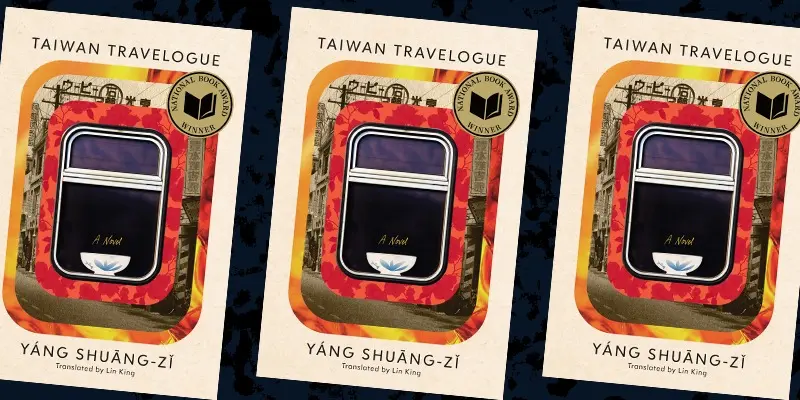
King also addressed the false binary often imposed upon bilingual literary creators who are frequently asked whether they identify primarily as writers or translators. Asserting that all translators are writers, even if not all writers are translators, she emphasized the immense creative agency required in her work. She noted that she personally chose every single word in the English edition of Taiwan Travelogue from the chaotic expanses of the English lexicon. Highlighting the separation between the original creation and its translation, she pointed out that the author, Yáng Shuāng-Zǐ, cannot read her English version—much in the same way King will not be able to read most of the forthcoming international translations of her own forthcoming novel. In those instances, she notes, the respective translators will be the ones writing those books, not the original authors.
This robust defense of the translator’s craft has garnered strong support from publishing professionals. Yuka Igarashi, Executive Editor at Graywolf Press, the publishing house responsible for releasing Taiwan Travelogue in the United States, strongly echoed King’s sentiments. Igarashi remarked that King’s inspired translation brilliantly demonstrates the validity of her argument: that translators are indeed writers in their own right whose copyrights must be fully respected. Describing translators as essential artists, cultural mediators, and advocates, Igarashi emphasized their indispensable role in the global dissemination of literature and expressed Graywolf Press’s full support for King’s courageous effort to bring visibility to vital, yet frequently overlooked and unacknowledged, literary labor.
King was quick to clarify that her legal battle is entirely divorced from financial motivations, a reality that will surprise no one familiar with the modest economic landscape of literary translation. In fact, King’s initial involvement with the book began as a labor of love; she volunteered without compensation to translate Táiwān Mǎn Yóu Jì and personally pitched the project to prospective US publishers. Characterizing translation as a famously difficult financial endeavor, King noted that she undertakes the grueling work simply because she deeply believes in the literary merit of the books she translates.
By taking this dispute to court, King is looking past the immediate infraction to challenge the broader, systemic business practices that have plagued the translation community for generations. She hopes her lawsuit will establish a vital new legal precedent and disrupt the entrenched "status quo" that has allowed unauthorized third-language translations to slip past legal and ethical boundaries unchecked. Questioning the industry’s reliance on historical precedent, King challenged the notion that an appeal to tradition can ever justify ongoing rights violations, writing that "it’s always been done this way" has never been a sufficient reason to continue infringing upon people’s legal and moral rights.
King concluded her statement with a passionate, direct appeal to the global publishing community, urging publishers of translated fiction to seek explicit permission rather than relying on retroactive apologies. She reminded them that if they truly love the literature they publish, they must respect the rights of the translators who fundamentally rewrite these stories, thereby making global literature accessible across language barriers. King’s complete statement and ongoing updates regarding her legal proceedings remain available to the public on her official Instagram account.