This monumental discovery was made by a collaborative team of researchers hailing from China, Thailand, and Mexico. Their extensive fieldwork and subsequent laboratory analysis revealed that the organism represents far more than a mere new species; it constitutes an entirely new genus and a brand-new family of fungi within the expansive Phylum Ascomycota.
Detailed analysis of its genome, combined with advanced molecular clock techniques, suggests that this newly minted family, Dianjunaceae, arose approximately 65 million years ago. This emergence occurred strikingly soon after the catastrophic Cretaceous-Paleogene mass extinction event that wiped out the dinosaurs and countless other terrestrial animals and plants. In the wake of that planetary upheaval, newly cleared ecological niches for wood-decomposing fungi suddenly opened up—a specialized niche that D. rex and its ancestors have successfully inhabited to this day.
"This remarkable species represents a new fungal family, Dianjunaceae, and provides a rare window into the evolution of extreme fungal body forms," said Dr. Indunil C. Senanayake, an associate professor at the Germplasm Bank of Wild Species at the Kunming Institute of Botany in China and the corresponding author of the groundbreaking study, which was published in the journal Frontiers in Fungal Biology. "The discovery illustrates how much fungus biodiversity remains to be discovered in East Asian forests."
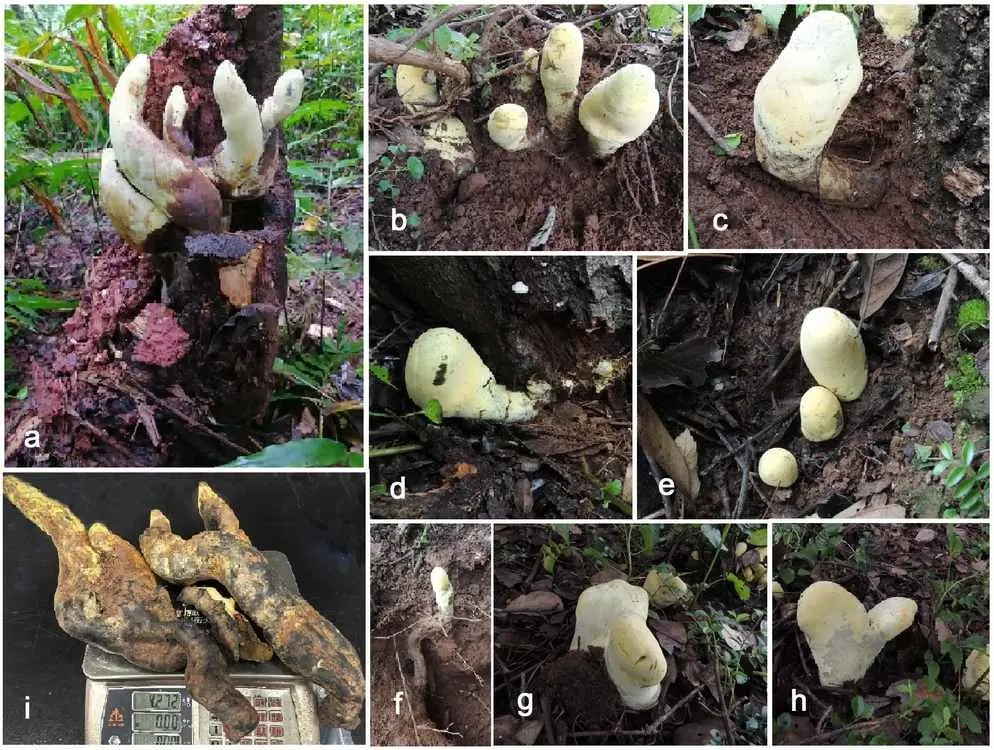
During exploratory fieldwork traversing a diverse mix of temperate coniferous forests and tropical rainforests in China’s Yunnan province, researchers from the Kunming Institute encountered large, striking, whitish fruiting bodies—scientifically known as stromata—growing conspicuously on the woody roots of Chinese cork oaks.
To understand the nature of this organism, it helps to look at its broader biological family. With more than 64,000 officially cataloged species, Ascomycota stands as the largest and most diverse group of fungi on Earth. Unlike basidiomycetes, which typically produce classic umbrella-shaped mushrooms, ascomycetes do not grow true mushrooms. Instead, they produce specialized fruiting bodies that release microscopic spores from tiny, sack-like structures located either inside or directly on the surface of the tissue.
While the average reader might not instantly recognize an ascomycete by its formal scientific name, these organisms represent one of the single most influential groups of living organisms on the planet, second only to humans in their broad ecological and cultural impact. Among the tens of thousands of species found within this phylum are the fundamental molds and yeasts responsible for producing bread, beer, wine, penicillin, and iconic artisan cheeses like Stilton, Roquefort, Brie, and Camembert. They are equally vital to global culinary traditions through the production of soy sauce and sake, as well as modern medicine through the creation of critical pharmaceuticals like the organ-rejection inhibitor ciclosporin. The group also counts among its ranks prized delicacies such as morels, truffles, cordyceps, and the curious forest growth known as dead-man’s fingers.
Of course, the ledger of ascomycetes also includes species of profound concern, encompassing plant pathogens that cause Dutch elm disease, chestnut blight, apple blight, and powdery mildew, alongside human afflictions ranging from histoplasmosis, ergotism, and valley fever to vaginal yeast infections and Aspergillus fumigatus, which is responsible for some of the most common and severe lung infections in humans.
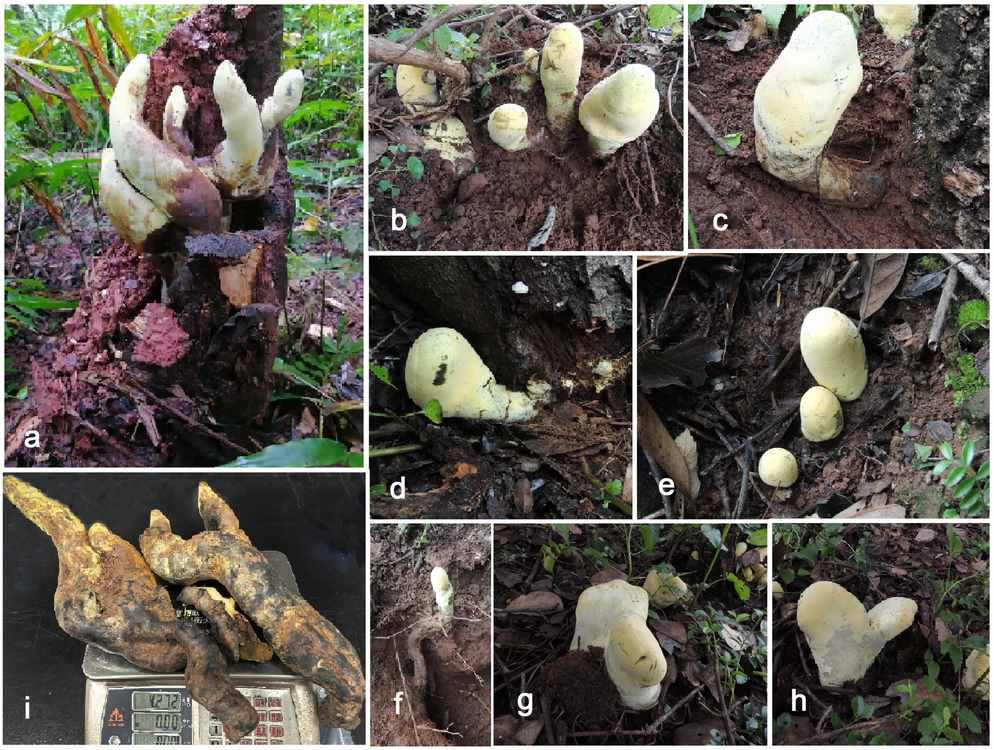
Yet, when set against the backdrop of this vast and varied kingdom of life, Dianjunus rex stands out as an absolute titan—the undisputed giant among ascomycetes.
Upon collecting the unusual fruiting bodies from the Yunnan field sites, the research team successfully cultivated spores on nutrient media to study the detailed morphology of the organism while simultaneously sequencing its entire genome. Genetic sequencing results, meticulously corroborated by a comprehensive study of its physical structures, confirmed that the newly established Dianjunaceae family fits neatly within the order Xylariales. Further genetic comparisons revealed that the closest known living relative to D. rex is Graphostroma platystoma, a fungus that grows across dead hardwoods throughout the Northern Hemisphere and constitutes its own distinct family, Graphostromataceae.
By deploying a "molecular clock" analysis—a method that measures the number of mutations in DNA sequences over time and compares them against the genomes of hundreds of other fungi with well-documented evolutionary ages—the study’s authors were able to estimate the birth of the Dianjunaceae family at roughly 65 million years ago. This timeline places the emergence of the lineage a mere one million years after the Cretaceous-Paleogene extinction event.
"This timing raises an intriguing possibility. After the mass extinction, forests experienced dramatic changes, including the sudden availability of large amounts of dead plant material," Dr. Senanayake explained. "For wood-associated decomposing fungi, such environmental disruption may have created new ecological opportunities."
Yet, millions of years later, as forest ecosystems have evolved into modern landscapes, D. rex continues to maintain its extraordinarily large physical stature. Until this discovery, the previous record-holders among ascomycete fruiting bodies maxed out at heights of 20 to 30 centimeters—roughly half the vertical reach achieved by the "King of Dian."
The researchers suggest that such an extreme physical investment serves a distinct evolutionary purpose. "A fruiting body which towers above surrounding vegetation and debris could have better dispersal of spores by wind in dense forests," Dr. Senanayake hypothesized. "However, such a large structure requires substantial energy investment, suggesting that this strategy likely evolved only where the ecological benefits outweighed the costs."
While animals like sharks, sea turtles, and crocodilians are widely celebrated by biologists for remaining remarkably unchanged from an evolutionary standpoint over hundreds of millions of years, the botanical and fungal worlds also harbor ancient lineages that have weathered sweeping global changes. Trees like the Ginkgo biloba and Australia’s rare "dinosaur evergreen" species have stood witness to the rise and fall of both prehistoric reptiles and modern humanity. D. rex joins these enduring lineages as a living link to ancient ecosystems.
Looking ahead, the research team anticipates that the subtropical forests of China hold many more undiscovered fungal secrets waiting to be brought to light.
"This region combines exceptional habitat heterogeneity, climatic stability, and complex biotic interactions that promote fungal diversification," Dr. Senanayake noted. "Historically, however, fungal diversity in these ecosystems has been underestimated due to logistical difficulties in field sampling, the seasonal and cryptic nature of fungal fruiting, and a historical emphasis on economically important fungi."