According to a groundbreaking new study bridging the worlds of fine art and astrophysics, the night sky painted by Van Gogh matches the actual celestial alignment of July 1889 over the French horizon—pinpointing a specific pre-dawn window that reveals the artist was painting what he truly saw.
The iconic masterpiece has conventionally been dated from a letter the artist wrote to his brother, Theo, around June 18th of that year. However, astronomical experts and researchers note that the waning gibbous moon described during that June period simply cannot account for the slender crescent moon depicted prominently on the canvas.
The new research found that the night sky captured in the painting matches—in both precise observation and geometric shape—the pre-dawn sky observed over Van Gogh’s asylum home in Saint-Rémy-de-Provence, France, around July 22, 1889.
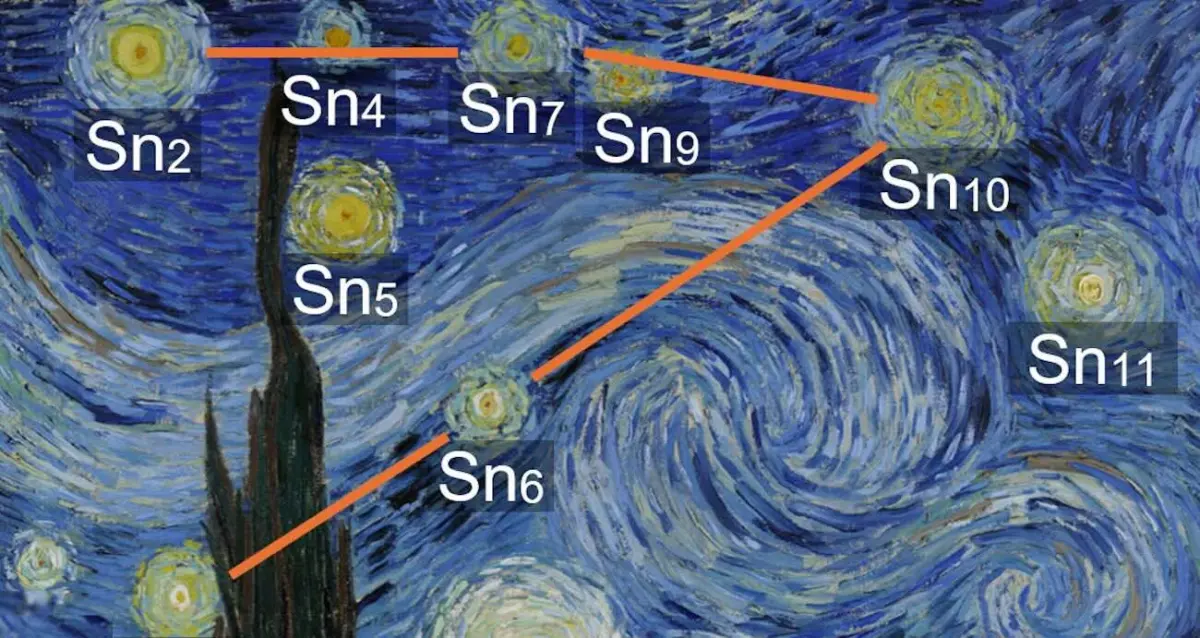
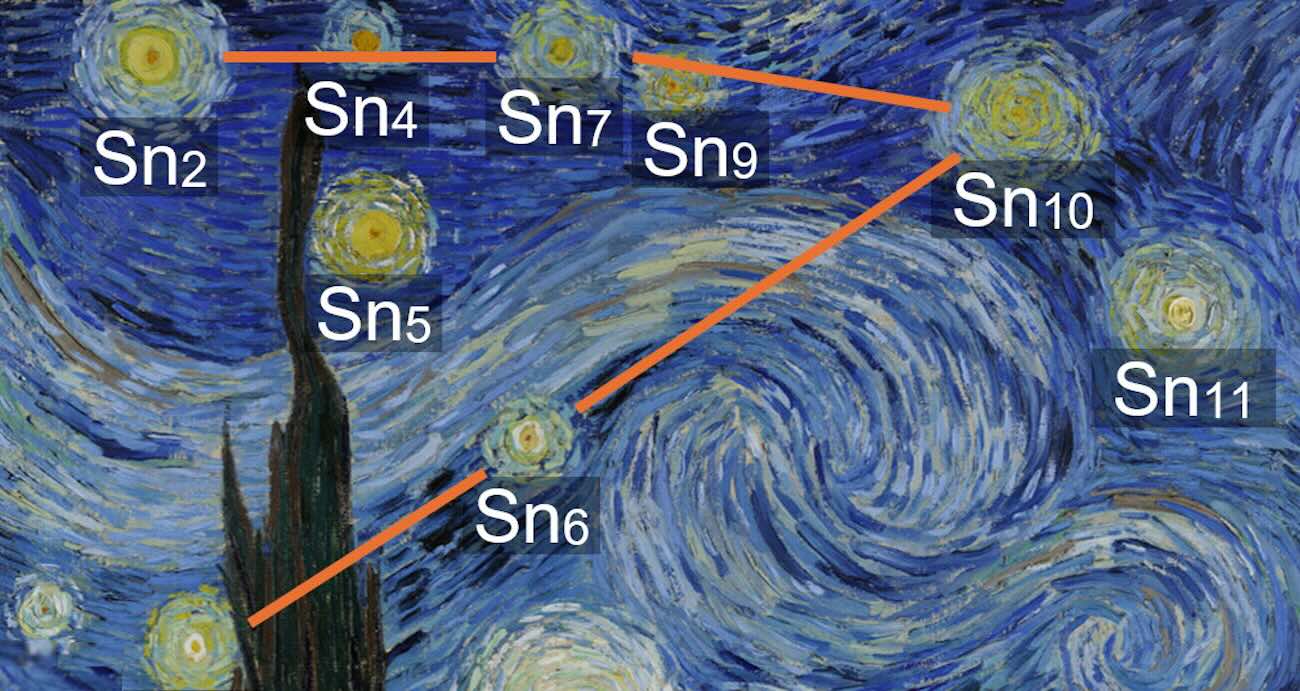
The canvas featured a waning crescent moon, the planet Venus, and the Hyades star cluster, all of which would have been directly within the painter’s field of view at that hour. This conclusion comes from the first comprehensive astronomical re-examination of the masterpiece in four decades.
The study, published in the prestigious journal Scientific Reports, was conducted jointly by space-science company SLLAB and the School of Space Research at Kyung Hee University in South Korea.
Serious astronomical readings of The Starry Night first began with American scientists Albert Boime in 1984 and Charles Whitney in 1986. Because those two early pioneers reached conflicting conclusions about which constellations Van Gogh was depicting, neither interpretation managed to displace the prevailing religious, emotional, and symbolic interpretations that dominated art history for generations.
"To an observational astronomer, the cluster of stars in The Starry Night is the Hyades in Taurus," said the study’s first author, Elijah Jeong-hyun Kim. "But the moment I read the earlier studies explaining it as Aries, I heard the painting calling to me."
Having built several custom telescopes and spent years meticulously observing the night sky, the South Korean research team judged that the Aries constellation was an unlikely source of inspiration for the artist.
The multi-year research project began with two intensive field trips to France in 2019. It builds directly upon a book published by Kim in 2025, which gathered foundational evidence and significantly expanded it using advanced quantitative data.
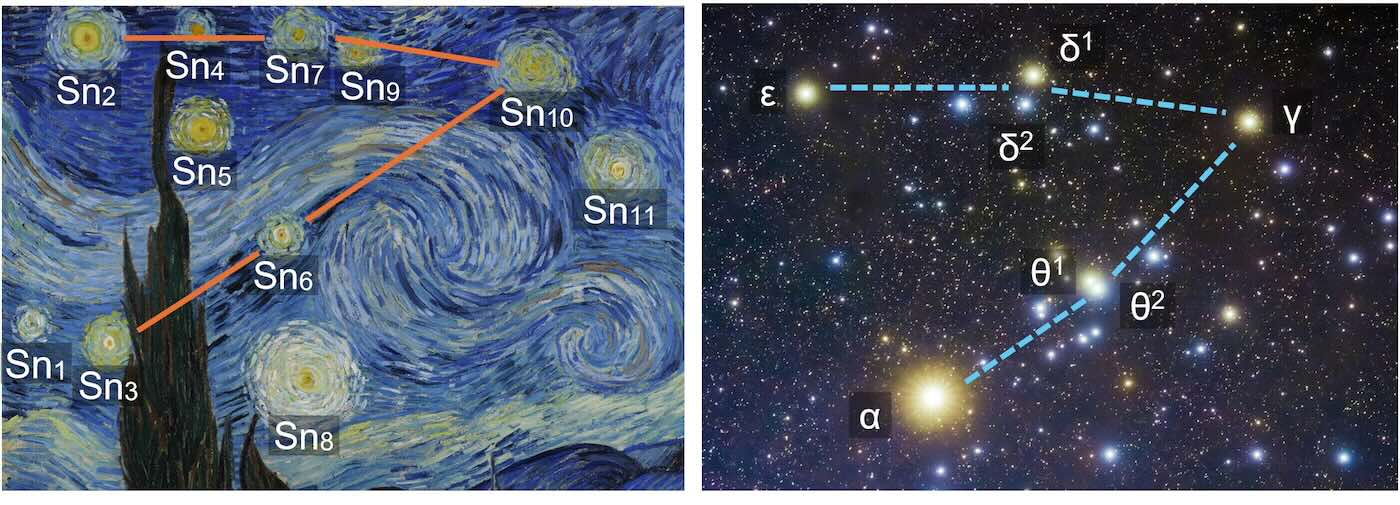
Kim explained that around July 22, 1889, the Hyades star cluster rose in the eastern sky alongside Venus, and the moon’s precise shape matched the slender crescent captured on the canvas. However, that specific date had long been assumed by historians to fall squarely within one of Van Gogh’s severe debilitating seizures, which would have presumably left him incapable of painting.
By cross-analyzing original French and Dutch correspondence, contemporary weather records from the region, and references to cicada insects found within the letters, the research team proposed a revised timeline, suggesting that the debilitating seizure actually began slightly later in July.
During their field research in the French village of Arles, the team utilized historical photographs taken on-site to verify the Impressionist master’s exact field of view in another famous nocturnal work—Starry Night over the Rhone, painted in 1888.
Moving onward to Saint-Rémy, the researchers successfully located the precise spot from which Van Gogh sketched the landscape on canvas before applying paint to The Starry Night, allowing them to carefully reconstruct his physical viewpoint from that exact vantage point.
To validate their hypothesis, the team employed Procrustes shape analysis, a sophisticated statistical method used for comparing and aligning geometric shapes. The analysis confirmed a striking correspondence between the five central stars of The Starry Night and the Hyades star cluster, with an even more precise match found in the pen drawing that Van Gogh created shortly after completing the painting.
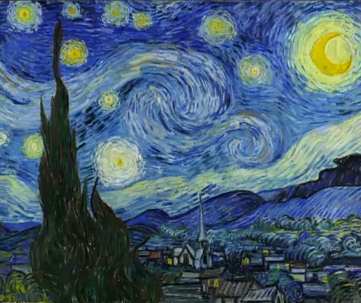
The researchers say their compelling results suggest that the turbulent, brilliant sky in the painting was fundamentally grounded in actual astronomical observation rather than being born out of pure imagination or hallucinatory frenzy.
Using the exact same rigorous analytical methodology, the research team also proposes that the arrangement of stars in Van Gogh’s 1888 painting Café Terrace at Night corresponds directly with the prominent celestial grouping known as the Summer Triangle.
"I hope this work prompts a renewed, multidisciplinary look at the sequence and working methods of the Saint-Rémy paintings," said Kim, who serves as the CEO of SLLAB and is a doctoral candidate at Kyung Hee University. "Our conversation with Van Gogh’s other skies is still ongoing. We plan to tell those stories one by one."