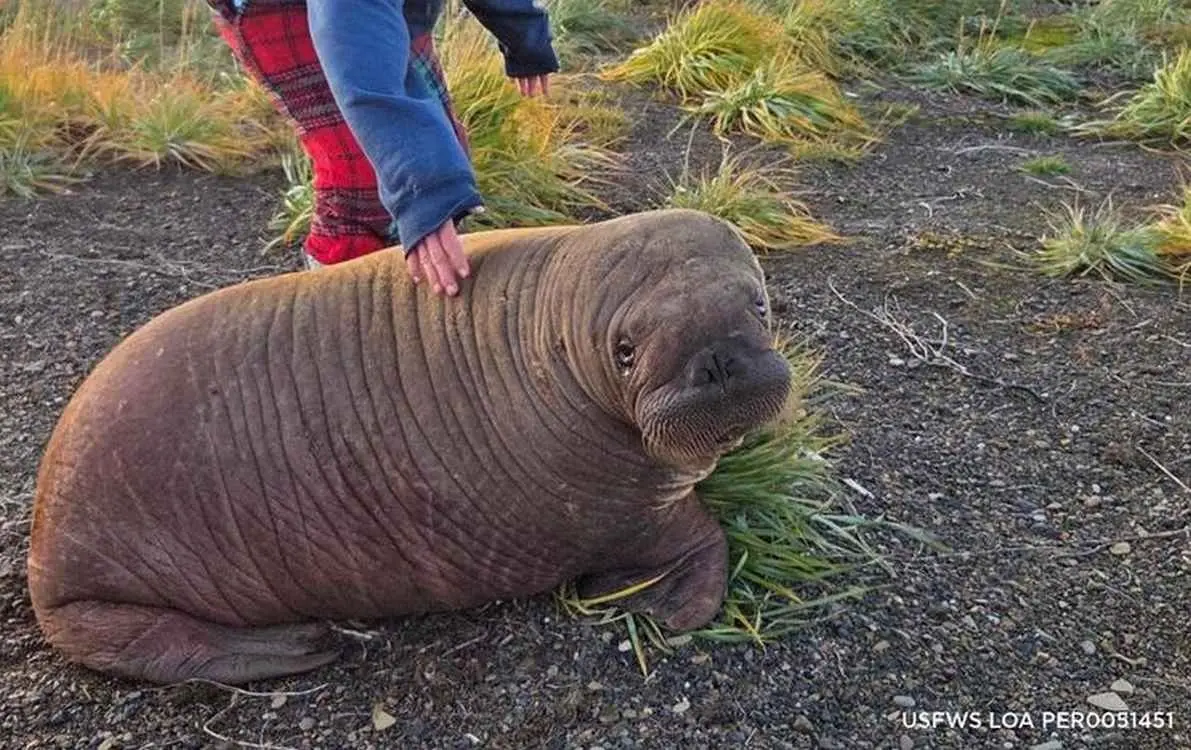
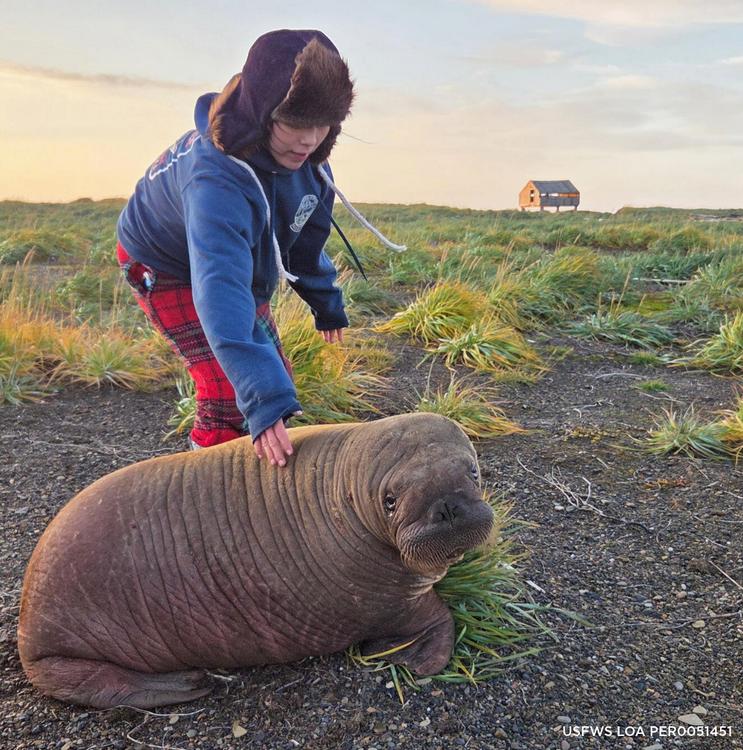
Annautaq’s improbable path to Florida began on a secluded shoreline in Northern Alaska. The calf was first spotted by Violet Anniskett, a local community member and wildlife research intern, alongside Tony Fischbach, a scientist with the United States Geological Survey (USGS). According to wildlife officials, the calf had been left behind after a herd of Pacific walruses departed the area during a period of heavy surf.
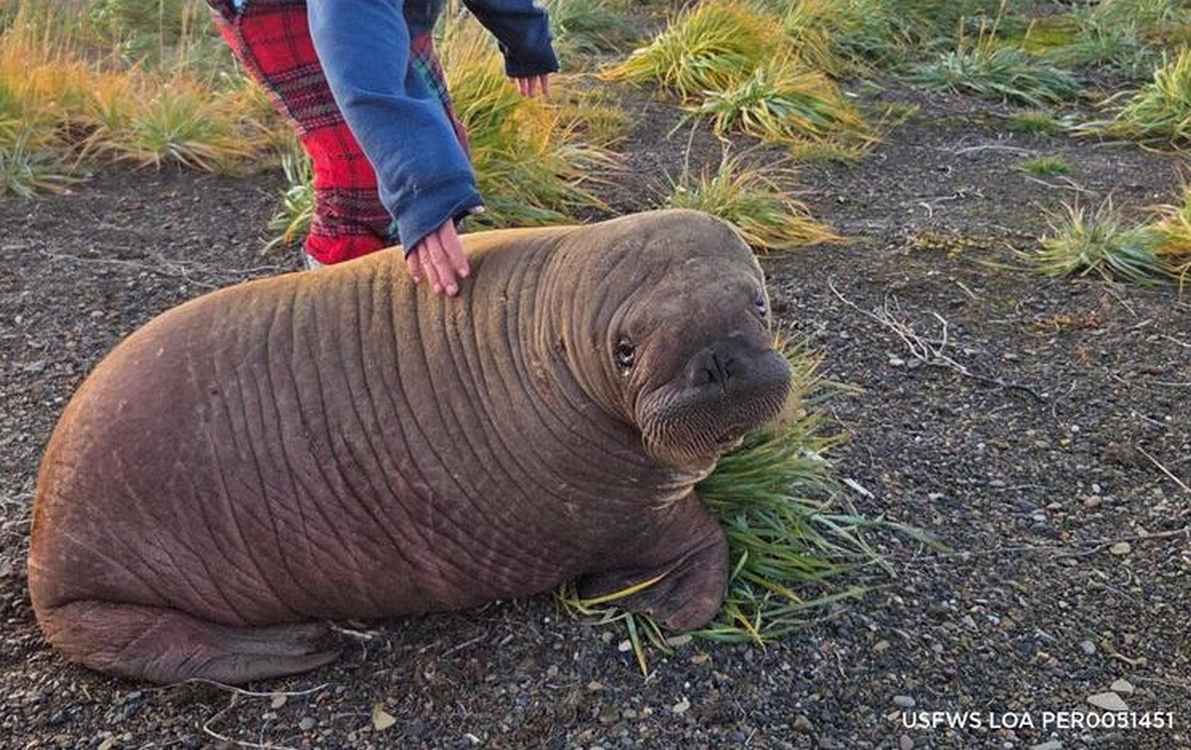
The researchers discovered the young walrus hiding between the weathered remains of two adult walruses. Already being targeted by scavenging birds, the calf was in dire condition and faced certain death without immediate human intervention. Because the discovery site was situated far from major human settlements or infrastructure, local caretakers and wildlife personnel had to tend to the vulnerable animal on-site over several days. Logistics had to be meticulously coordinated before the calf could be safely airlifted to the Alaska SeaLife Center in Seward, a premier marine research and rehabilitation facility.
The rescue and subsequent stabilization of the calf drew strong support from the local Alaskan community, who recognized the importance of giving the young animal a fighting chance while also creating an educational opportunity regarding the realities of Arctic marine life. Anniskett chose the name Annautaq—pronounced “ah-now-tuq”—which translates to “axe” in Iñupiaq, honoring her father’s traditional Iñupiaq name.
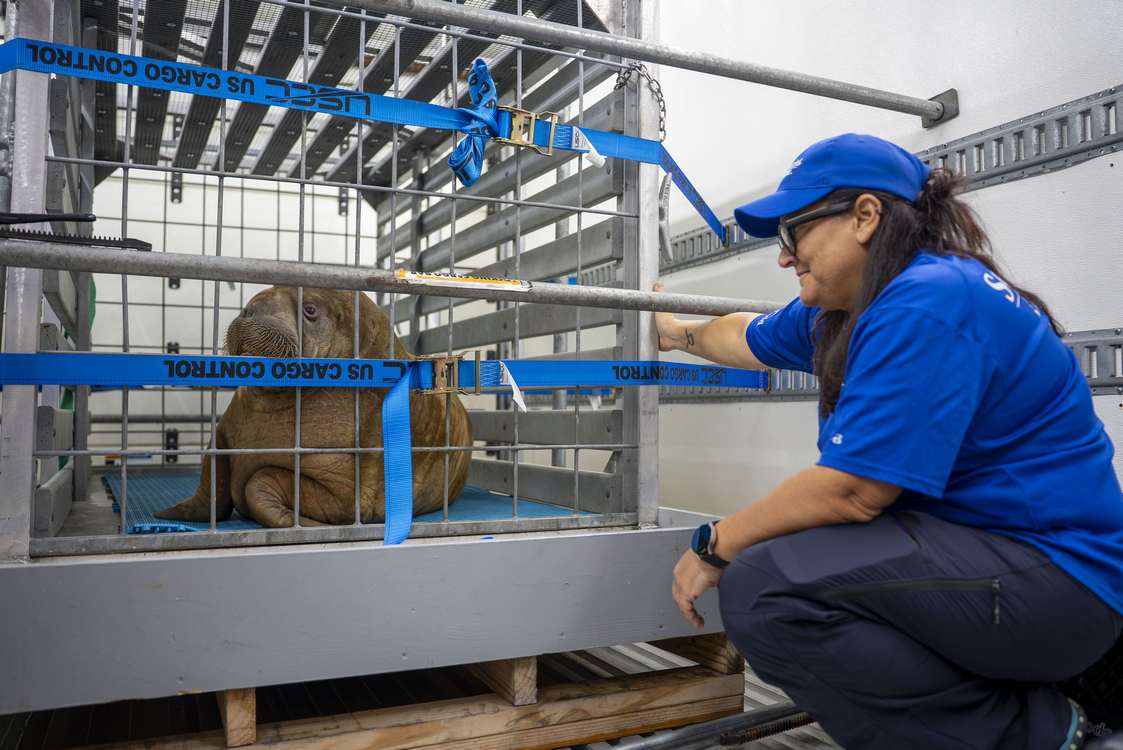
Recognizing the immense specialized requirements of rearing a walrus calf, SeaWorld dispatched a team of animal care experts and veterinarians experienced in marine mammal husbandry to Alaska. This team assisted personnel at the Alaska SeaLife Center in stabilizing the animal and preparing him for the long transcontinental relocation to Central Florida. The move marks another chapter in SeaWorld Orlando’s long-standing history of wildlife rescue, adding to a tally of approximately 43,000 orphaned, injured, sick, or otherwise needy animals that the park has aided since its founding.
The decision to place Annautaq in permanent human care rather than attempting a wild release was made by the U.S. Fish and Wildlife Service (USFWS). Biological experts note that Pacific walrus calves rely entirely on their mothers’ milk for nutrition throughout their entire first year of life. Beyond nutrition, maternal care is critical for protection against predators and for the development of complex survival and social behaviors necessary for life in the harsh Arctic environment. Without his mother, and with no opportunity for reintegration into a wild herd, wildlife authorities determined that a zoological facility was his only viable option for survival.
Upon arrival in Florida, Annautaq’s placement was carefully planned around his long-term developmental and social needs. Rather than being housed in isolation, he was placed in an environment where he would eventually have the opportunity to interact and grow alongside other walruses. SeaWorld Orlando currently houses three other walruses: Garfield, Kaboodle, and Uki.
Jane Belovarac, the wildlife response curator at the Alaska SeaLife Center, emphasized the collaborative nature of the rescue effort and the critical need for specialized infrastructure in northern regions.
"Annautaq’s story shows why having specialized marine mammal rehabilitation capacity in Alaska is so important," Belovarac said. "Getting Annautaq to this point took an incredible network of people, and we’re proud the ASLC could provide the specialized care that helped carry him from rescue in Alaska to his next chapter."
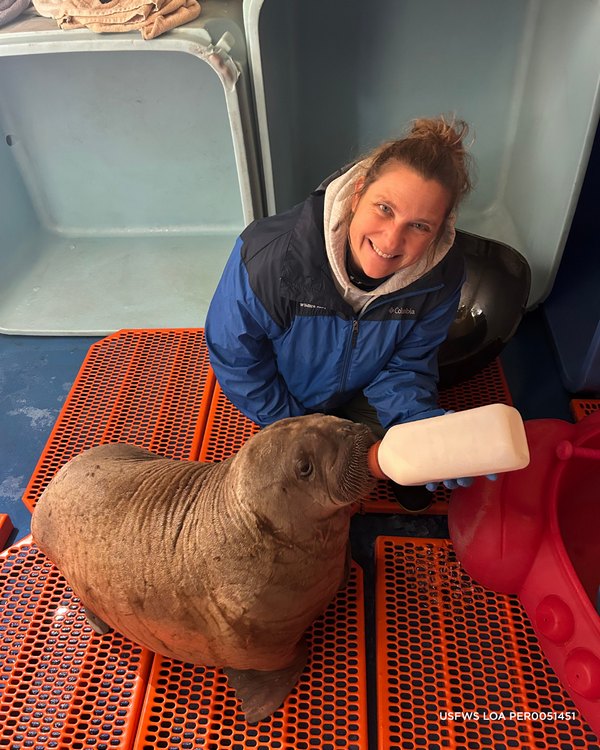
During his initial weeks at SeaWorld Orlando, Annautaq is receiving up to six bottle feedings a day, alongside continuous veterinary oversight and round-the-clock monitoring. Once his initial quarantine concludes, animal care staff plan to introduce him to the rest of the resident herd gradually.
Jim Kinsler, a curator at SeaWorld Orlando, outlined the careful process planned for the calf’s integration into the social group.
"As he settles in, we’ll make introductions to Garfield, Kaboodle and Uki at his pace," Kinsler said. "Kaboodle’s experience caring for rescued calves and the opportunity to connect with 2-year-old Uki, herself a rescued walrus, make this herd a promising setting for him to learn, build relationships and grow."
As he acclimates to his new surroundings and continues to mature, Annautaq is expected to join Uki and the other walruses in serving as an ambassador for his species. Zoologists and educators hope that his presence will help raise awareness regarding the mounting environmental challenges Pacific walruses face in the wild, including diminishing sea ice and shifting Arctic ecosystems. Park officials noted that Annautaq’s journey from a remote, windswept beach in Alaska to the marine habitats of Orlando underscores the ongoing mission of wildlife organizations to rescue, rehabilitate, and inspire broader public action toward the preservation of vulnerable marine species.