

Yet, for seasoned investors and veterans of the early retirement movement, this cycle of fear is a well-worn script. As financial commentators and long-term retirees reflect on decades of market volatility, the prevailing message remains steadfast: genuine economic prosperity is driven not by fluctuating financial systems or speculative stock tickers, but by fundamental human productivity and innovation.

Looking Back at Two Decades of Market Anxiety
The psychological weight of a seemingly precarious economy is nothing new. Reflecting on past financial climates reveals that anxiety over impending doom is a permanent fixture of public discourse. Looking back to the mid-2000s, investors were plagued by an entirely different set of existential threats. At the time, public conversations centered on geopolitical instability, mounting national debt, inflation, outsourcing fears regarding labor markets in India and China, and the looming crisis of peak oil.

Despite those severe apprehensions, the subsequent twenty years witnessed remarkable economic resilience and technological progress. Even the Great Financial Crisis—the most severe economic downturn since the Great Depression—proved to be a temporary disruption within a much broader upward trajectory. Long-term market charts demonstrate that broad-based investments weathered not only the housing crash of 2008 but also subsequent disruptions like the market volatility of 2020, ultimately yielding substantial long-term growth.

Beyond the financial markets, global living standards advanced significantly over the same period. Extreme poverty rates experienced a sharp decline, infant mortality rates were halved, and renewable energy adoption surged as clean technologies became dramatically more affordable. Solar power generation expanded exponentially, and electric vehicles transitioned from a niche concept into a substantial share of global automotive sales. These developments underscore a fundamental economic truth: long-term human progress consistently outpaces short-term financial anxieties.

Prosperity Roots in Productivity, Not Speculation
The disconnect between market panic and actual human prosperity lies in the misunderstanding of what drives economic value. Financial systems, stock markets, and complex monetary instruments are ultimately human constructs—numbers on computer screens that are prone to emotional swings, irrational exuberance, and periodic panic. When financial systems experience severe corrections, society retains its foundational tools for creating value.

True prosperity stems directly from productivity. Capitalism is inherently volatile, but beneath the surface turbulence, individuals continue to perform essential work, solve complex problems, and invent transformative technologies. If a financial system undergoes a major correction due to speculative excesses, economic infrastructure can be recalibrated, and society returns to productive labor, much as it has following every historical downturn.

Technology has historically served as the primary engine of this productivity. Just as mechanization and computing power amplified human labor in previous centuries, artificial intelligence represents the latest evolution in efficiency tools. Rather than viewing emerging technologies solely as existential threats, economic analysts suggest treating them as cognitive force multipliers designed to enhance output and reduce friction across various industries.

Navigating the Psychological Trap of Fear
The persistence of financial anxiety despite decades of positive historical data points to deeper psychological mechanisms inherent to human biology. Human beings evolved primarily as vigilant danger-detection machines. In primitive environments, scanning constantly for threats was essential for survival. However, in modern society—where immediate threats like predators and severe scarcity have largely been mitigated for a significant portion of the population—this cognitive machinery continues to function by shifting goalposts.
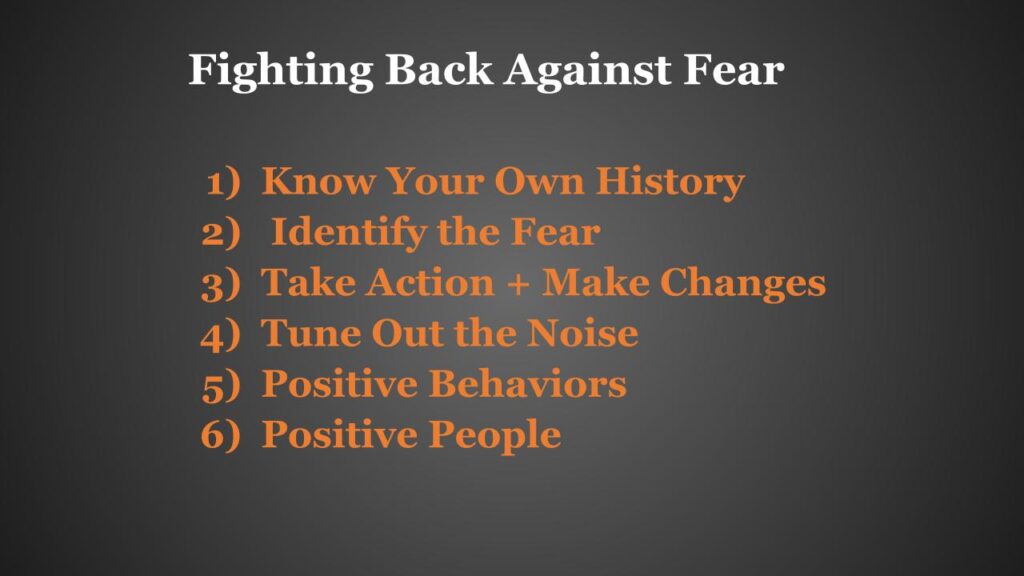
When baseline survival needs are secured, individuals frequently pivot to worrying about social standing, economic comparisons, future uncertainties, and complex financial management strategies. This pervasive background fear is frequently amplified by a 24-hour news cycle that relies on hand-picked, alarming narratives to capture attention. To combat this cycle, financial commentators emphasize the importance of curating mental diets, reducing exposure to fear-mongering media, and focusing instead on constructive, tangible behaviors.

Adopting an experimental mindset toward life changes—whether career transitions, lifestyle adjustments, or navigating new economic landscapes—can help neutralize the paralysis of fear. Viewing new developments as exploratory processes rather than existential threats allows individuals to respond with resilience and adaptability.
The AI Era as a Technological Experiment
Applying this framework to the current artificial intelligence boom reframes the technology from a looming catastrophe into a fascinating economic experiment. While AI is poised to displace certain entry-level office and driving roles in the near term—much like previous technological revolutions—it simultaneously paves the way for new industries, increased efficiencies, and broader economic growth.

The historical pattern of technological innovation demonstrates that while the rewards of new efficiencies often concentrate initially among capital owners and shareholders, the broader economy eventually benefits from cheaper goods, enhanced services, and novel capabilities. For diversified long-term investors participating in the broader market, these technological shifts ultimately contribute to corporate productivity and aggregate growth.

Ultimately, addressing financial anxiety requires looking past superficial market symptoms and confronting the root causes of personal fear. By anchoring expectations in historical resilience, prioritizing tangible productivity over speculative panic, and maintaining a rational approach to emerging technologies, individuals can navigate market bubbles—including the current wave of artificial intelligence—with confidence and clarity.