As the financial world has been whipped around like a circus tent in a hurricane over the last several months, almost everyone with a stake in the economy has been wondering what to make of it. As the situation stands, the exact outcome of the worldwide tariff and trade battle unleashed by the government remains uncertain. However, the results are already visible: businesses are bracing for massive changes, currencies and interest rates are reacting, and regular investors are left wondering what the future holds for early retirement funds. Surveying friends and colleagues, reactions span the whole range of emotions from the belief that the situation is a giant nothingburger to convictions that everyone is totally screwed.
To get closer to realistic answers, it helps to start with the most basic economic question: What is a tariff?
A tariff is simply a sales tax charged by the government on goods imported into the country. They are paid by whoever is doing the importing—meaning individual consumers ordering items directly from overseas companies, or major corporations like Amazon, Walmart, and Apple which import products by the shipload.

Ultimately, tariffs are not paid by foreign nations or multinational retailers. They are paid by the end consumer because if the cost of goods increases, retailers inevitably raise their prices to maintain profitability. Tariffs also affect companies directly. If a major home improvement retailer wants to build a new store or an energy company needs a new oil rig, tariffs on imported steel, copper, lumber, and countless other components raise the cost of these construction projects. They also drive up the cost of housing, since most building materials originate from multiple countries.
On average, tariffs result in higher prices for everything, functioning just like any other broad-based sales tax. Much like other taxes, the overall effect is to slow the economy and reduce consumer spending power. On the positive side, all that tax money flows into the government’s coffers, which could theoretically help fund the national budget and reduce the deficit.
Naturally, every government requires tax revenue to function, making some mix of sales, income, and corporate taxes necessary. The most critical factor is that these levels should remain as low as possible while keeping the country running well, remaining fair and predictable so that people and businesses have the incentive to work hard and plan for the future. That is precisely where the current tariff regime appears inverted, as random, extremely high tariff numbers are brandished as threats, then walked back and altered on an almost daily basis.
Examining the Potential Upside of Tariffs
Sometimes, a country utilizes tariffs to protect domestic industries. For example, placing a tax on imported vehicles grants domestic manufacturers a competitive advantage, allowing them to turn a higher profit. In such scenarios, most consumers ultimately lose out due to increased prices and decreased selection, though domestic auto manufacturers and their employees benefit.

This can be executed for strategic purposes, such as placing taxes on imported fighter jets to ensure domestic defense contractors remain viable for national security reasons. Alternatively, it can be driven by political influence, where politicians receive backing from major industry players and push through protective tariffs in return.
This approach is not isolated to a single political party. Previous administrations have also deployed tariffs in attempts to appease specific voter blocs. Notable examples include taxes placed on imported solar panel components, which have subsequently been raised even further. These components consist of inexpensive glass designed to supply affordable energy and wealth for decades upon installation. Because cheap energy lowers the cost of living while boosting broader industry, critics argue there is no sound economic reason to block such resources from crossing borders.
The Complex Relationship Between Tariffs and Job Creation
Analyzing the employment impact requires looking at how protective measures alter consumer behavior. If a steep tax is placed on imported vehicles, many buyers will gravitate toward domestic alternatives to save money. Even if the domestic options are less appealing, a significant price difference will sway a portion of the market.
As a result, domestic sales rise, prompting companies to hire more employees and construct additional factories. They may even develop new models and technologies to meet new demand. In an ideal scenario, more individuals acquire advanced skills, creating a virtuous circle of growth.

However, in exchange for a boom in one specific sector, everyone else across the economy ends up paying more for slightly lower-quality goods. Higher vehicle prices mean delivery fleets cost more to operate, forcing companies to raise prices slightly on everything they sell. Somewhere, a startup company or a medical breakthrough becomes marginally less likely to happen because it must operate in an environment that is slightly more expensive and less efficient.
Furthermore, once a domestic industry is liberated from the pressure of competing against foreign alternatives, it has less incentive to innovate and streamline operations. Consequently, its overall trajectory becomes slower and less efficient, even if corporate profits rise. This overarching macroeconomic effect is why mainstream economists generally agree that tariffs should be used very sparingly. They frequently cause unexpected collateral damage, decrease overall employment, and slow economic velocity, though exceptions are sometimes made for food security or national defense.
Understanding the Current Political Strategy
The aggressive deployment of tariffs has generated widespread confusion among economists and market participants. Public statements from political leaders frequently frame tariffs as a mechanism to generate wealth, focusing heavily on first-order effects—such as domestic manufacturers hiring more workers—while ignoring the broader drag on economic efficiency.
Market reactions tell a different story. When larger tariffs are announced, share prices drop because individuals who run and invest in businesses recognize that corporate earnings will decline. When tariffs are paused or reduced, share prices rebound. Because it is widely understood that tariffs function as a national sales tax rather than a strategic weapon, various observers suggest these maneuvers are primarily used as negotiating tactics to gain leverage in international trade talks.
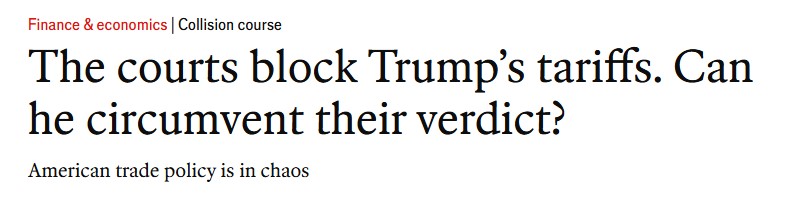
Nevertheless, subjecting the entire national economy to the unpredictable whims of a single official mirrors autocratic systems rather than a balanced democratic republic designed around independent branches of government. Presidents have frequently attempted to expand executive authority beyond constitutional limits, and the ongoing clashes in the federal court system represent the latest chapter in that historic struggle.
The Current State of Imports and Prices
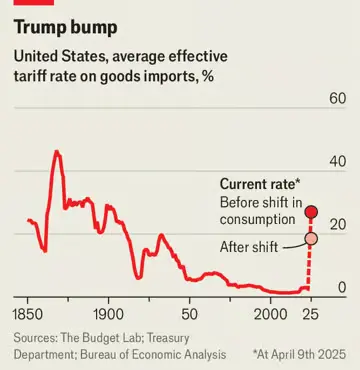
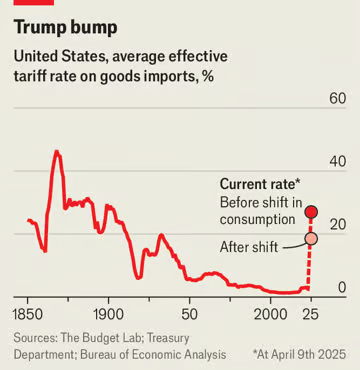
Even discounting extreme proposed figures, current tariff levels remain substantially higher than historical norms observed over the past three quarters of a century. The broader U.S. economy is built upon a framework of very low tariffs and relatively free trade.
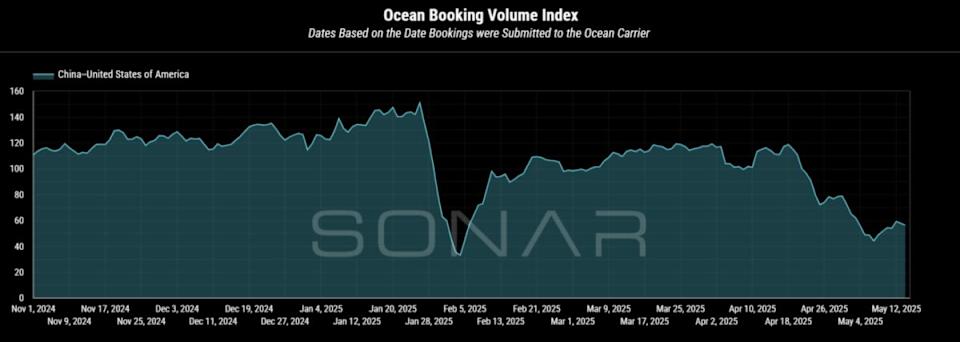
Because the domestic economy operates on a massive scale with substantial inventory, shifts in trade policy take time to materialize fully at the consumer level. When trade drama initially began, importers accelerated orders to stockpile goods before tariffs took effect. Consequently, import volumes have since dropped significantly.
While the economy has continued to draw down previously stockpiled inventory, imports have slowed to the point where cheap goods are running out. If access to core industrial tools and machinery is restricted, the economic consequences will extend far beyond minor consumer goods.
Looking Ahead at Economic Scenarios
As economic uncertainty persists, analysts generally outline a couple of primary paths forward. In the first scenario, current high tariff levels remain in place indefinitely, an outcome most analysts view as unlikely given widespread opposition from business sectors. In the second scenario, tariffs serve primarily as a negotiating tactic, eventually receding as trade agreements are reached and low tariffs are restored.
History suggests that national prosperity is built upon open borders, cooperation, and the free exchange of goods and services. Collaborative respect among friendly nations fosters mutual economic growth, reinforcing the idea that the most effective approach to international trade is maintaining open avenues of commerce.
Market Resilience and the Lesson of the News Cycle
Following significant market drops and subsequent recoveries triggered by shifting tariff announcements, the U.S. stock market has largely returned to historic highs. While these valuations outpace current tariff levels—which remain significantly elevated compared to previous baselines—they reflect investor confidence that international trade will eventually stabilize.
Long-term investors who maintain their positions through periods of volatility typically benefit from the market’s resilience, provided democratic institutions and market checks continue to function effectively.
A broader takeaway from these financial swings involves how information is consumed. Modern media ecosystems frequently prioritize attention-grabbing headlines designed to generate outrage and fear over measured analysis. Recognizing that commercial media models are inherently incentivized to provoke emotional reactions highlights the value of focusing on primary sources and subject matter expertise. Ultimately, navigating economic shifts requires looking past short-term headlines and maintaining a long-term perspective on personal and financial well-being.