Which of these two professional paths do you suppose is more likely to drive an individual to severe burnout?
If posed this question just a couple of years ago, many observers would likely have guessed the second type. After all, humankind does not live by bread alone. Conventional wisdom suggests that careers offering the alluring possibility of prestige, societal purpose, and intellectual challenge should inherently make work energizing and sustainable.
Yet, contemporary organizational research increasingly points to the exact opposite conclusion. While individuals trapped in grueling, low-paying, or deeply frustrating jobs certainly experience exhaustion, the phenomenon of true professional burnout was first documented in—and remains most frequently found among—professions generally considered to be highly desirable. Doctors, teachers, activists, and academics appear with disproportionate frequency in clinical case studies and academic literature concerning workplace burnout.
Why Burnout Strikes the Envious
Why is it that individuals with enviable, high-status jobs experience burnout with such alarming regularity?
One of the most compelling explanations for this counterintuitive finding comes from Jonathan Malesic in his book, The End of Burnout. According to Malesic, burnout occurs when the widening gap between the idealistic expectations of a job and its tedious, complicated reality becomes entirely irreconcilable. People tethered to "great" careers face burnout more frequently, not necessarily because their working conditions are objectively worse than anyone else’s, but because those prestigious roles invariably carry heavy, idealistic expectations from the start.
Malesic’s own professional background offers a striking case study. Previously a tenured academic specializing in theology, Malesic was drawn to the profession because his early college experiences convinced him that spending a lifetime teaching students about the deeper mysteries of the universe would be profoundly satisfying and socially vital.
Yet, even after achieving the coveted milestone of tenure—itself notoriously recognized as a burnout-inducing quest—he discovered a starkly different reality. Most of his students couldn’t care less about the theological nuances he was teaching. The scholarly papers he poured months into writing were largely ignored by the broader academic community, and on many mornings, he could barely summon the physical or emotional energy to drag himself to class.
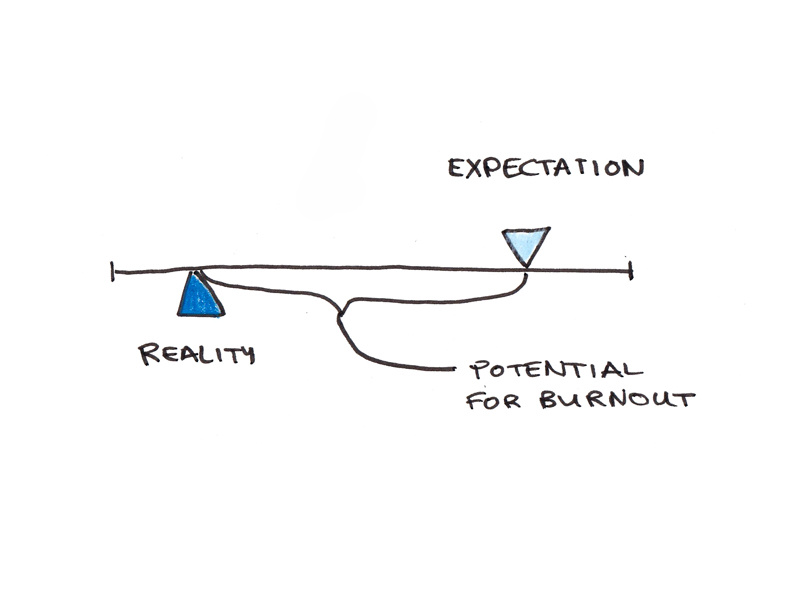
Malesic’s lofty expectations of what his work should be—intellectually stimulating, transformative, and deeply meaningful—crashed violently against the mundane reality of chronically bored students, petty departmental politics, and thankless administrative service work.
In stark contrast, Malesic often reflects on his prior experience working as a parking lot attendant before his transition into academia. Even though most people working at the parking facility viewed it as a thoroughly menial job, not a single person there experienced burnout. They arrived for their shifts, performed their routine tasks, collected their paychecks, and went home to engage in "real" life. Their jobs did not define their self-worth; instead, their meaningful pursuits existed entirely outside of the workplace, preserving their emotional and mental reserves.
The Opposite of Burnout
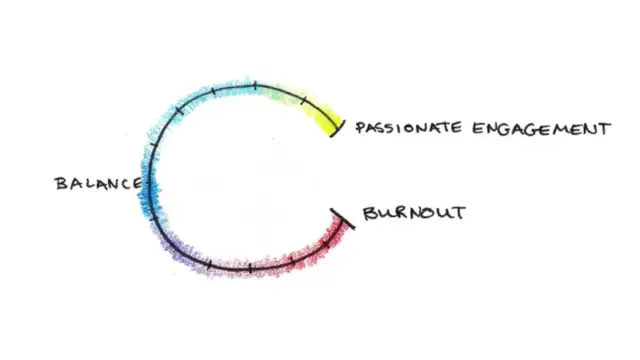
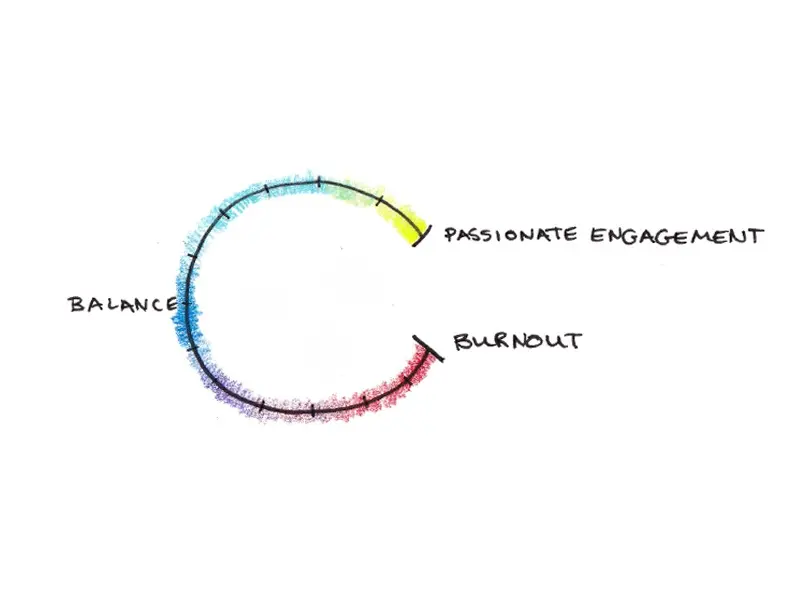
All of this evidence suggests that the true opposite of burnout is not simply passionate engagement. Ironically, passionate engagement—and the heavy, unrealistic expectations it invariably generates—can frequently create the exact environmental conditions that spark burnout in the first place.
Of course, this realization does not imply that being stuck in a dead-end, low-paying job serves as an effective cure, either. Good things are fundamentally good. All else being equal, securing a position with higher pay, better benefits, and greater societal prestige is objectively preferable to the alternative. While the jarring gap between lofty expectations and a mediocre reality can easily trigger burnout, enduring a genuinely toxic or hellish workplace with minimal baseline support can achieve the exact same devastating result from a different angle.
The true opposite of burnout, researchers argue, is balance. True professional and personal balance means having expectations for work that are reasonably well-matched by the actual day-to-day realities of the job, coupled with a healthy surplus of alternative sources of meaning and resilience outside the office. This foundation includes strong interpersonal relationships, engaging hobbies, consistent self-care habits, and reliable social support systems.
An inherent irony in modern professional culture is that balance frequently proves far more productive over the long haul than an obsessive, all-consuming devotion to work. The individual who sacrifices every waking hour to their career may achieve extraordinary milestones in the short term, but they construct a deeply unstable life. If the steady drip of professional accolades, promotions, or intrinsic rewards fails to meet their soaring expectations, the result is often a catastrophic crash from which recovery is exceptionally difficult.
Conversely, the person who approaches work as merely one vital piece of a multi-faceted life—running parallel to personal pursuits, family commitments, and community involvement—builds a robust psychological buffer against burnout. This sustainable approach allows an individual to continue performing good, steady work far longer and with greater consistency, which ultimately accumulates into a much more meaningful and productive lifetime achievement.