
For many, the current cycle evokes memories of the dot-com bubble of the early 2000s, an era that launched early careers and path-to-retirement strategies before threatening livelihoods and financial security when the market eventually corrected. Today, as a new generation of investors questions the sustainability of modern valuations, financial commentators are frequently asked whether the current economic climate threatens long-term retirement security. Addressing these concerns requires looking past daily market volatility to examine the historical trajectory of economic booms, busts, and the fundamental drivers of human prosperity.

Reflecting on two decades of retirement provides a valuable perspective on how anxiety evolves alongside economic cycles. Comparing contemporary worries—such as geopolitical instability, national debt, inflation, and the rise of artificial intelligence—reveals a striking similarity to the anxieties of twenty years ago. In 2006, the discourse was dominated by fears of the housing bubble, outsourcing to overseas markets, geopolitical conflicts in the Middle East, peak oil predictions, and mounting national debt. Yet, despite the subsequent arrival of the Great Financial Crisis—the most severe market downturn since the Great Depression—broad economic indicators and long-term stock market performance demonstrated remarkable resilience. A historical investment in the broader market weathered both the 2008 crisis and subsequent market shocks, such as the pandemic-related downturn of 2020, to deliver substantial long-term growth.

Simultaneously, global standards of living have advanced significantly over the past twenty years. Extreme poverty rates have declined markedly, infant mortality rates have been halved, and clean energy adoption has accelerated as solar technology costs dropped dramatically. Renewable energy generation now accounts for the vast majority of new capacity additions globally, and electric vehicle adoption has surged. These developments highlight a fundamental economic truth that financial fear-mongering often overlooks: true prosperity does not originate from abstract numbers in the financial system or the stock market, but rather from human productivity.

The underlying mechanics of capitalism are inherently volatile, characterized by cyclical waves of enthusiasm and correction. Beneath the surface fluctuations of financial markets, however, real people continue to innovate, labor, and build tangible improvements to society. The financial system itself is a human invention, capable of restructuring and adapting when imbalances occur. Economic growth, standard of living enhancements, and the viability of early retirement strategies are ultimately anchored in high productivity rather than transient market sentiment.

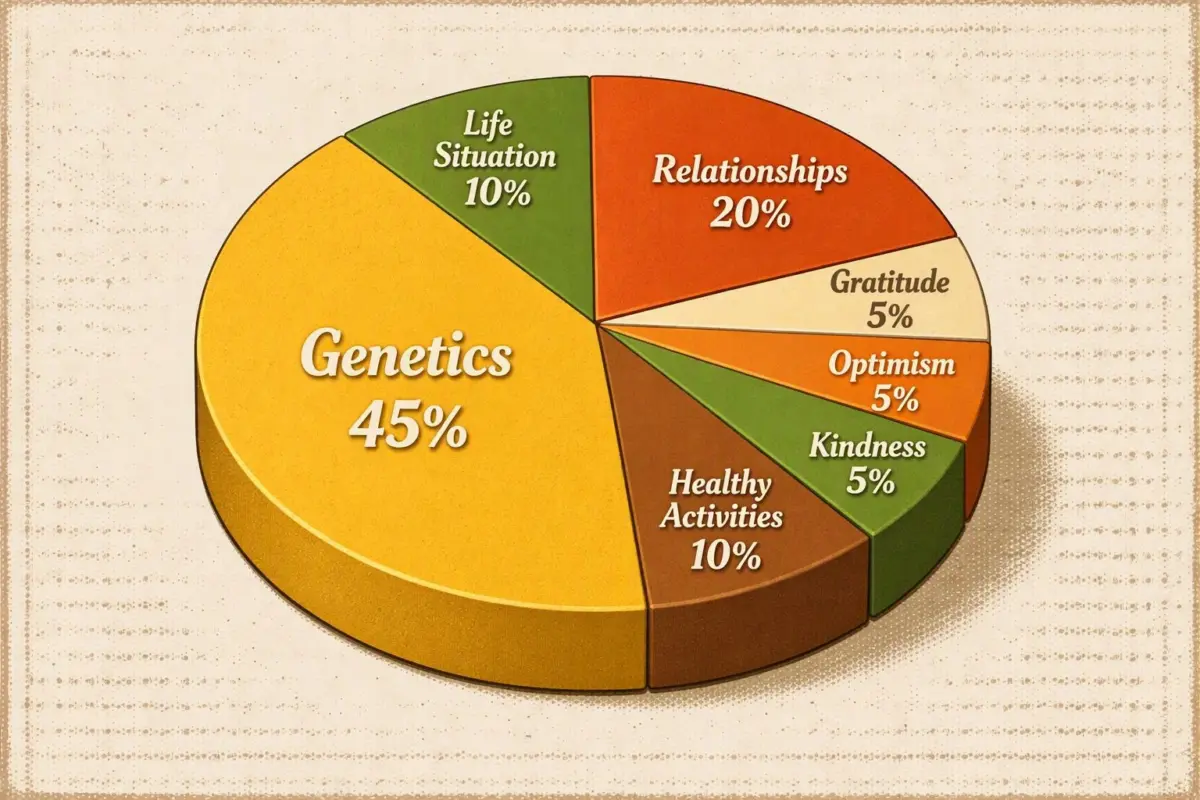
Once societies achieve a certain baseline standard of living, human happiness relies heavily on factors beyond material wealth. Psychological research indicates that while economic security is essential, overall life satisfaction is heavily influenced by non-financial elements, including personal relationships, maintaining an optimistic outlook, physical health, and outdoor activity. Despite these foundational concepts being widely discussed within the financial independence community, underlying anxiety about the future remains prevalent among many individuals.

This persistent apprehension is largely rooted in human evolutionary biology. As a species, humans evolved as danger-detection machines, utilizing background fear to protect against immediate physical threats. When acute dangers are resolved, this cognitive machinery often redirects its focus toward new anxieties, shifting the goalposts from basic survival and food security to social belonging, resource accumulation, and eventually complex financial management strategies. Overcoming this cycle requires self-awareness, an understanding of personal and familial history regarding scarcity or trauma, and a rational approach to evaluating perceived risks.

Taking proactive steps helps demystify the unfamiliar and builds psychological resilience. Financial anxiety often diminishes when individuals evaluate worst-case scenarios realistically and recognize that the probability of exhausting accumulated wealth is exceptionally low. Furthermore, reducing exposure to continuous media cycles that emphasize sensationalized, fear-driven narratives can significantly improve mental well-being. Focusing instead on constructive behaviors, physical health, and engaging with optimistic communities helps align daily life with natural human tendencies.

Approaching major life transitions and technological shifts with an experimental mindset transforms potential sources of dread into opportunities for engagement. Rather than succumbing to doom-scrolling and apprehension surrounding artificial intelligence, recognizing the technology as a powerful tool for cognitive efficiency provides a clearer perspective. Much like previous technological revolutions that automated routine tasks and eventually catalyzed entirely new industries, artificial intelligence acts as a force multiplier for productivity. While such technological shifts inevitably displace certain traditional roles, they simultaneously lower service costs and foster economic evolution.

Ultimately, artificial intelligence represents another chapter in the ongoing experiment of human innovation. By addressing the root causes of anxiety rather than reacting purely to the symptoms, individuals can navigate economic uncertainty with greater confidence, recognizing that sustainable progress has always relied on human adaptability, productivity, and the courage to move forward.