For those who have largely tuned out financial media and focused on day-to-day living, maintaining distance from the market drama is often an effective strategy. However, understanding the current economic landscape requires examining the prevailing AI narrative. Investors increasingly worry that while artificial intelligence is unquestionably a monumental technological breakthrough, the market mania surrounding it is happening too fast and on too grand a scale. This dynamic has sparked widespread fears of a repeat—or an escalation—of the dot-com crash of the early 2000s, an era that served as a double-edged sword for many early-career professionals by fueling early retirement dreams before threatening livelihoods and immigration statuses in the ensuing downturn.

As financial commentators field countless inquiries regarding this current investment cycle, veterans of past booms and busts find themselves addressing the same underlying anxieties that have surfaced across previous market eras. Recently, these discussions have expanded beyond personal blogs into live speaking engagements, addressing crowds at gatherings such as Camp FI Midwest and the Bogleheads conference. Through these presentations, financial commentators continue to unpack the psychological toll of market volatility, examining whether current fears regarding artificial intelligence are genuinely different from historical panics.
Will the AI Bubble Ruin Our Retirement?
Achieving long-term financial independence and reaching decades of comfortable retirement brings a certain familiarity with market cycles. Yet, even seasoned retirees frequently encounter expressions of profound disbelief from friends and peers. A common refrain among anxious observers questions how anyone can remain retired and sleep soundly given the state of the modern world.

When list-makers and news-watchers compile their daily grievances, the catalog of contemporary anxieties often features familiar heavy hitters: geopolitical instability driven by volatile leadership, persistent inflation eroding purchasing power, the towering accumulation of the United States national debt, and bubbling international conflicts threatening global stability. Alongside these macroeconomic and geopolitical stressors sits the modern fear of artificial intelligence—specifically, the dread that the AI bubble will burst, or that advanced systems will render human labor obsolete.
Interestingly, these specific worries mirror those raised by anxious observers over two decades ago. In 2006, society grappled with its own distinct set of perceived existential threats. Back then, headlines featured anxieties surrounding different geopolitical leaders, ongoing conflicts in the Middle East, escalating national debt, and rising inflation. The stock market was similarly viewed with suspicion, though the underlying catalyst then was a housing bubble rather than an artificial intelligence boom. Concerns over automation and job displacement existed even then, though the focus was directed toward outsourcing labor to rapidly developing economies like India and China rather than machine learning algorithms. Furthermore, the era was consumed by fierce debates over "peak oil"—the widespread belief that fossil fuel consumption would inevitably outstrip dwindling supplies, leading to global economic collapse.

Looking back at how those historical worries played out provides valuable perspective. The global financial crisis that eventually materialized was indeed the largest market crash since the Great Depression, driven by an unfortunate cocktail of irrational exuberance in housing prices and overly complex financial leverage. Yet, when viewed across a multi-decade horizon, even that severe economic earthquake appears as a temporary dip within a broader upward trajectory. Broad market indices demonstrate that significant historical downturns, including the subsequent pandemic-induced crash of 2020, ultimately gave way to substantial long-term growth for patient investors.
Simultaneously, broader global indicators over the same twenty-year period reveal significant human progress. The proportion of the global population living in extreme poverty dropped dramatically, while infant mortality rates were cut in half. Clean energy transitioned from a fringe concept into a dominant market force, driven by massive drops in the cost of solar technology, and electric vehicles grew from a statistical zero to capture a substantial share of global automotive sales. This historical disconnect between widespread cultural anxiety and actual long-term progress underscores a fundamental question: whether energy is better spent worrying about an uncertain future or maintaining an optimistic, resilient outlook.

Prosperity Comes from Productivity
Despite persistent warnings from financial media about modern debt levels, stock market valuations, and technological disruption, doomsayers frequently overlook a foundational economic truth. At its core, human prosperity does not originate within the abstract architecture of the financial system or the daily fluctuations of stock tickers, which represent little more than numerical tallies computed on servers. True prosperity stems directly from productivity.
The fundamental mechanics of capitalism are inherently choppy, characterized by wild cyclical swings and periodic corrections. However, beneath those volatile surface waves lie real people performing real labor and developing tangible inventions. The concept of an economy or a financial system is itself a human construct. If a financial system experiences a systemic failure because participants lose confidence in prevailing numerical valuations, society possesses the capacity to reset the parameters and resume productive work—a recovery mechanism successfully deployed during past financial panics.

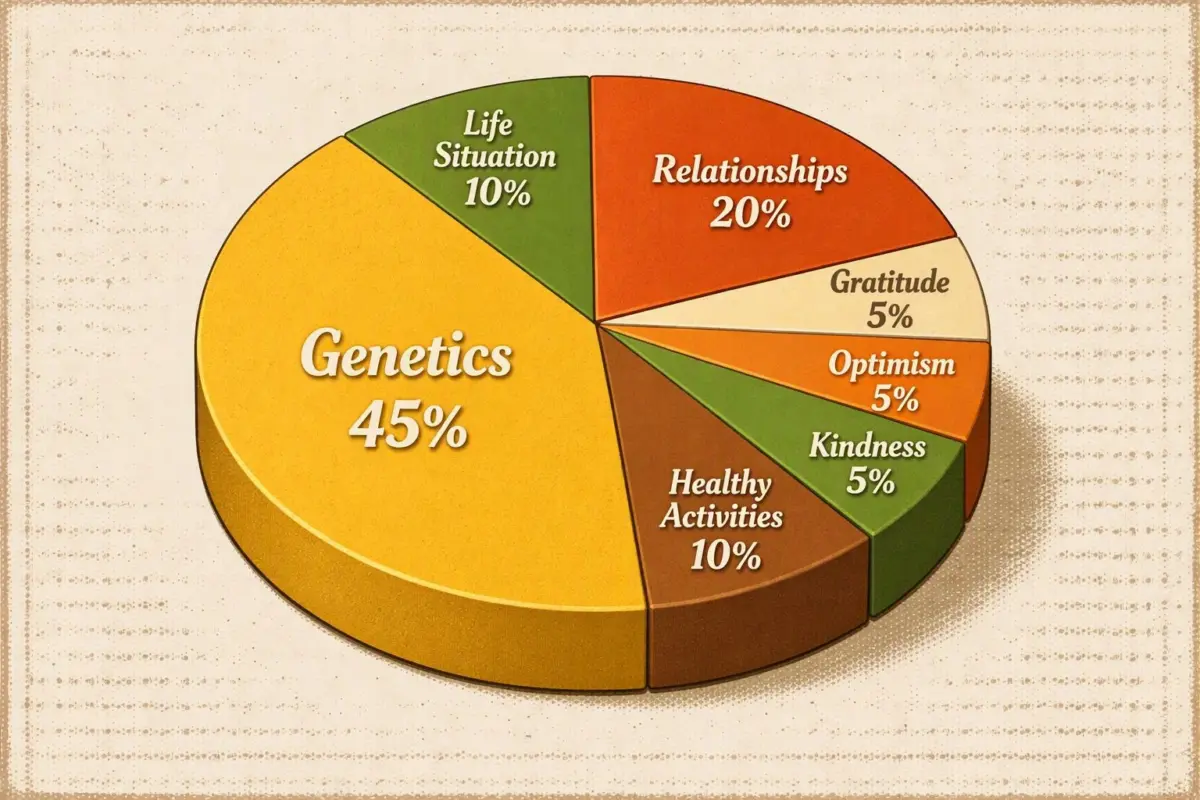
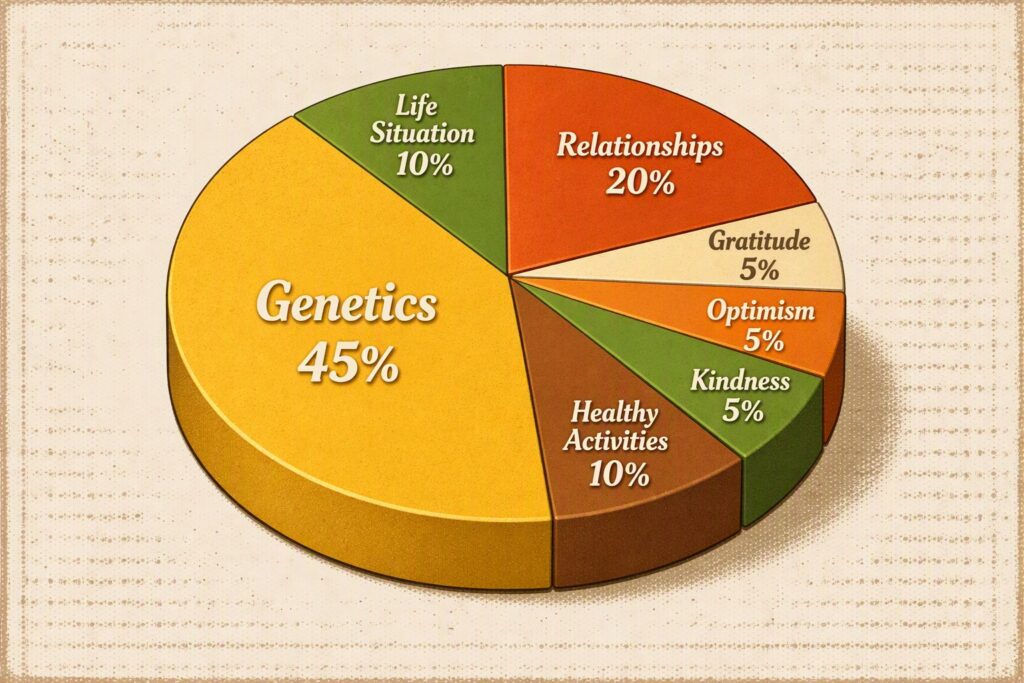
Humanity retains every practical tool ever invented to enhance productivity, elevate living standards, and drive economic growth. Furthermore, once basic material needs and standards of living are securely met in developed nations, incremental increases in financial wealth cease to be the primary driver of human happiness. Scientific and psychological observations suggest that long-term satisfaction is anchored much more heavily in immutable factors like genetics, followed closely by controllable lifestyle choices: maintaining close personal relationships, practicing gratitude, cultivating optimism, and incorporating healthy physical activity into daily routines.
Confronting Fear Itself
Despite the historical resilience of human productivity, a pervasive background anxiety often persists even among financially secure individuals. This phenomenon is largely rooted in human biology. As a species, humans evolved as sophisticated danger detection machinery designed to ensure survival in hostile environments.

The evolutionary challenge lies in the adaptability of this machinery. When genuine physical dangers recede, the human brain continues scanning the environment for threats, effectively shifting the goalposts of anxiety. Once immediate concerns regarding physical safety and food scarcity are resolved, individuals frequently transition to worrying about social acceptance, relative financial standing within their peer groups, tax strategies, or abstract long-term economic scenarios. In some cases, individuals even direct their anxieties toward administrative regulations designed to manage surplus wealth, such as mandatory distribution requirements for retirement accounts.
Combating this persistent cycle of fear requires a conscious application of self-awareness and rational thought. Understanding personal history often reveals the origin points of modern anxieties, whether rooted in familial scarcity mentalities passed down from generations who lived through historical depressions or shaped by early life trauma. Identifying specific fears by examining worst-case scenarios typically exposes their lack of objective validity.

Taking decisive action serves as an effective antidote to fear, transforming the unfamiliar into the familiar and building genuine psychological resilience. When individuals develop the mental, physical, and emotional adaptability to handle unexpected situations, abstract worries lose their grip. Complementing this active approach involves curating one’s mental diet by filtering out the relentless stream of sensationalized media coverage, which disproportionately highlights catastrophic narratives. Refocusing energy on positive behavioral choices, outdoor physical activity, and constructive problem-solving aligns daily habits with human evolutionary design.
Moreover, surrounding oneself with optimistic, productive peers rather than fear-mongering voices helps reinforce a resilient mindset. Within communities dedicated to financial independence and intentional living, the focus consistently remains on optimizing life quality and supporting others rather than succumbing to speculative dread. Approaching life’s inevitable transitions through the lens of experimentation—treating everything from career changes to retirement as a manageable test rather than an existential gamble—fundamentally alters one’s relationship with uncertainty.
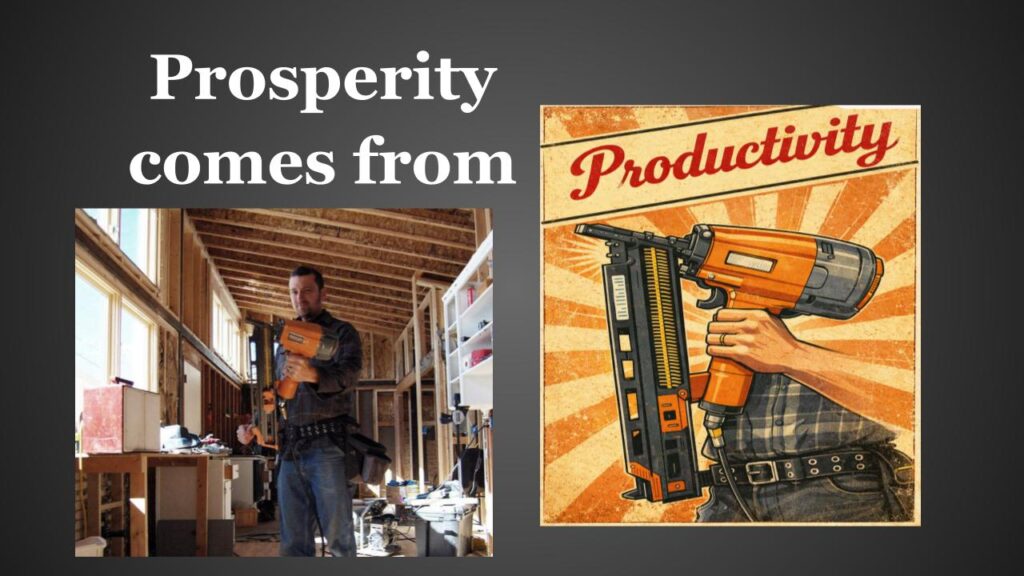
The Cognitive Nail Gun
Viewing the modern rise of artificial intelligence through an experimental framework rather than a lens of impending doom reframes the technology entirely. Rather than succumbing to dystopian narratives regarding machine dominance, examining the practical mechanics of AI reveals it to be a sophisticated productivity multiplier—effectively operating as a cognitive nail gun.
Much like physical tools that exponentially increase the output of a carpenter, artificial intelligence enhances cognitive efficiency, driving productivity gains that ultimately translate into broader economic prosperity. By lowering the cost of complex data processing and problem-solving, AI provides accessible intellectual leverage. Naturally, like previous technological revolutions that transformed industries from agriculture to computing, artificial intelligence will inevitably displace certain administrative and routine labor roles, prompting workforce transitions and creating entirely new economic sectors.
At the same time, the wealth generated by these technological leaps tends to concentrate among asset owners and shareholders, mirroring historical precedents set by past industrial expansions. Ultimately, artificial intelligence presents society with a familiar set of choices. It functions as an opportunity to engage in lifelong learning, adapt operational methods, and pursue more meaningful human endeavors. By addressing the root causes of internal anxiety and replacing speculative fear with informed action, individuals can navigate technological shifts and market bubbles with confidence, recognizing that fulfilling aspirations consistently lies on the far side of fear.