


The debate surrounding the current investment cycle has prompted widespread discussion among financial commentators and retirees alike. Recently addressing audiences at events such as Camp FI Midwest, long-time financial advocates have been fielding constant inquiries regarding the safety of retirement portfolios in the face of soaring tech valuations. The central concern remains whether the rapid adoption of AI represents an unsustainable bubble that will eventually trigger a downturn eclipsing past financial crises.

Will the AI Bubble Ruin Our Retirement?
Reaching multi-decade milestones in early retirement often brings a certain level of comfort with market volatility, yet the pervasive anxiety expressed by everyday news-watchers persists. Friends and peers frequently voice deep concerns about the current state of the world, pointing to a familiar roster of modern crises: volatile geopolitical leaders, persistent inflation, escalating national debt, ongoing international conflicts, and the looming threat of technological disruption.

Interestingly, these exact categories of fear are hardly novel. Comparing the prevailing anxieties of the mid-2000s to today reveals a striking continuity in human worry. Twenty years ago, headlines were dominated by fears of different political figures, wars in the Middle East, escalating national debt, and concerns over an overvalued housing market. At the time, the existential dread centered around the real estate bubble rather than an AI boom, while job displacement anxieties focused on the outsourcing of labor to overseas markets rather than automated software.

Furthermore, fears surrounding resource scarcity—such as the intense debate over peak oil—ultimately gave way to massive technological adaptations, including the plummeting cost of solar energy and the rapid rise of electric vehicles. Despite the severe turbulence of the Great Financial Crisis that followed the mid-2000s worries, long-term market charts demonstrate that a diversified investment strategy ultimately weathered the storm, turning historical drawdowns into substantial multi-decade growth alongside significant global improvements in poverty reduction and healthcare.

The Core of Economic Resilience: Prosperity Comes from Productivity
When confronting questions of whether current market conditions are fundamentally different—whether due to towering national debt or the unprecedented scope of AI—analysts often overlook the foundational driver of modern wealth. Prosperity does not originate from financial systems or computerized stock market figures, which are ultimately human-made constructs. Instead, true economic prosperity stems directly from productivity.

The fundamental lesson of long-term economic history is that capitalism is inherently volatile and prone to dramatic swings, but beneath the surface turbulence, human ingenuity continues to drive real work and tangible inventions. If a financial system experiences a severe correction, history shows that societies possess the capacity to adapt, restructure, and continue utilizing productivity-boosting tools. Standard of living and economic growth are inextricably linked to efficiency and innovation rather than short-term market sentiment.

Beyond financial metrics and macroeconomic productivity, human well-being relies heavily on factors far removed from the stock market. Scientific assessments of happiness consistently demonstrate that basic material needs in developed nations were surpassed decades ago. Modern psychological factors emphasize that long-term satisfaction is rooted in personal relationships, optimism, physical health, and community connection rather than portfolio valuations.

Confronting Fear and Understanding the Human Danger Detection Machine
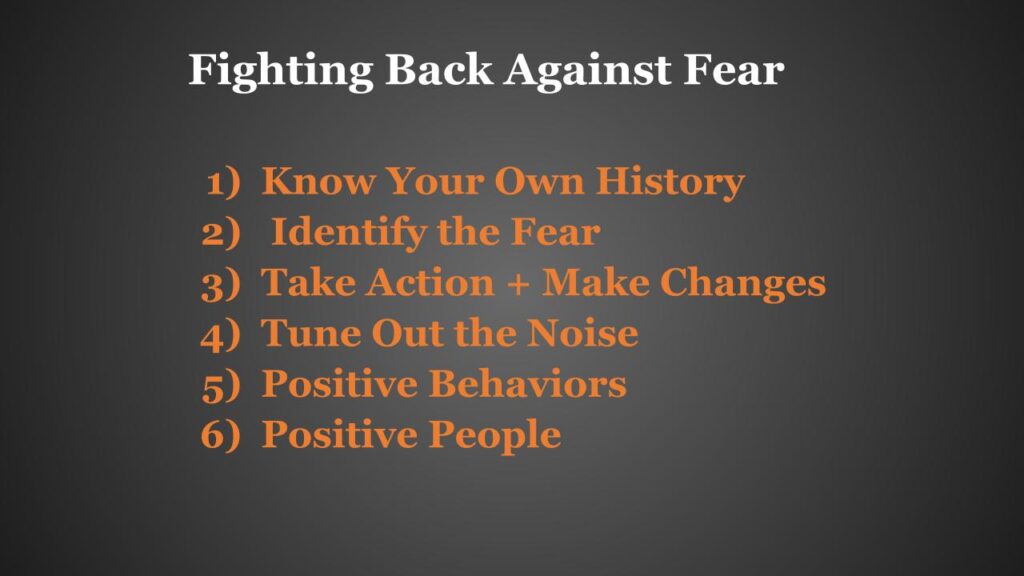
The persistence of financial anxiety despite decades of proven market recovery highlights a deeper psychological phenomenon: humanity has evolved as an innate danger detection machine. This evolutionary trait is designed to protect individuals from immediate physical threats, but in modern societies characterized by safety and relative abundance, the underlying fear response rarely deactivates. Instead, it simply shifts its focus to new targets, moving from basic survival and resource scarcity to tribal belonging, tax strategies, and portfolio management.

Recognizing this internal mechanism is the first step toward combating irrational anxiety. Personal histories, childhood environments, and past traumas frequently shape an individual’s relationship with money, fostering a scarcity mindset that persists long after objective financial security has been achieved. By actively identifying these fears and exploring worst-case scenarios, individuals can dismantle abstract anxieties and recognize that extreme financial ruin is rarely as probable as the mind suggests.

Taking deliberate action remains one of the most effective antidotes to fear, transforming the unfamiliar into the manageable and building personal resilience. For many, this process also involves curating a healthy mental diet by stepping back from sensationalized daily news cycles that amplify distress. Shifting focus toward active problem-solving, physical well-being, and engagement with optimistic, productive communities helps realign daily life with human nature.
Everything is an Experiment: Viewing AI Through the Lens of Opportunity
Approaching life’s transitions—whether changing careers, adjusting living situations, or navigating market shifts—through the framework of an experiment can fundamentally alter one’s perspective. Rather than viewing change as an existential threat, treating it as a test allows individuals to gather data, adapt, and learn without the paralysis of fear.

This experimental mindset applies directly to the current Artificial Intelligence revolution. While technological shifts inevitably introduce uncertainty and displace traditional roles in fields like software, finance, and logistics, viewing AI simply as a sophisticated productivity tool provides a clearer lens for understanding its long-term impact. Much like the invention of automated machinery or the internet, cognitive technologies enhance efficiency and lower the cost of services, ultimately paving the way for entirely new industries and economic expansion.

While the rewards of such technological advancements frequently concentrate among asset owners and shareholders—including everyday investors participating in public markets—the broader trajectory of innovation continues to mirror historical precedent. Artificial intelligence represents another wave of human ingenuity, offering an opportunity for learning, adaptation, and progress for those willing to look past the immediate noise of fear-mongering headlines.