
Investors frequently worry that while artificial intelligence is undoubtedly a major technological leap, the mania surrounding it is moving too fast. Many fear a replay of the dot-com crash of the early 2000s on a much grander scale. Interestingly, that exact boom helped launch the early career of prominent financial commentator and retired blogger Mr. Money Mustache, before the subsequent crash nearly derailed his professional trajectory and citizenship application. Two decades later, as questions mount regarding this current investment cycle, financial analysts and long-term retirees alike are revisiting the psychology of market bubbles, examining whether the current AI wave genuinely poses a threat to long-term retirement security or if it is simply the latest iteration of cyclical economic fear.

Reflecting on more than two decades of retirement, financial observers often encounter a recurring question from anxious friends: how can anyone remain comfortable and sleep peacefully at night given the state of the world? When pressed, worried individuals point to a litany of geopolitical tensions, soaring national debt, persistent inflation, and the looming spectre of disruptive technologies. Yet, a look back in time reveals that the specific catalysts for panic may change, but the underlying anxiety remains remarkably constant.

Back in 2006, the worries dominating the cultural conversation were entirely different, yet equally severe. The world was fixated on conflicts in the Middle East, volatile leadership, national debt, and inflation. Back then, the overvalued stock market caused distress not because of artificial intelligence, but because of a massive housing bubble. Job security fears centered on outsourcing to India and China rather than automation, and global panic focused on "Peak Oil" and the imminent depletion of fossil fuels.

Despite those daunting projections, the subsequent two decades witnessed monumental shifts. Even the Great Financial Crisis—triggered by irrational exuberance in real estate and complex financial leverage, marking the steepest economic downturn since the Great Depression—was ultimately absorbed by the broader arc of economic growth. A hypothetical investment of one hundred thousand dollars during those turbulent years still managed to grow substantially over the long term, weathering subsequent shocks like the pandemic-era market correction of 2020. Globally, extreme poverty rates plummeted significantly, infant mortality rates were halved, and clean energy adoption surged as solar technology became vastly more accessible and affordable, while electric vehicles transitioned from a novelty to a mainstream reality.

This historical perspective raises a fundamental question: does genuine prosperity stem from the fickle movements of the stock market, or does it originate from something much more foundational? The core driver of economic prosperity has always been productivity. Financial systems and stock market tickers are ultimately human inventions, capable of being reset or restructured when numbers fail to align with reality. If a financial system experiences a catastrophic disruption, societies have historically adapted by creating new frameworks and continuing the underlying work of invention and labor.

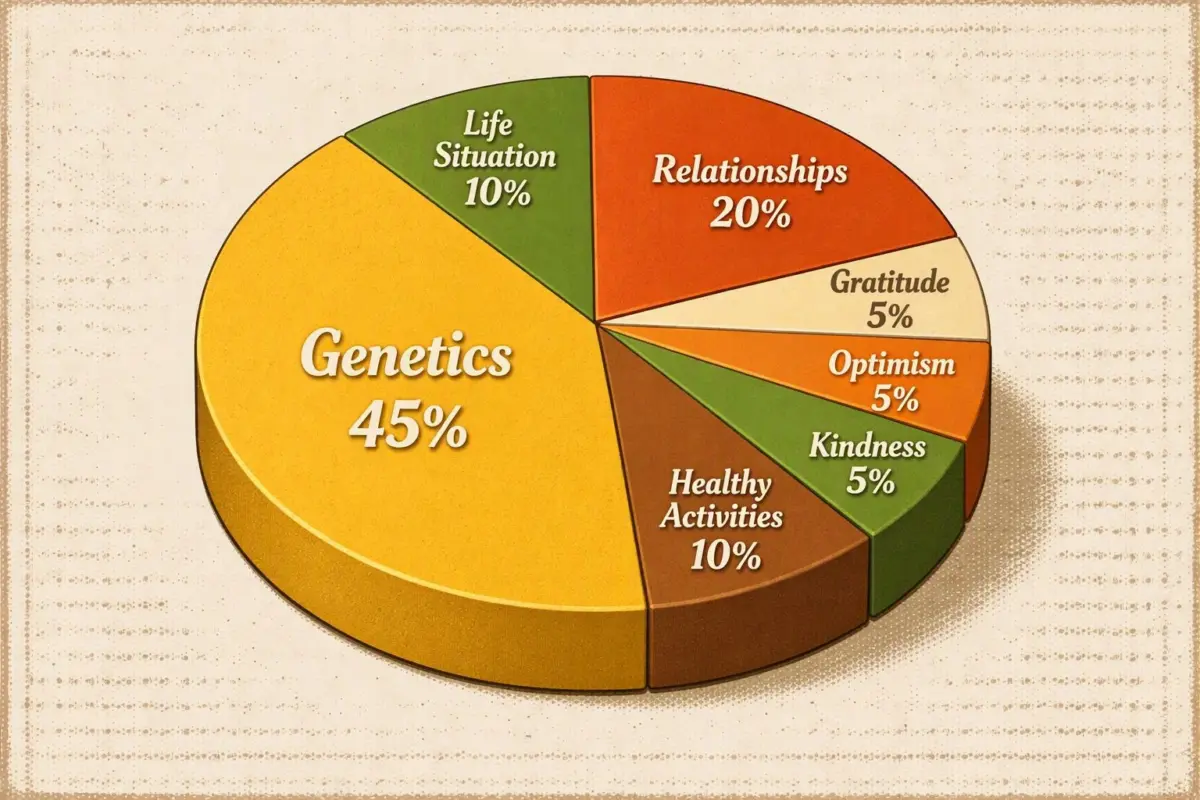
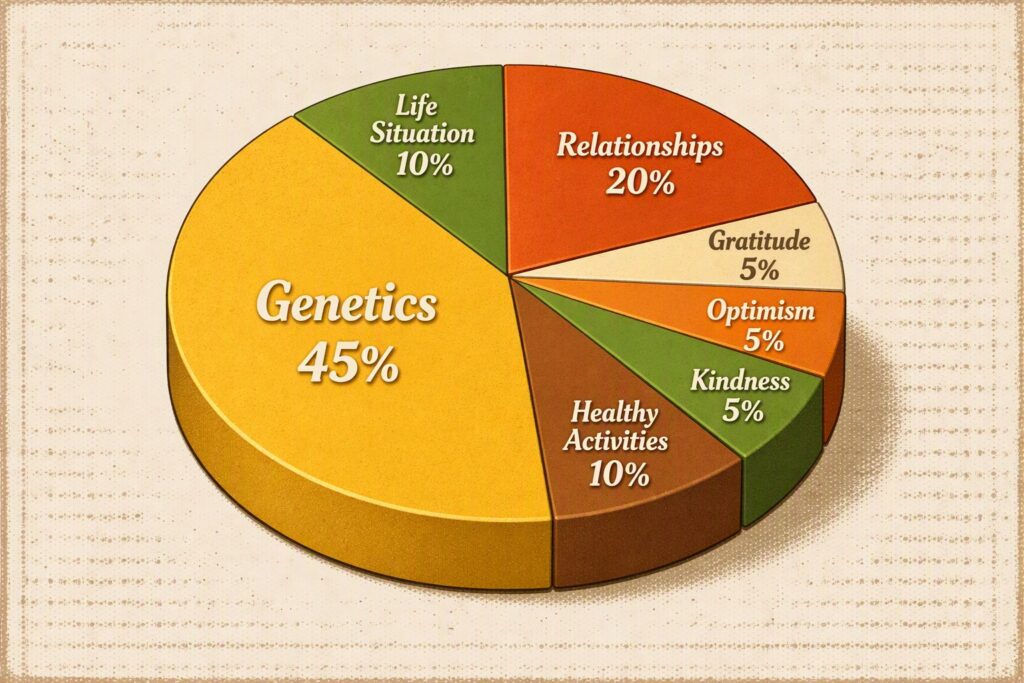
Human progress relies heavily on productivity tools, yet standard of living and economic growth are only components of overall well-being. In developed nations, basic material needs were met decades ago, shifting the primary focus of human happiness toward non-monetary factors. Psychological research suggests that while genetics play a prominent role in individual happiness, conscious choices—such as maintaining close relationships, practicing gratitude, cultivating optimism, and spending time on physical and outdoor activities—strongly dictate life satisfaction.

Despite these reassuring historical trends, widespread anxiety persists, even among individuals who have successfully achieved financial independence. The root cause of this persistent unease is often fear itself. As human beings, we are fundamentally danger-detection machines. Evolutionarily, fear served as a crucial survival mechanism against predators and scarcity. However, once immediate physical dangers are resolved, the human brain tends to shift its focus, moving goalposts to new areas of concern, ranging from social acceptance and wealth accumulation to sophisticated tax planning and mandatory retirement distribution thresholds.
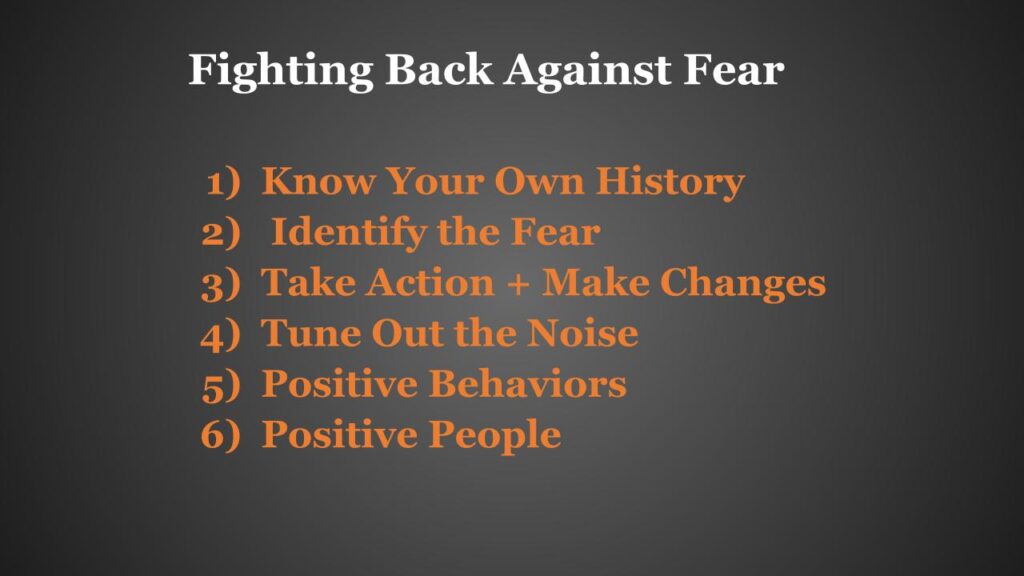
Combatting this pervasive anxiety requires self-awareness and rational evaluation. Examining personal history—such as growing up in environments scarred by past economic depressions or scarcity mindsets—often illuminates why certain fears persist today. By identifying the specific nature of a fear and confronting worst-case scenarios realistically, individuals can demystify the unknown. Action remains a powerful antidote to anxiety, transforming the unfamiliar into the manageable and building personal resilience.

Furthermore, managing one’s mental diet by filtering out sensationalized news media helps combat chronic stress. News outlets frequently prioritize hand-picked stories of crisis and catastrophe, whereas meaningful human progress stems from positive behaviors, active problem-solving, and surrounding oneself with optimistic, productive peers rather than fear-mongers. Adopting an experimental mindset toward life changes—whether shifting careers, making lifestyle adjustments, or evaluating early retirement—allows individuals to view uncertainty as a fascinating opportunity rather than a threat.
This philosophy applies directly to the current discourse surrounding artificial intelligence. Rather than yielding to doom-scrolling and apprehension, viewing the AI era as a grand technological experiment strips away much of its terror. Technology experts view artificial intelligence not as an existential menace, but as a high-powered cognitive tool designed to boost efficiency and productivity.

Just like previous technological revolutions—such as the advent of the internet and mobile computing—AI will inevitably displace certain traditional administrative and operational roles while simultaneously reducing service costs and catalysing entirely new industries. Much of the economic reward will naturally flow toward those who own and implement these tools, benefiting public shareholders and investors alike. Ultimately, technological disruptions present a choice: individuals can succumb to fear or utilize these developments as catalysts for continuous learning, adaptation, and a more engaged approach to life.