
Financial independence commentator and veteran blogger Mr. Money Mustache recently addressed these market anxieties in a newly developed presentation, debuting it at Camp FI Midwest and slated for a subsequent appearance at the Bogleheads conference. Drawing on over two decades of retirement experience, he examined how recurring anxieties about economic collapse, technological disruption, and global instability mirror the fears of previous decades, while offering a broader perspective on productivity, human psychology, and resilience.

Reflecting on Two Decades of Market Anxieties
Reflecting on twenty-one years of retirement, the financial commentator noted that friends and observers frequently question how anyone can remain comfortable and sleep soundly amid constant global uncertainty. A similar question was posed two decades earlier, in 2006, when investors faced an entirely different set of perceived existential threats.

Back in 2006, public discourse was dominated by fears of soaring national debt, inflation, geopolitical conflicts in the Middle East, and concerns over an overvalued housing market. At the time, anxiety centered on the impending housing bubble and the outsourcing of jobs overseas to nations like China and India, alongside widespread debates regarding "peak oil" and diminishing fossil fuel supplies.

Despite those substantial concerns, the subsequent twenty years featured significant historical disruptions, including the Great Financial Crisis—the most severe market downturn since the Great Depression—and the 2020 pandemic crash. Yet, looking at the long-term trajectory of the stock market, those historic crashes appear as temporary fluctuations within an upward trend. A foundational investment in the broader market during that period continued to appreciate significantly over the long haul.

Concurrently, global societal indicators showed substantial measurable progress. Extreme poverty rates declined considerably over a twenty-year span, and infant mortality rates dropped by half. Meanwhile, clean energy adoption accelerated as solar technology became dramatically more affordable, and electric vehicle adoption expanded globally. These developments highlight a historical pattern where persistent anxiety about an uncertain future frequently overshadows underlying long-term progress.

Prosperity, Productivity, and the Nature of Fear
Addressing whether current market conditions are fundamentally different—such as the potential impacts of the growing U.S. national debt or an AI-driven market correction—financial analysts point back to a fundamental economic principle: true prosperity is rooted in productivity rather than the numerical valuations of financial systems.

Financial markets and economic systems are human constructs. When market structures face severe disruptions, historical precedent demonstrates that societies adapt, restructure financial frameworks, and resume productive work. High productivity, driven by continuous innovation and technological development, remains the primary engine of economic growth, standard of living improvements, and the feasibility of early retirement.

However, the persistence of financial anxiety often stems less from objective economic realities and more from human psychology. Humans evolved as danger-detection machines, a biological trait designed to protect against immediate threats. When physical survival needs, basic food security, and social integration are successfully met, this detection machinery often pivots toward abstract worries, ranging from neighborhood property standards to complex tax strategies and investment preservation.
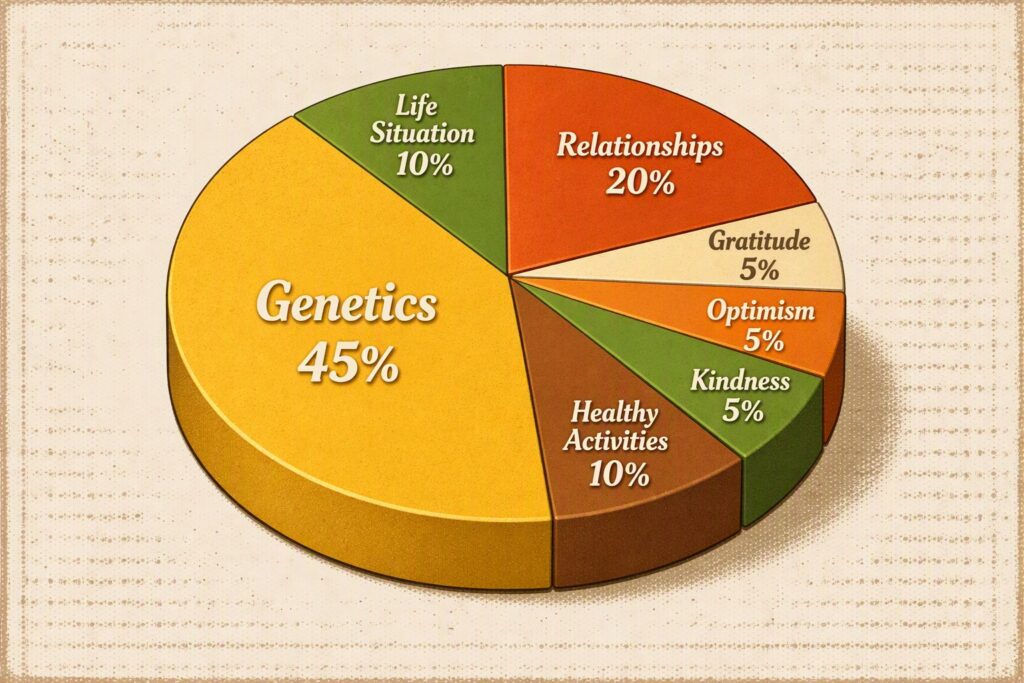
Understanding the root causes of financial fear—whether stemming from family history, past scarcity mindsets, or societal exposure to sensationalized daily news—allows individuals to evaluate their concerns rationally. Recognizing that continuous media consumption often amplifies extreme scenarios helps shift focus away from speculative worry and toward intentional behaviors, physical health, and positive engagement.

The AI Boom Through the Lens of Experimentation
Bringing these psychological insights to the present day, the ongoing artificial intelligence boom is characterized not as a looming catastrophe, but as a major technological experiment. While rapid advancements in artificial intelligence introduce uncertainty and displace certain entry-level office and administrative roles, technological shifts have historically displaced specific jobs while simultaneously reducing costs, increasing efficiency, and catalyzing entirely new industries. Much like the advent of the internet and mobile computing, artificial intelligence functions as a powerful tool for cognitive efficiency.
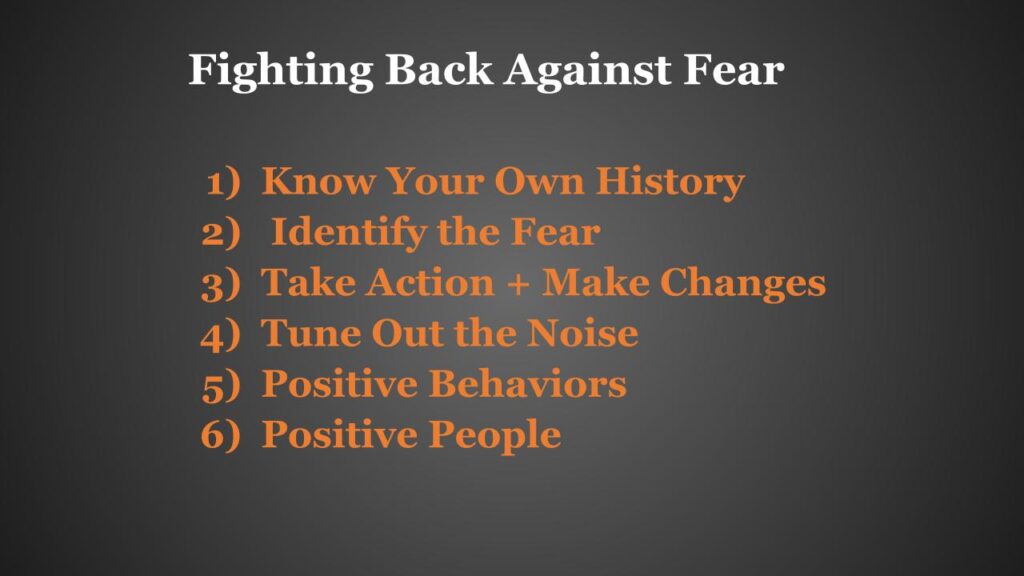
Ultimately, navigating modern economic cycles involves recognizing that financial systems are inherently volatile, but human adaptability remains resilient. By framing life changes, career transitions, and economic shifts as ongoing experiments rather than sources of terror, individuals can better manage uncertainty. As financial observers frequently emphasize, confronting and moving past inherent anxieties is often the necessary step toward achieving long-term personal and financial goals.