For decades, the stock market has continued to surprise investors, defying gravity and setting record valuations that inevitably spark anxiety about an impending crash. As artificial intelligence dominates current market enthusiasm, many investors find themselves wondering whether this tech-driven boom is simply a precursor to a modern repetition of the early 2000s dot-com collapse.

Addressing these widespread anxieties, veteran financial independence commentator and long-term retiree Mr. Money Mustache has offered a fresh perspective on market cycles, shifting focus away from transient economic panic and toward the underlying mechanics of human productivity and psychological resilience. Drawing from a presentation recently delivered at Camp FI Midwest and slated for the upcoming Bogleheads conference in November, the discussion tackles whether the current AI wave poses a genuine threat to retirement security or if it is merely the latest chapter in a long-standing pattern of market apprehension.
Will the AI Bubble Ruin Our Retirement?
Reflecting on more than two decades of retirement, the financial commentator noted that friends and followers frequently express astonishment that anyone can remain financially secure and sleep peacefully amidst persistent global instability. Modern news cycles consistently highlight a formidable roster of concerns, including volatile geopolitical leaders, rising inflation, towering national debt levels, active international conflicts, and the looming threat of an AI-driven economic bubble.

However, a historical comparison reveals that this brand of anxiety is far from new. Looking back twenty years to 2006, investors were wrestling with an entirely different set of catastrophic predictions. At that time, headlines were dominated by fears of political turmoil in the Middle East, escalating national debt, rampant inflation, the looming housing market bubble, and concerns that economic outsourcing to emerging markets like India and China would permanently destabilize Western employment. There was even widespread panic over "Peak Oil"—the persistent theory that rising fossil fuel consumption would inevitably outstrip dwindling global supplies.
Despite those severe warnings, the subsequent two decades demonstrated remarkable long-term resilience. Even accounting for the Great Financial Crisis—spurred by unchecked housing speculation and aggressive financial leverage—and the subsequent pandemic-related market shock of 2020, major broad-market investments experienced substantial long-term growth. Furthermore, global living standards improved dramatically over the same twenty-year period. Extreme poverty rates dropped significantly, global infant mortality rates were cut in half, and clean energy technologies expanded rapidly as solar power generation became exponentially more affordable and electric vehicle adoption surged worldwide.

Prosperity Rises from Productivity
When financial media outlets project catastrophic scenarios regarding national debt or technological bubbles, they often overlook a fundamental economic principle: true prosperity does not originate from abstract financial systems or computer-generated stock market tickers, but rather from human productivity.
Market economies are inherently volatile, prone to cyclical swings and periodic corrections. However, beneath the surface turbulence, human ingenuity continues to drive real-world inventions and labor. Financial systems and monetary metrics are ultimately human constructs; when financial systems face severe distress, society historically adapts, recalibrates, and continues forward. The core drivers of long-term economic growth, improved standards of living, and early retirement viability remain firmly rooted in technological progress and rising productivity.

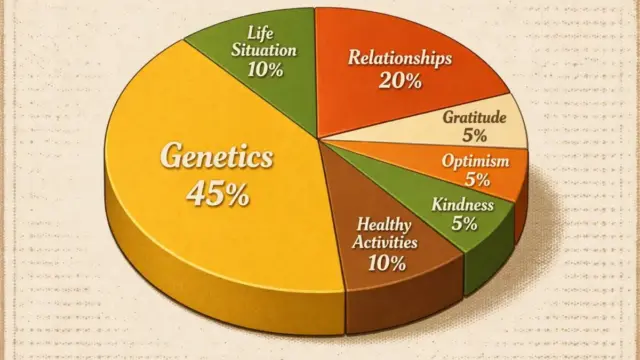
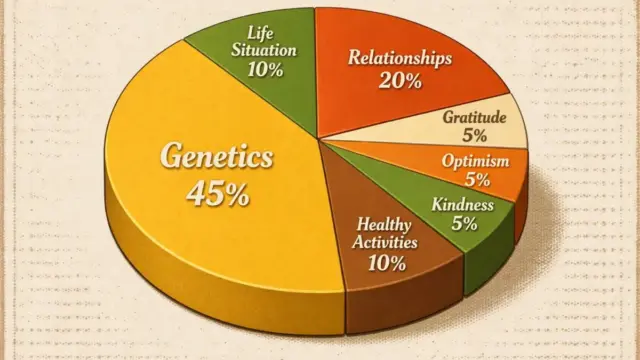
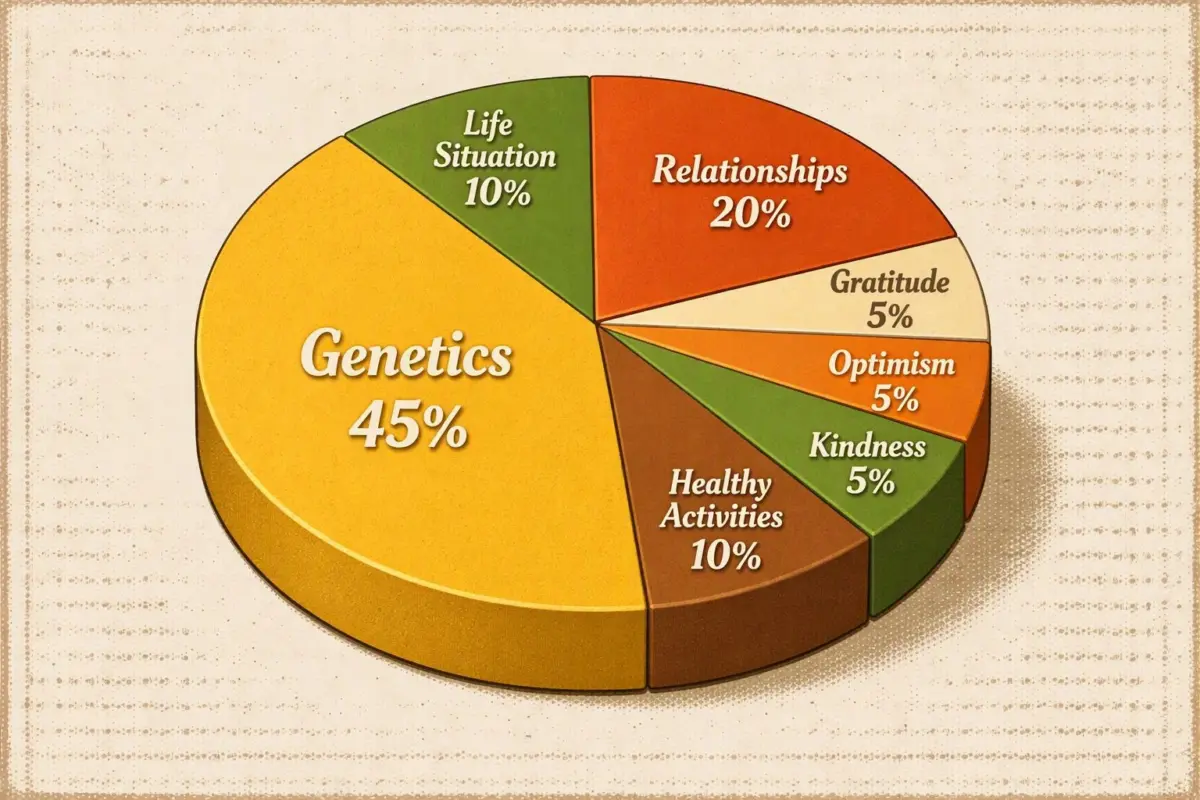
Beyond economic output, research into human happiness indicates that once basic material needs and comfort thresholds are met in developed nations, incremental wealth plays a diminishing role in overall life satisfaction. Long-term well-being is predominantly influenced by non-monetary factors, including genetics, strong personal relationships, gratitude, optimism, and engagement in healthy physical and outdoor activities.
Confronting the Evolutionary Mechanics of Fear
The persistence of financial anxiety, even among individuals who have achieved financial security, points to a deeper psychological root: human evolutionary biology. As a species, humans evolved primarily as danger-detection machines. This pervasive background fear served as an essential evolutionary survival mechanism to protect early humans from immediate physical threats, predators, and scarcity.

However, this detection machinery often malfunctions in modern, secure environments. When genuine physical dangers are neutralized, the human mind frequently continues scanning for threats, effectively moving the goalposts of anxiety. Once basic survival and food security are achieved, individuals pivot to worrying about social acceptance, relative wealth comparisons, tax strategies, or administrative regulations like required minimum distributions.
Overcoming this pervasive background anxiety requires self-awareness and an understanding of personal history. Childhood experiences, family attitudes toward money, and past trauma often shape an individual’s financial worldview in adulthood, leading to fears driven by the past rather than an objective assessment of the present. By identifying specific fears and examining worst-case scenarios, individuals can recognize that many anticipated catastrophes are statistically improbable.

Taking decisive action remains one of the most effective methods for dissolving unfamiliarity and building resilience. Cultivating broad mental, physical, and emotional adaptability equips individuals to navigate shifting circumstances with confidence, rendering future uncertainties far less intimidating.
Treating the Future as an Experiment
To counter the paralyzing effects of sensationalized media and chronic worry, financial commentators advocate adopting an experimental mindset toward life changes. Whether applied to minor lifestyle adjustments, career transitions, or major milestones like early retirement, viewing life events as experiments reframes uncertainty from a threat into an opportunity for discovery.

This experimental framework applies directly to the current artificial intelligence boom. Rather than succumbing to doom-scrolling and generalized panic over technological displacement, examining the underlying technology reveals both significant potential and clear structural shifts. AI functions essentially as a cognitive tool designed to enhance efficiency and productivity.
Like previous technological revolutions—such as the advent of the internet and mobile computing—artificial intelligence will inevitably disrupt traditional employment sectors while simultaneously lowering service costs and catalyzing entirely new industries. While productivity gains and technological rewards often concentrate among asset owners and shareholders, these innovations ultimately present individual participants with choices regarding adaptation, continuous learning, and personal engagement.

Ultimately, navigating market bubbles and economic transitions requires addressing the root causes of internal anxiety rather than merely reacting to external symptoms. Embracing uncertainty as a natural component of growth and maintaining a focus on productive behavior remains essential for achieving long-term personal and financial fulfillment.