
For those who have tuned out the financial media drama, the current economic landscape is dominated by the meteoric rise of generative AI. Proponents view it as a revolutionary technological leap that will reshape human productivity, while skeptics warn of an imminent crash mirroring the devastating dot-com bust of the early 2000s.

Addressing this mounting apprehension, veteran financial commentator and early retirement pioneer Mr. Money Mustache recently tackled the psychology of market crashes, historical anxieties, and the nature of human fear during a presentation at the Camp FI Midwest event. Expanding on these themes ahead of an upcoming appearance at the Bogleheads conference in November, the long-running internet financial personality argues that the panic surrounding the AI boom is largely misplaced, rooted instead in evolutionary psychology rather than economic reality.
Will the AI Bubble Ruin Our Retirement?
Having celebrated over two decades of early retirement, the author notes that he has grown comfortable with economic volatility. However, a recent conversation with a concerned friend prompted a reflection on how the nature of public anxiety shifts over time, yet rarely disappears.

When questioned about how anyone could remain retired and sleep soundly given the state of the world, a parallel was drawn to a nearly identical conversation that took place twenty years prior, in 2006. Back then, public anxiety was focused on a different set of perils: geopolitical instability in the Middle East, surging national debt, inflation fears, and a hyper-inflated stock market driven by the housing bubble rather than AI. Observers at the time also worried extensively about "peak oil" and the outsourcing of American jobs to overseas markets like India and China.
Looking back, those fears materialized into major historical events, most notably the Great Financial Crisis of 2008—the largest market crash since the Great Depression. Yet, viewed through a long-term lens, the impact of even that catastrophic downturn was absorbed by decades of subsequent growth. A hypothetical investment made during that period of peak anxiety still expanded significantly over the following twenty years, weathering subsequent disruptions such as the 2020 pandemic crash.

Simultaneously, global standards of living improved dramatically on multiple fronts. Over the span of two decades, the proportion of the global population living in extreme poverty dropped from 20 percent to 8 percent, while global infant mortality rates were cut in half. Clean energy adoption surged, with solar panels becoming dramatically cheaper and emerging as a dominant source of new power generation, alongside a massive rise in electric vehicle adoption worldwide.
Despite these tangible global advancements, the financial media continues to churn out cautionary narratives about modern threats, from escalating national debt to the potential societal disruptions of artificial intelligence. Yet, these pessimistic forecasts routinely overlook a fundamental economic principle: true prosperity is not derived from the artificial constructs of financial systems or fluctuating stock tickers, but from human productivity.

Prosperity Comes From Productivity
The core argument rests on the understanding that the global capitalist system is inherently volatile and prone to erratic swings. Beneath the daily turbulence of financial markets, however, real people continue to perform real work, invent new technologies, and drive efficiency.
The concept of an "economy" is ultimately a human invention. Should a financial system collapse due to speculative excess or a loss of confidence, society has historically demonstrated the capacity to restructure the framework and resume productive labor, as occurred following the 2008 financial crisis. The underlying tools of human productivity—coupled with technological innovation—remain intact, serving as the true engine of economic growth, higher living standards, and the feasibility of early retirement.

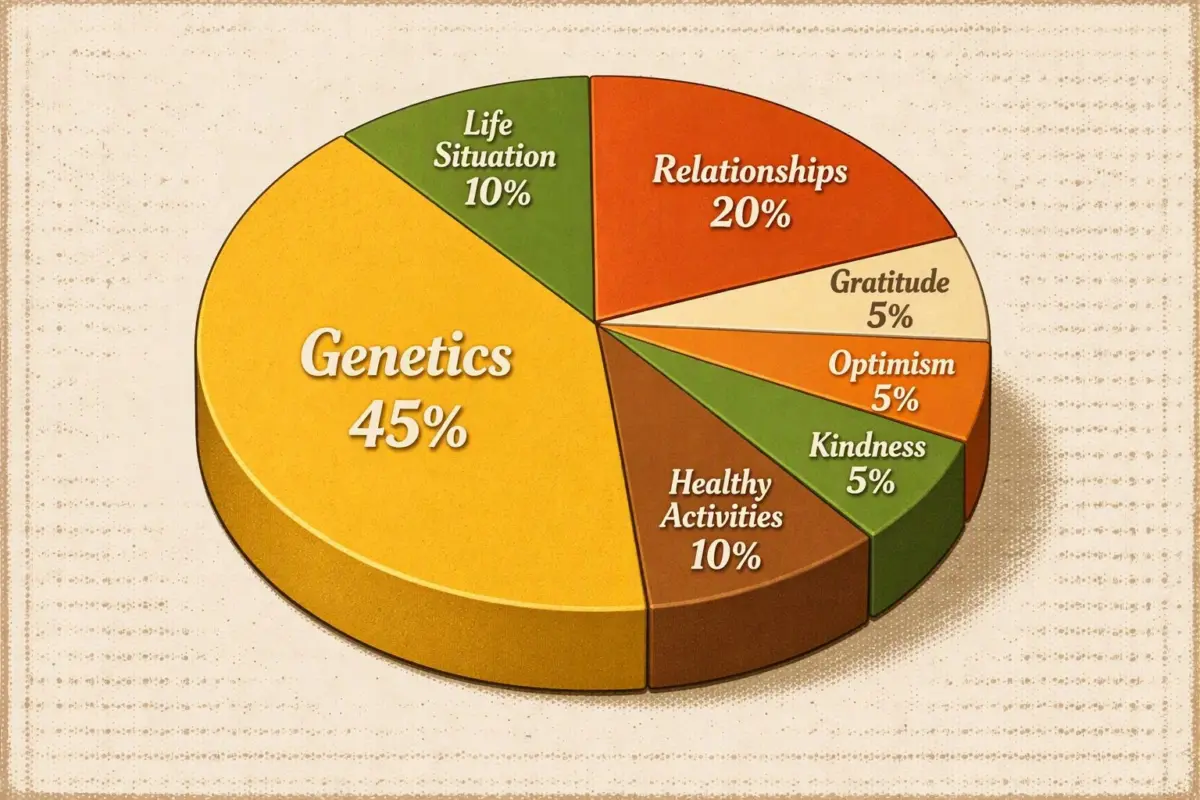
Beyond economic output, discussions surrounding wealth often overlook the plateau of human happiness. Once a society achieves a stable, comfortable standard of living, additional financial accumulation yields diminishing returns regarding overall life satisfaction. Psychological research suggests that wealth forms only a minor component of a broader happiness framework largely dictated by genetics, interpersonal relationships, gratitude, optimism, and engagement in healthy, active lifestyles.
Understanding and Combating Fear
If the fundamentals of human progress remain strong, the persistence of widespread anxiety among investors points to a deeper psychological root: human evolutionary biology. As a species, humans evolved primarily as danger detection machines. While this hyper-vigilance was historically vital for survival against predators and disease, modern environments lack those immediate physical threats, causing the human brain to continuously shift the goalposts of worry.

Once basic survival needs and financial security are met, anxiety often migrates to abstract concerns, ranging from neighborhood property aesthetics and tax strategies to mandatory retirement account distributions. This background fear is frequently compounded by personal history, childhood environments marked by scarcity, or past trauma.
To counter this persistent state of apprehension, financial commentators suggest a deliberate shift in perspective. The first step involves recognizing the source of one’s anxieties rather than projecting them onto current external events. Identifying specific worst-case scenarios often reveals that potential outcomes are far less catastrophic than anticipated.

Furthermore, taking decisive action serves as an effective antidote to fear, transforming the unfamiliar into the manageable and building personal resilience. Proactively filtering out the sensationalized daily news cycle—which relies heavily on fear-mongering to capture attention—allows individuals to redirect their focus toward positive behaviors, physical health, and constructive problem-solving within their immediate environments. Surrounding oneself with optimistic, forward-thinking peers further reinforces a productive mindset.
Everything Is an Experiment
Applying this experimental mindset to modern developments helps reframe potential disruptions, such as the rapid advancement of artificial intelligence. Rather than viewing emerging technology through a lens of existential dread, it can be evaluated objectively as a profound shift in societal capabilities.

AI functions fundamentally as a form of cognitive efficiency—a high-powered intellectual tool that enhances productivity across numerous sectors. Much like previous technological revolutions, including the advent of the internet and the proliferation of mobile smartphones, AI promises to accelerate economic output while simultaneously displacing certain administrative and technical roles.
While productivity gains historically concentrate financial rewards among business owners and shareholders, they also drive down the costs of goods and services while catalyzing entirely new industries. Artificial intelligence thus represents a choice point: an opportunity for individuals to engage in continuous learning, adapt to changing economic conditions, and participate in technological progress rather than succumbing to preemptive panic.
Ultimately, navigating both market bubbles and personal anxieties requires looking past short-term volatility and recognizing that growth, resilience, and personal fulfillment lie just beyond the boundaries of fear.