For those detached from the daily financial drama, the overarching AI narrative centers on rapid innovation, massive venture capital flows, and profound economic disruption. However, investors frequently worry that while artificial intelligence is undoubtedly a major technological milestone, the financial mania surrounding it is developing too fast and too intensely. This has fueled widespread speculation that markets are marching toward a magnified repetition of the dot-com crash of the early 2000s—an era that shaped early career paths and nearly derailed personal milestones before giving way to subsequent market cycles.

As financial commentators and long-term retirees reflect on these recurring cycles, questions regarding modern investment strategies remain central to public discourse. To address these concerns, financial educators have taken public discussions on the road, recently presenting analyses at events such as Camp FI Midwest and preparing expanded sessions for upcoming financial conferences like the Bogleheads gathering. These discussions examine whether current market dynamics will jeopardize retirement security or if history offers a more reassuring perspective.
Will the AI Bubble Ruin Our Retirement?
Achieving decades of retirement brings a certain comfort with market volatility, yet questions from concerned peers routinely challenge this peace of mind. A common refrain among anxious observers is how anyone can remain retired and sleep soundly amid current global uncertainties.

A retrospective look reveals that anxieties are a permanent fixture of human consciousness, though the specific targets shift over time. Twenty years prior, in 2006, investors and the general public wrestled with a completely different set of terrifying headlines. Leaders such as George W. Bush, Saddam Hussein, and Osama Bin Laden dominated the news cycle, while military conflicts raged in Iraq rather than Iran. Back then, society worried intensely about the U.S. national debt, inflation, and an overvalued housing market that eventually triggered the Great Financial Crisis. Instead of artificial intelligence taking white-collar jobs, the prevailing fear was that widespread outsourcing to India and China would hollow out the domestic labor market. Furthermore, a fierce debate raged over "Peak Oil," with many convinced that skyrocketing fossil fuel consumption would inevitably outstrip dwindling supplies and doom civilization.
Instead of absolute destruction, the subsequent twenty years unfolded with surprising resilience. While the Great Financial Crisis emerged as the most severe economic downturn since the Great Depression—fueled by irrational exuberance in housing prices and complex financial leverage—the long-term trajectory of the stock market continued upward. In the grand scheme of things, historical charts show that even significant market crashes appear as minor blips over extended horizons, with foundational investments multiplying substantially over the decades, successfully weathering major shocks like the 2020 pandemic crash.

Simultaneously, the broader world experienced remarkable human and economic progress. Global extreme poverty rates plummeted significantly over a twenty-year span, while infant mortality rates were cut in half. Clean energy expanded dramatically, driven by solar panels becoming exponentially cheaper and generating vast amounts of peak capacity globally. Concurrently, electric vehicle adoption surged from near-zero to substantial market shares worldwide.
These historical realities pose a fundamental question: should energy be focused on worrying about an uncertain future, or on optimism and productivity?

Prosperity and the Core Drivers of Economic Growth
Skeptics frequently question whether the current landscape is fundamentally different—wondering if the national debt has finally reached a tipping point, if the AI bubble will dwarf the housing crisis, or if advanced intelligence will eventually supersede human utility. Financial media routinely capitalizes on these fears, yet such narratives frequently overlook a foundational economic truth: true prosperity does not originate from abstract financial systems or computer-generated stock market tickers.
Prosperity stems directly from productivity.

The underlying mechanics of capitalism are inherently choppy, marked by wild swings and emotional cycles. However, beneath the surface turbulence, real people perform real work and develop tangible inventions. Economic systems and financial markets are fundamentally human constructs. If a financial system experiences a severe correction due to shifting sentiment, society can adapt, recalibrate, and resume productive labor, much as it did following the disruptions of 2008 and earlier historical crises.
Humanity retains every tool ever invented to boost productivity. Standard of living, economic growth, and the viability of early retirement are all anchored in high productivity rather than speculative market sentiment.

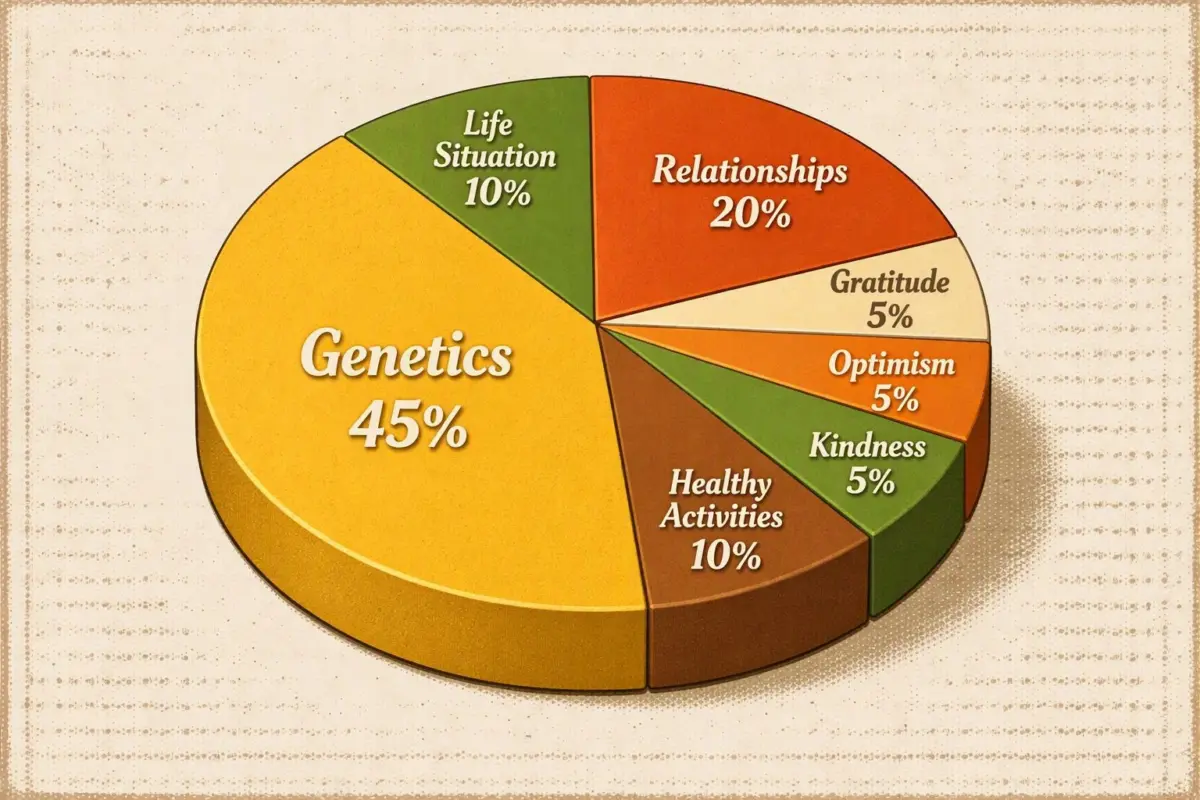
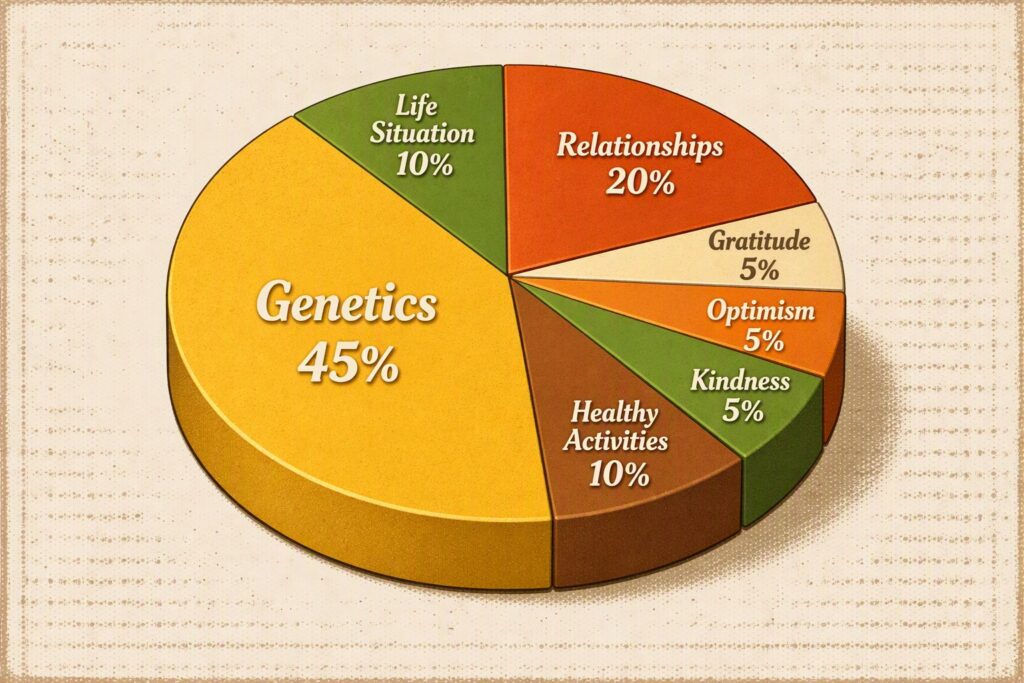
Yet, once a certain standard of living is achieved, human happiness largely stabilizes in that dimension. In developed nations, basic material requirements were surpassed decades ago, leading individuals to seek fulfillment through non-financial avenues. Ultimately, wealth represents merely one slice of an individual’s overall life satisfaction. While genetics play a substantial role in baseline happiness, actionable choices remain within personal control—such as cultivating strong relationships, practicing gratitude, maintaining an optimistic philosophy, and incorporating regular outdoor physical activity into daily life.
Confronting Fear Itself and the Mechanics of Worry
Despite these enduring principles, persistent anxiety remains a widespread challenge, even among financially independent individuals. The root cause often lies in human biology: humans evolved primarily as danger-detection machines. This pervasive background fear served a vital evolutionary purpose in protecting early humans from immediate environmental threats.

However, this detection machinery exhibits a peculiar flaw. When actual physical dangers recede, the human mind continues searching for new sources of worry, effectively moving the goalposts. Once predators and disease are managed through modern infrastructure, attention shifts toward food scarcity, social exclusion within a tribe, or abstract financial concerns. At advanced stages of financial security, anxieties migrate into hyper-specific domains, such as complex tax strategies, estate planning, and managing government-mandated required minimum distributions on surplus wealth.
Combating this intrinsic fear requires conscious self-awareness and rational thinking. Understanding personal history—such as childhood experiences shaped by family scarcity mentalities or broader historical trauma—helps contextualize why anxiety manifests in the present moment rather than reflecting objective reality. Identifying specific worst-case scenarios through structured examination frequently reveals that potential outcomes are far less catastrophic than anticipated.

Action remains a powerful antidote to fear. Taking concrete steps makes the unfamiliar familiar, building resilience and confidence. Furthermore, curating one’s mental diet by minimizing exposure to sensationalized daily news—which disproportionately highlights terrifying anecdotes—allows individuals to redirect their energy toward positive behaviors, physical movement, and constructive problem-solving in natural environments. Surrounding oneself with optimistic, productive peers within supportive communities further reinforces a healthy mental framework.
Embracing Change: The AI Era as an Experiment
Adopting an experimental mindset transforms how individuals approach uncertainty. Whether evaluating minor lifestyle changes or monumental decisions like career pivots and early retirement, viewing life experiences through the lens of experimentation strips away paralyzing dread.
This perspective applies directly to the artificial intelligence boom. Rather than succumbing to doom-scrolling and ominous media coverage, understanding the technological and economic drivers behind AI reveals a landscape rich with potential. Artificial intelligence functions essentially as a sophisticated cognitive tool designed to enhance efficiency and productivity.
Like previous technological revolutions, AI will inevitably displace certain entry-level administrative, financial, and transit roles. Simultaneously, it reduces service costs and catalyzes the creation of entirely new industries, mirroring the transformative impact of the internet, smartphones, and mobile applications. While the economic rewards of such innovations often concentrate among asset owners and shareholders, individual market participants who maintain diversified portfolios also share in these macroeconomic shifts.

Ultimately, artificial intelligence represents another major technological evolution—an opportunity to make deliberate choices rather than surrender to fear. By recognizing anxiety as an evolutionary artifact rather than an infallible guide, individuals can navigate market cycles, technological shifts, and personal transitions with resilience and clarity. As many philosophical frameworks suggest, everything desired on a personal level ultimately lies on the other side of fear, waiting for deliberate, rational action to bridge the gap.