For those who have managed to tune out the daily drumbeat of financial media drama, the current landscape centers on a familiar narrative. Investors worry that while Artificial Intelligence is undoubtedly a major technological milestone, the economic mania surrounding it is moving too fast and reaching valuations that outpace reality. This dynamic evokes memories of the early 2000s dot-com bubble—a market cycle that notably propelled the early career of prominent financial commentator and blogger Mr. Money Mustache, before the ensuing crash threatened both his job stability and citizenship application.

Addressing these widespread economic anxieties, the veteran financial commentator recently developed a dedicated presentation exploring the intersection of modern market bubbles and human psychology. After debuting the talk at the Camp FI Midwest event, preparations are underway to deliver a refined version at the upcoming Bogleheads conference in November. The core thesis of these discussions addresses a fundamental question that plagues modern savers: Will the current AI bubble ruin retirement, or is the collective panic merely a modern manifestation of age-old financial fears?
To contextualize the current climate, it helps to look back two decades. In 2006, savers faced a vastly different set of alarming headlines, yet the underlying emotional tenor was remarkably similar. Back then, financial pundits warned of dangerous geopolitical leaders, escalating conflicts in the Middle East, surging national debt, persistent inflation, and a dangerously overvalued housing market. Observers also panicked about outsourcing threatening domestic employment, alongside widespread debates over "Peak Oil" and the impending exhaustion of global fossil fuel supplies.

Yet, looking back over the subsequent twenty-year window reveals a resilient global economy. Despite the devastation of the Great Financial Crisis—triggered by irrational exuberance over rising housing prices and excessive financial leverage—long-term market performance defied catastrophic predictions. A $100,000 investment made during that period of peak anxiety still managed to grow substantially over the next two decades, absorbing subsequent shocks like the 2020 pandemic-induced downturn.
Simultaneously, broader global indicators demonstrated profound societal progress. Over the same twenty-year span, the global proportion of people living in extreme poverty dropped dramatically, and infant mortality rates were cut in half. Clean energy adoption accelerated as solar panels plummeted in cost, making solar generation a dominant source of new capacity worldwide. Meanwhile, electric vehicle adoption surged from near-zero to a significant share of global automotive sales. These realities underscore a vital economic principle: long-term prosperity is not derived from the volatile numbers flickering on a computer screen within the financial system, but rather from fundamental human productivity.

Prosperity, Productivity, and the Nature of Economic Systems
The underlying mechanics of capitalism have always been characterized by choppy waters and wild swings. Beneath the surface turbulence, however, real people continue to perform real work and develop genuine innovations. The concept of an "economy" is fundamentally a human invention. If a financial system breaks down because market participants lose confidence in prevailing valuations, society possesses the capacity to reset the parameters and resume productive labor—a mechanism demonstrated successfully during the 2008 financial crisis and numerous historical precedents.
True economic growth, standard of living improvements, and the viability of early retirement strategies all stem from sustained productivity. However, once a society achieves a certain baseline standard of living, human happiness tends to plateau along that specific financial dimension. First-world nations surpassed those minimum material requirements decades ago, shifting the primary driver of overall well-being toward non-financial factors.

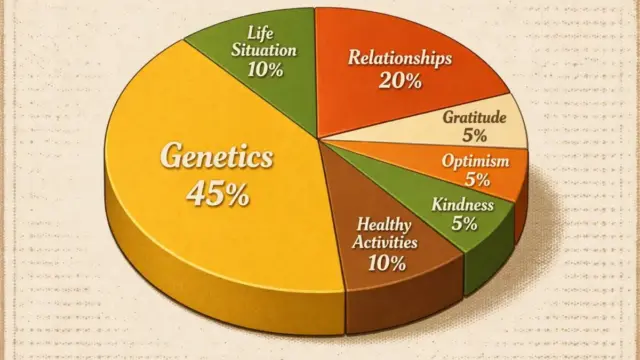
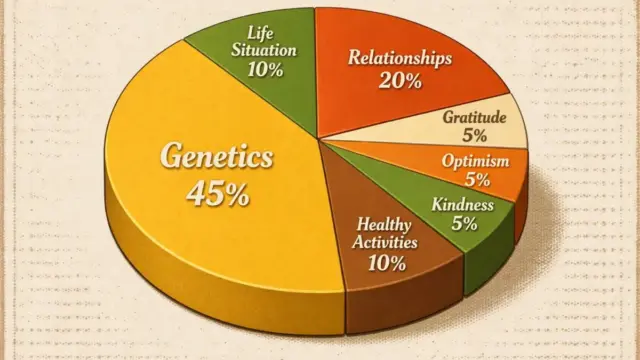
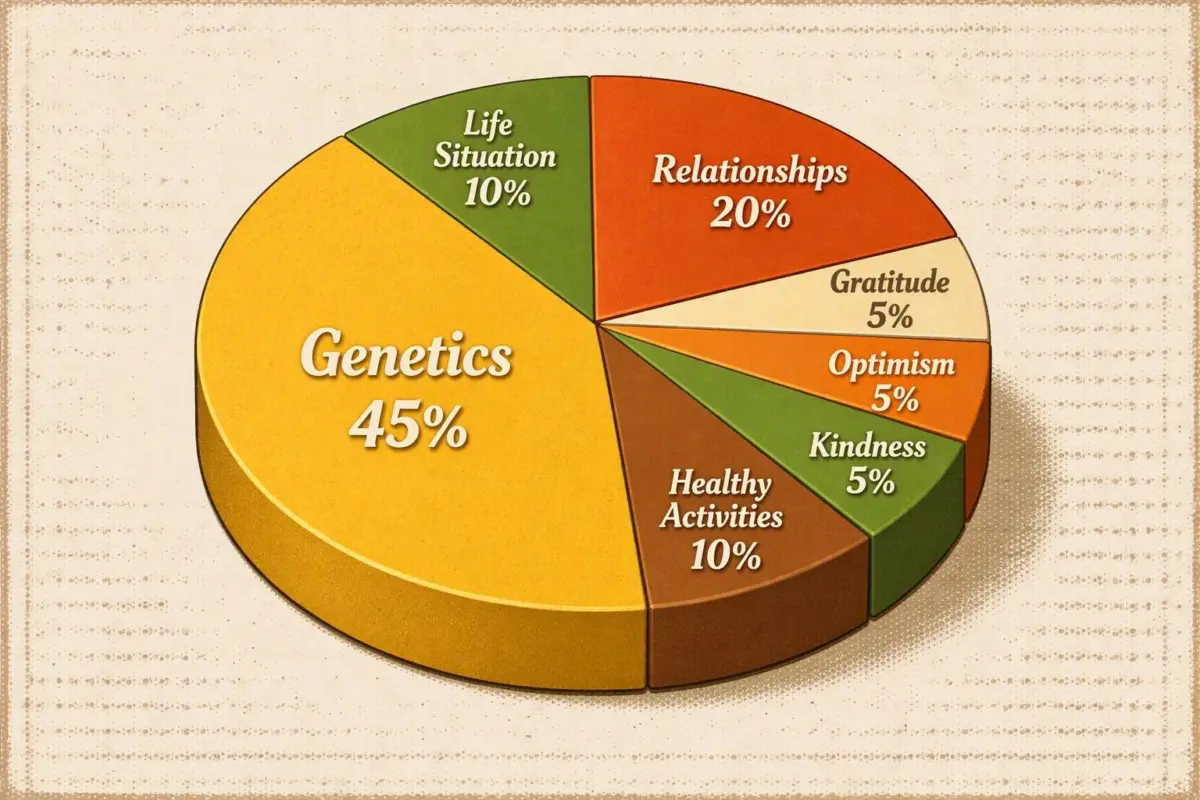
Psychological research and observational models suggest that wealth represents only a fraction of an individual’s overall life satisfaction. While genetic predispositions play a major role in baseline happiness, controllable factors such as cultivating strong personal relationships, practicing gratitude, maintaining an optimistic outlook, and engaging in regular outdoor physical activity carry significantly more weight in determining daily contentment.
Despite these reassuring historical realities, persistent anxiety remains prevalent even among financially secure individuals. This phenomenon points to a deeper psychological root cause: fear itself.

Understanding and Combating Human Fear Responses
Human beings evolved as sophisticated danger detection machines. This background anxiety served as an evolutionary survival mechanism designed to protect early humans from predators and environmental threats. However, modern psychological adaptation creates a persistent challenge. When immediate physical dangers are resolved, the human brain continues scanning the environment for new threats, effectively shifting the goalposts of worry.
Once scarcity of food and basic supplies is conquered, individuals often pivot to worrying about social acceptance within their communities. In wealthier populations, anxiety frequently migrates toward financial optimization, such as complex tax strategies, estate planning to maximize generational inheritances, or navigating government-mandated Required Minimum Distributions upon reaching advanced age.

Combating this pervasive anxiety requires conscious self-awareness and rational evaluation. Tracing the historical roots of personal fear—whether stemming from childhood environments, familial scarcity mentalities, or past trauma—helps decouple historical conditioning from objective present-day realities. Articulating worst-case scenarios often reveals that perceived catastrophes are manageable. Taking deliberate action transforms the unfamiliar into the familiar, fostering resilience and confidence.
Furthermore, managing one’s mental diet by filtering out sensationalized news media helps mitigate unnecessary panic. The daily news cycle often emphasizes alarming stories designed to trigger emotional engagement rather than objective understanding. Replacing fear-mongering influences with positive, productive communities allows individuals to focus on constructive behaviors, personal health, and purposeful engagement with the world.

The Artificial Intelligence Era as a Technological Experiment
Approaching new technological frontiers through the lens of experimentation rather than existential dread alters the perspective on modern developments like Artificial Intelligence. Rather than succumbing to doom-scrolling, examining the foundational drivers of technological enthusiasm reveals significant potential upside alongside structural shifts.
Artificial Intelligence functions fundamentally as a powerful cognitive tool—effectively serving as a cognitive nail gun designed to enhance human efficiency, productivity, and ultimately societal prosperity. By lowering the cost of advanced cognitive capabilities, AI holds the potential to unlock new industries and drive economic expansion, much like the advent of the internet and mobile computing revolutions.

At the same time, technological transitions invariably displace certain categories of workers, particularly in entry-level administrative, software, and transportation roles. This displacement echoes historical industrial shifts where automation altered labor markets while simultaneously generating entirely new economic sectors. While the productivity gains and financial rewards of such innovations often concentrate among asset owners and shareholders, the broader technological integration remains an ongoing experiment rather than an insurmountable crisis.
Ultimately, navigating economic uncertainties and technological revolutions requires moving past surface-level anxiety to address the underlying emotional and psychological drivers of fear. By focusing on productivity, resilience, and intentional living, individuals can approach an unpredictable future with clarity and purpose.