
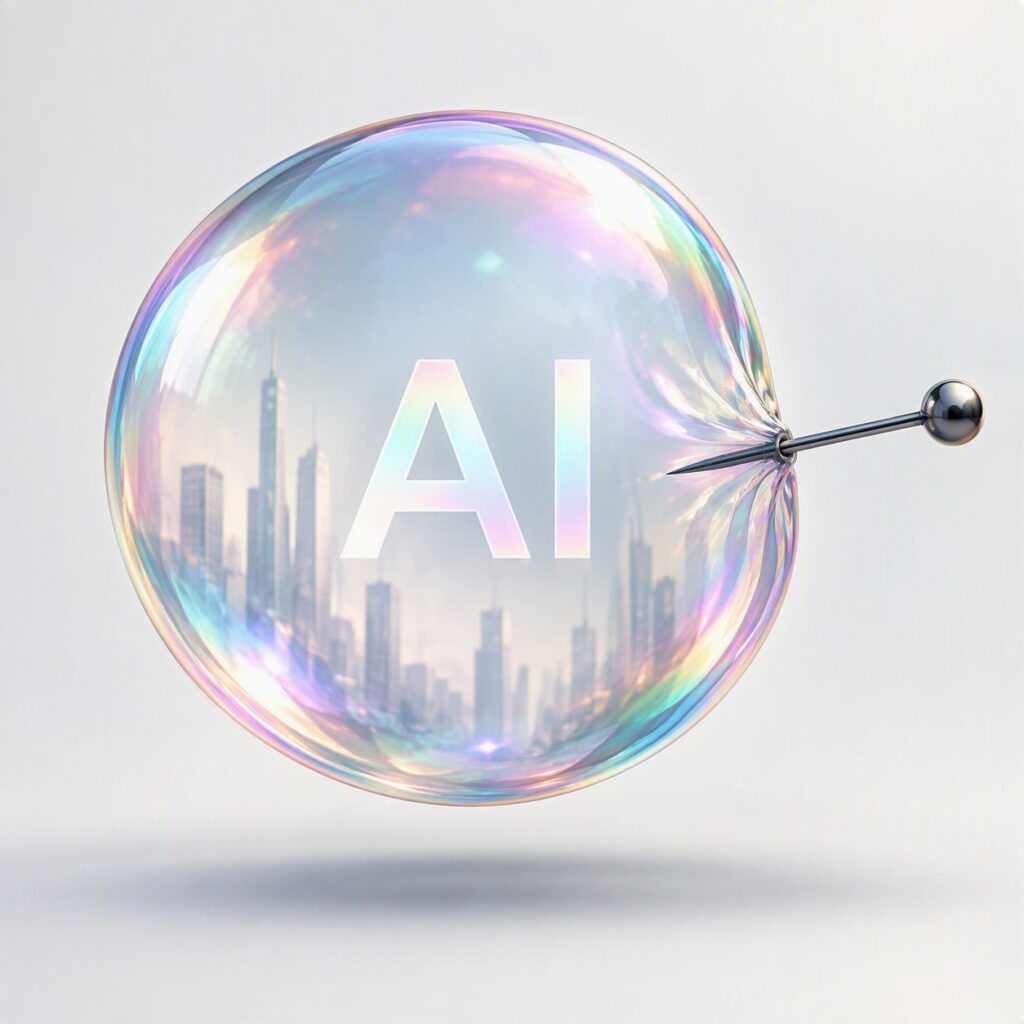
While those who maintain a healthy detachment from daily financial media continue to enjoy their lives unbothered, the broader discourse remains fixated on the trajectory of the tech sector. Investors worry that although artificial intelligence is undeniably a transformative technological breakthrough, the speculative mania surrounding it is moving too fast and reaching unsustainable extremes. This dynamic evokes strong parallels to the dot-com bubble of the early 2000s—a defining period that catalyzed early career milestones for some veteran figures in the financial independence community before nearly derailing their long-term stability when the market eventually corrected.
As questions surrounding this latest investment cycle multiply, long-standing financial commentators and early retirement advocates have begun addressing these anxieties through public speaking engagements, including recent appearances at the Camp FI Midwest event and upcoming presentations at the Bogleheads conference. These discussions seek to contextualize contemporary market fears by examining historical parallels, separating systemic economic realities from psychological panic, and evaluating whether current anxieties about artificial intelligence are genuinely distinct from past economic panics.

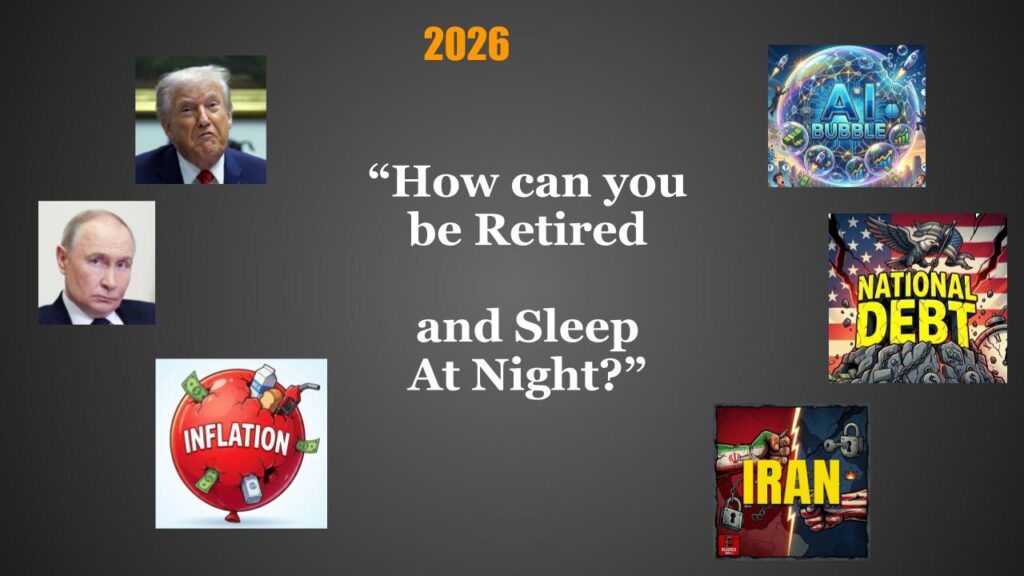
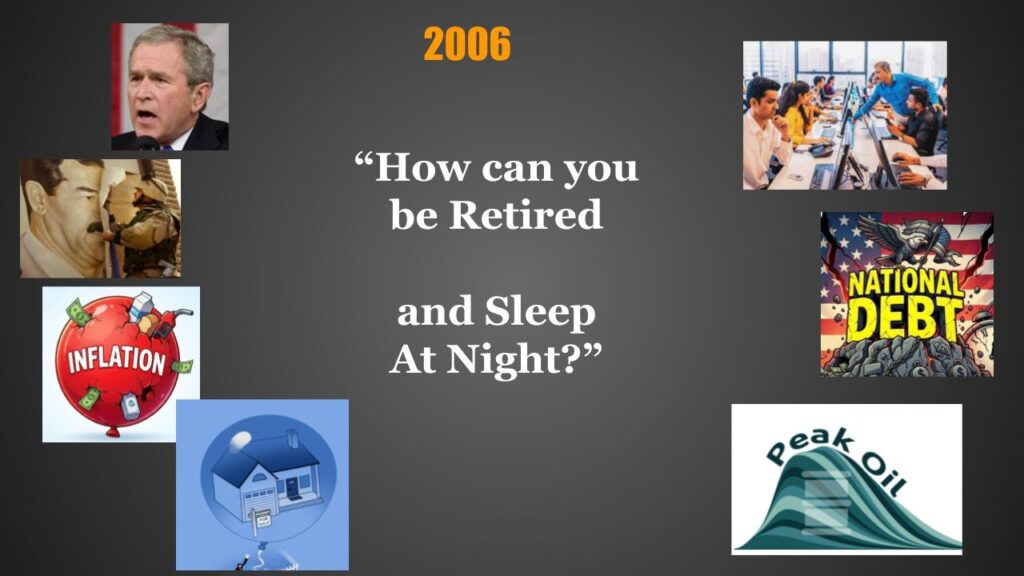
Reflecting on decades of post-work life, financial observers often encounter a recurring question from anxious peers: how one can remain comfortable and sleep soundly amid global uncertainties, ranging from volatile geopolitical tensions and escalating national debt to persistent inflation and technological disruption. Interestingly, these exact worries are hardly novel. When similar concerns were raised two decades prior—amid the geopolitical conflicts of the mid-2000s, anxieties over the national debt, fears of outsourcing, and debates surrounding peak oil—the prevailing sentiment was one of impending doom.
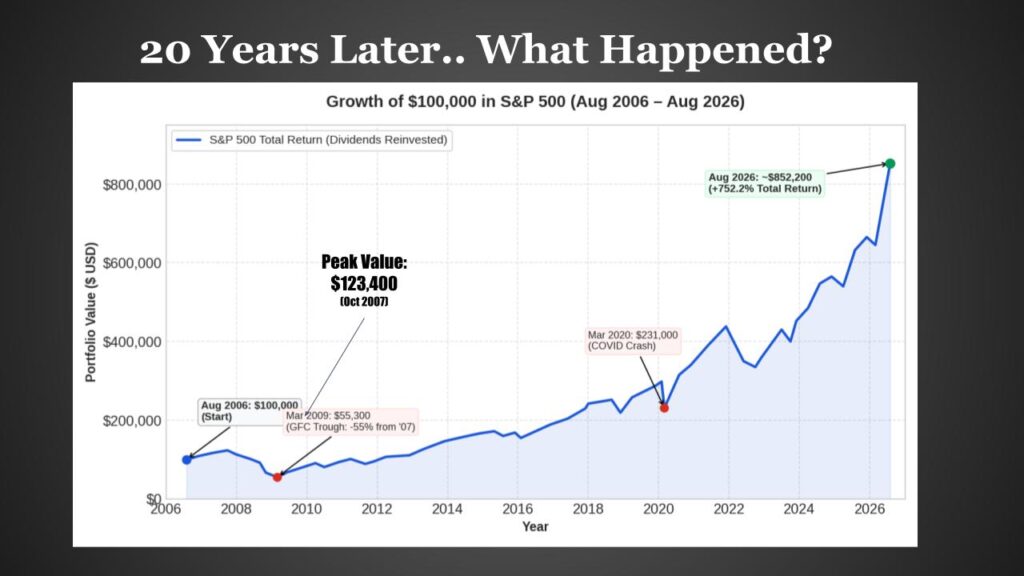
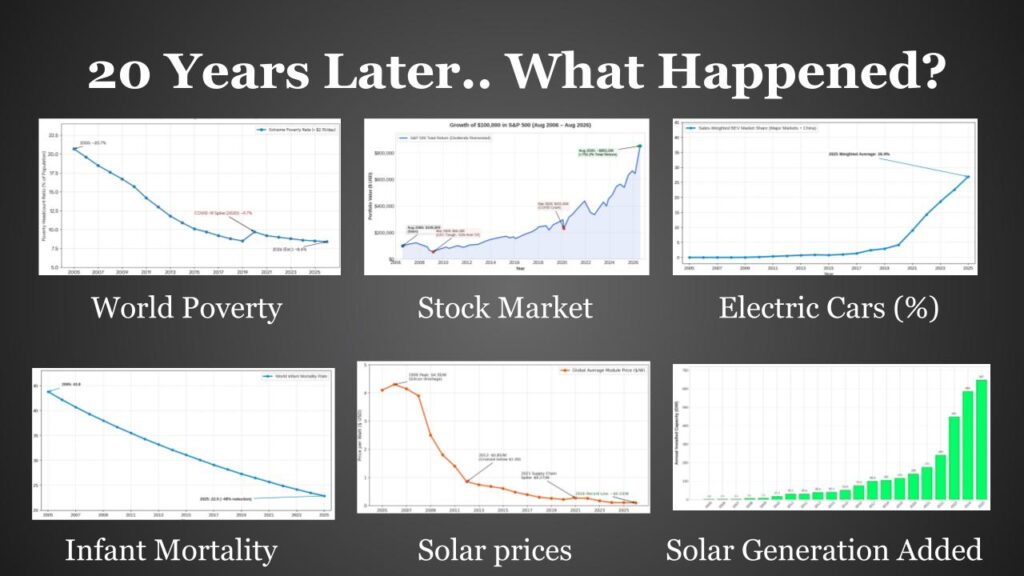
Yet, looking back across the subsequent twenty years reveals a vastly different reality. Despite the severe turbulence of the Great Financial Crisis—triggered by housing market irrational exuberance and excessive leverage—and subsequent disruptions such as the COVID-19 pandemic, broad equity markets demonstrated remarkable resilience. A historical investment in the broader market weathered these profound storms and appreciated substantially over the long term. Simultaneously, broader global indicators improved significantly, with extreme poverty rates dropping markedly, infant mortality declining across the globe, and clean energy adoption accelerating as solar and electric vehicle technologies matured rapidly.
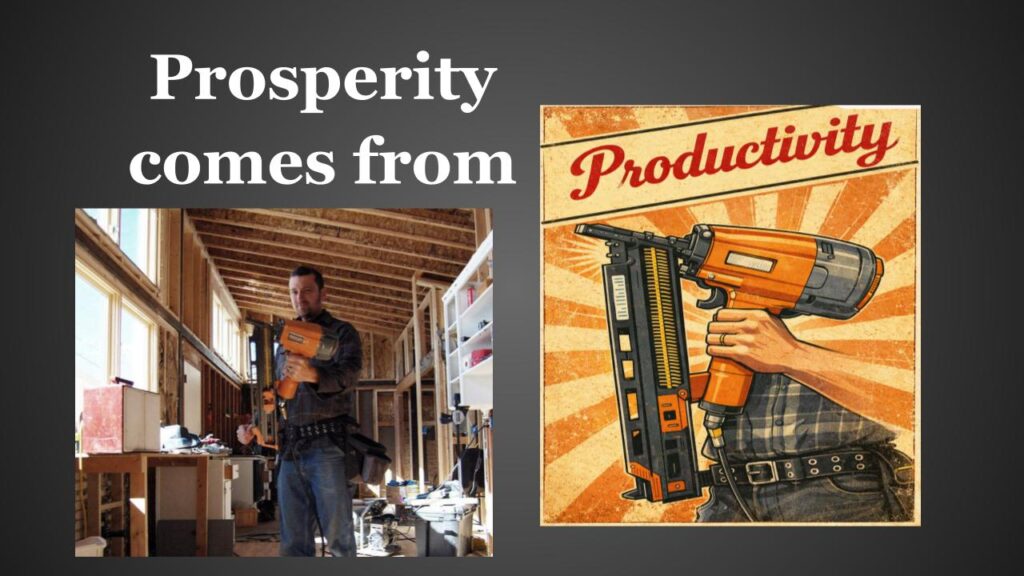
This historical context highlights a fundamental tension between the fear of an uncertain future and the steady accumulation of human productivity. Market commentators frequently overlook a basic economic truth: long-term prosperity does not originate from ephemeral stock market figures or complex financial instruments, but rather from tangible productivity. Capitalism is inherently volatile, characterized by cyclical waves of exuberance and correction, but beneath the surface volatility, individuals continue to innovate, invent, and generate real economic value. Financial systems themselves are human constructs; if a system experiences a severe dislocation, societies routinely restructure the framework to resume productive output, as occurred following the 2008 financial crisis and numerous historical downturns prior.
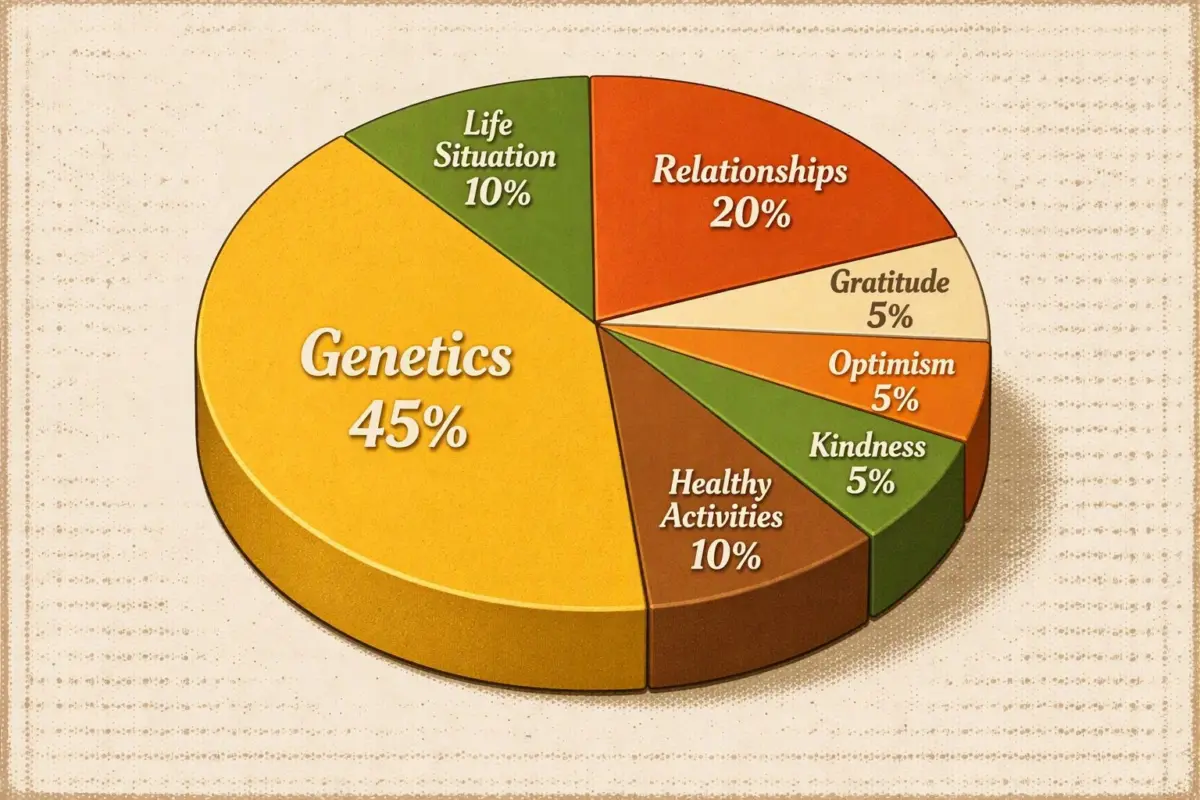
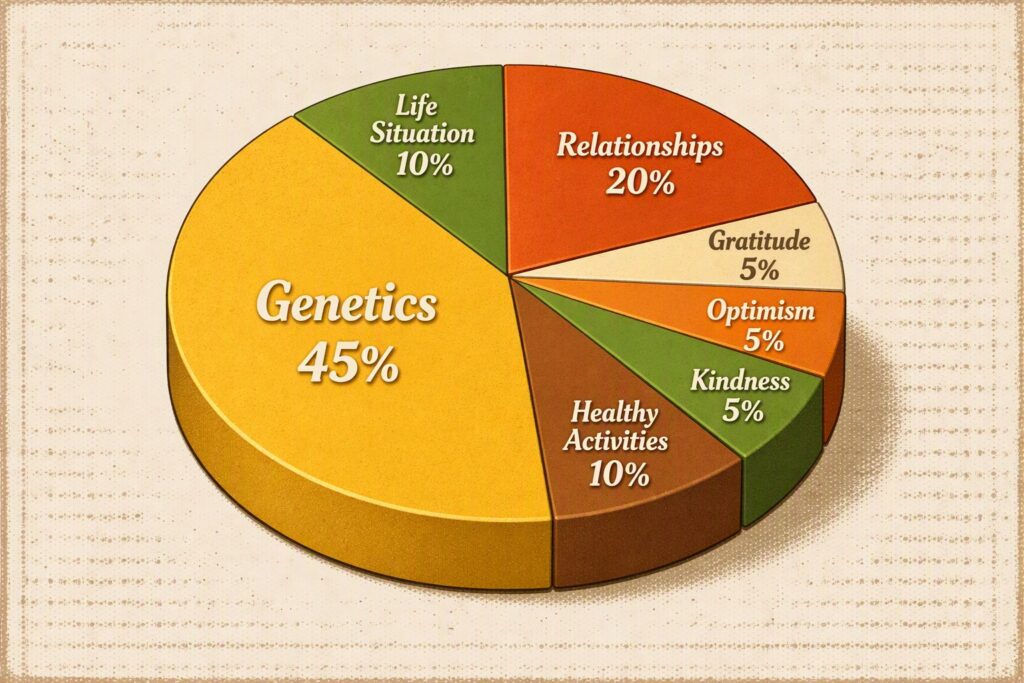
Beyond economics and productivity, human happiness tends to stabilize once basic material standards of living are met. Psychological research and anecdotal observation suggest that long-term well-being is largely influenced by a combination of innate temperament, supportive personal relationships, the practice of gratitude, and regular physical activity. Despite these enduring principles, background anxiety remains remarkably persistent among investors and retirees alike.
This pervasive anxiety can largely be attributed to human evolutionary psychology. As biological entities, humans evolved as sophisticated danger-detection machines designed to identify and respond to physical threats. When immediate perils such as predators or extreme scarcity are mitigated, the mind frequently continues searching for new sources of worry, shifting from basic survival to social status, economic positioning, and even nuanced financial strategies like navigating mandatory retirement account distributions.
Overcoming this perpetual cycle of fear requires a conscious effort toward self-awareness and rational evaluation. Examining personal and familial histories often reveals that modern anxieties are rooted in past experiences or inherited scarcity mindsets rather than objective assessments of the present. Furthermore, replacing a diet of sensationalized daily news with proactive behavior, outdoor activity, and constructive social circles can significantly alter one’s mental landscape. Adopting an experimental mindset toward life transitions—whether changing careers, adjusting living arrangements, or stepping away from traditional employment into early retirement—helps reframe unfamiliar challenges as manageable learning opportunities.
When applied to the current artificial intelligence landscape, this experimental perspective transforms a source of widespread dread into an object of fascination. Rather than yielding to doom-scrolling and apprehension, viewing AI as an advanced form of cognitive tool offers a more balanced outlook. Much like previous technological revolutions, artificial intelligence acts as a powerful amplifier of human efficiency, boosting productivity and ultimately driving broader economic prosperity.

At the same time, the integration of advanced technology inevitably disrupts traditional labor markets, displacing workers in administrative, financial, and transportation sectors while simultaneously lowering service costs and spawning entirely new industries—a pattern observed during the rise of the internet and mobile computing. While the economic rewards of such innovations frequently concentrate among capital owners and shareholders, the technology itself remains another chapter in the ongoing evolution of human capability.
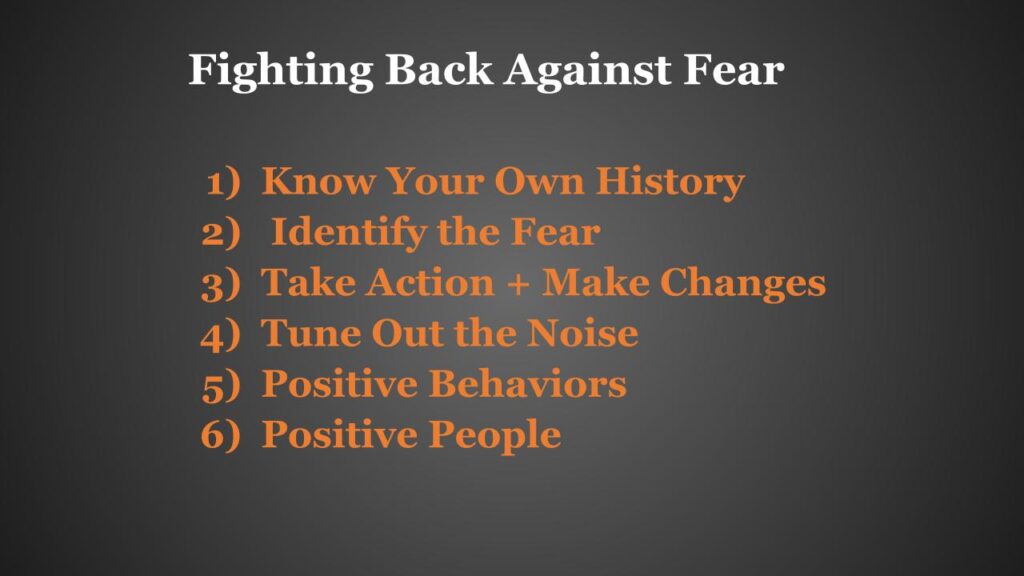
Ultimately, addressing financial anxieties requires looking past the daily fluctuations of the stock market and examining the root causes of fear itself. By understanding psychological triggers, focusing on tangible productivity, and adopting a resilient approach to change, individuals can better navigate market manias and focus on building a sustainable and fulfilling life.