
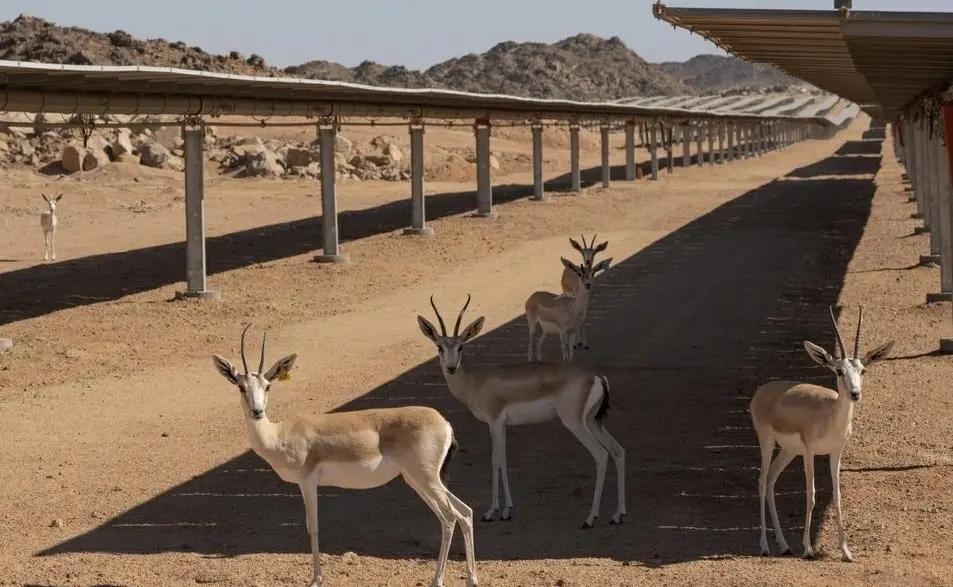
The initiative represents a novel approach to environmental management in the region, bridging the gap between the clean energy transition and biodiversity preservation. While small gazelles of this variety are frequently found in captivity across global zoological institutions, wildlife managers estimate that only about 3,000 of these delicate animals survive in the wild across their historic range in the Arabian Peninsula and Türkiye. Placing a fragile, vulnerable population inside a heavily engineered, high-voltage industrial solar park might initially seem unconventional, but conservation leaders point out that the unique microclimate and protection offered by the site create an ideal ecosystem for recovery.
Spanning an impressive 1,200 acres within the broader 24,500-square-mile nature reserve, the solar plant primarily generates clean electricity to power Amaala, the Kingdom’s flagship 100% renewably powered ultra-luxury coastal tourist destination. However, the operational landscape has now been cleverly adapted to accommodate local fauna. The entire facility is surrounded by robust, wildlife-proof fencing, a security measure originally designed to protect the multi-million-dollar array of photovoltaic panels that now serves an equally vital ecological purpose: shielding the resident gazelles from outside predators.
Within these secure confines, the initial cohort of 38 Arabian sand gazelles can forage, roam, and breed free from the constant pressure of predation that plagues wild populations across the harsh desert landscape. Conservation managers have laid out ambitious projections for the sanctuary, with the immediate goal of nurturing the founding group of several dozen animals until the population expands beyond 500 individuals. Once this threshold is achieved, officials plan to use the surplus population to systematically reestablish strong, self-sustaining herds throughout the wider expanses of the massive nature reserve.
Andrew Zaloumis, director of the Prince bin Salman Nature Reserve, emphasized the long-term vision behind the project during a recent briefing on the region’s environmental strategies. Explaining the core philosophy driving the initiative, Zaloumis noted that the ultimate objective extends far beyond simply managing a captive herd.
"Our rewilding goal is to build self-sustaining wildlife populations that can survive in the wild without ongoing human intervention," Zaloumis said. He added that the endeavor introduces a forward-looking operational model that merges clean energy production with ecological restoration, introducing a novel "double-green" framework that holds significant potential for global scalability. To describe this fusion of green energy and rewilding, project leaders have coined the term "ReWildingVoltaics." While the terminology may be rooted in technical jargon, the tangible results on the ground are what matter most to the conservation teams managing the daily operations.
The integration of wildlife into the solar facility has unfolded in carefully monitored phases to ensure the animals successfully acclimatize to their new surroundings. Alongside the initial arrival of the sand gazelles last October, conservationists also introduced mountain gazelles and Arabian hares into the solar park to diversify the local fauna and reintroduce native species back into their historical habitat. After months of careful observation by on-site ecologists to confirm that the animals were settling comfortably into the terrain and adapting to the industrial layout, male members were added to the population in May. Wildlife managers are optimistic that this structured introduction will successfully establish a thriving, self-perpetuating population capable of anchoring future conservation victories in the region.
The project builds upon a growing body of global research and practical experimentation regarding the dual use of solar energy installations, a practice often referred to broadly in the renewable energy sector as agrivoltaics or environmental synergy. While previous international initiatives documented by environmental outlets have focused on agricultural benefits—such as utilizing the space beneath solar panels for pasturing sheep to manage vegetation or cultivating shade-tolerant crops—the Saudi project adapts these foundational principles for wildlife conservation and arid-zone ecology.
One of the most immediate and tangible benefits observed at the site is the natural climate modification provided by the sprawling rows of photovoltaic panels. In the searing heat of the Arabian Peninsula, where surface temperatures can reach punishing extremes, the elevated panels cast dense, continuous shade across the ground. Field observations indicate that the shaded microclimates beneath and around the arrays remain between 8 and 18 degrees Fahrenheit cooler than the open desert exposed to direct sunlight. This temperature reduction offers vital thermal relief for the gazelles, lowering heat stress and making the harsh desert environment significantly more hospitable during peak daylight hours.
This multifaceted initiative aligns closely with the broader ambitions of the Saudi Green Initiative, a national sustainability strategy aimed at combating climate change, protecting vulnerable ecosystems, and transitioning the national economy toward a more sustainable future. Among its core targets, the initiative aims to protect 30 percent of the Kingdom’s terrestrial and marine landmass while simultaneously scaling up renewable energy infrastructure to generate 50 percent of the nation’s electricity from clean sources by the year 2030. By successfully demonstrating that utility-scale clean energy generation and native wildlife conservation can coexist not only peacefully but to their mutual benefit, the Prince bin Salman Nature Reserve project offers a compelling blueprint for balancing industrial development with environmental stewardship in sensitive arid regions across the globe.