The five-month-old male calf, now named Annautaq, represents a rare addition to the small population of walruses in human care in the United States. SeaWorld Orlando is currently one of only four institutions in the entire country equipped with the specialized facilities, expert staff, and infrastructure necessary to house and care for Pacific walruses.
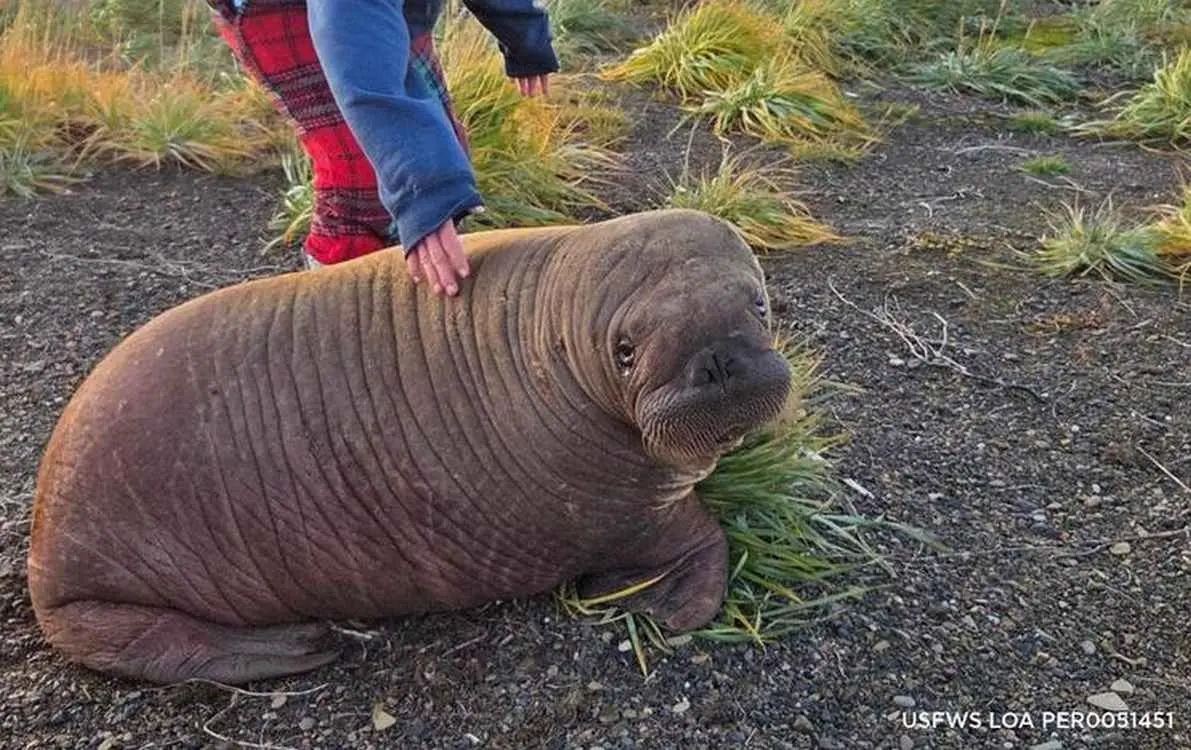
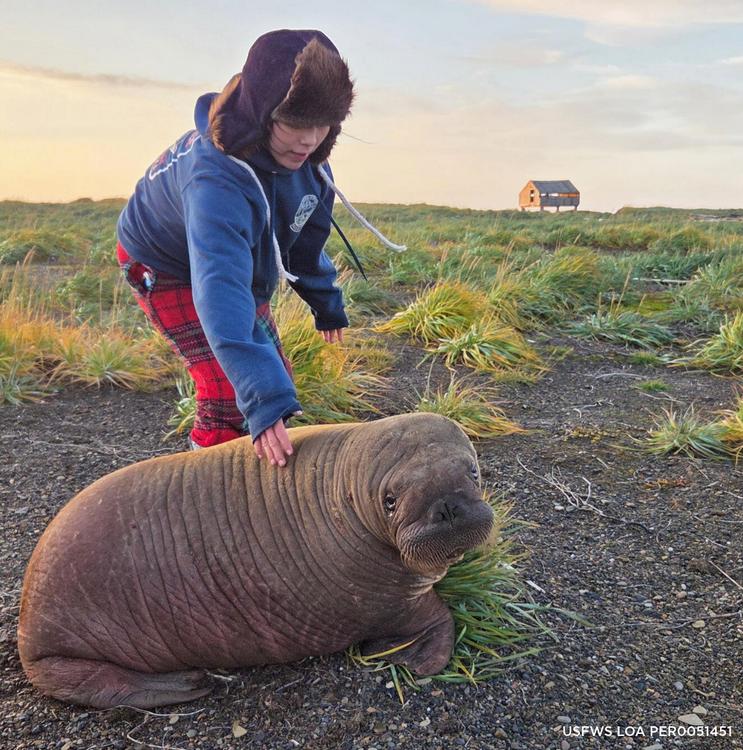
Annautaq’s journey to safety began in the vast and unforgiving wilderness of northern Alaska. Violet Anniskett, a local community member and wildlife research intern, alongside Tony Fischbach, a scientist with the U.S. Geological Survey, made the critical discovery during field monitoring. They encountered the young calf huddled between the weathered remains of two adult walruses on an isolated stretch of coastline. The local walrus herd had recently moved on as heavy surf battered the shoreline, leaving the dependent calf behind.
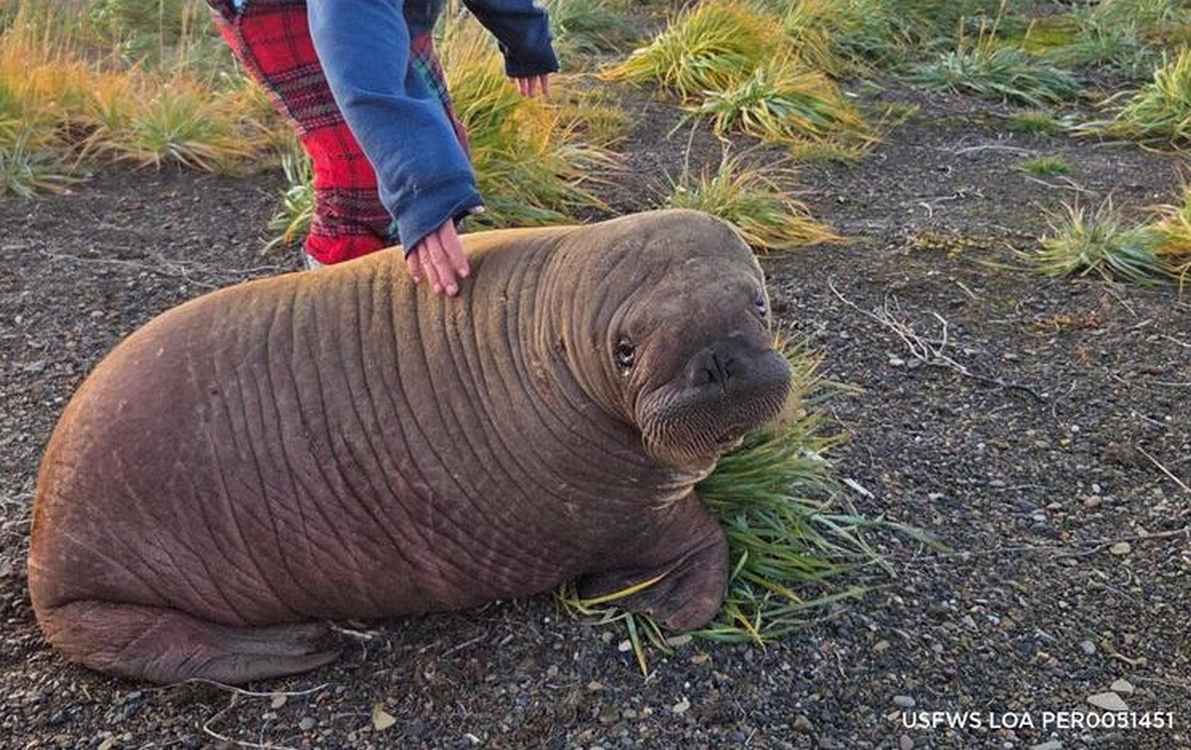
Given his young age and lack of maternal protection, the calf was already being targeted by scavenging birds. Wildlife experts quickly realized that without human intervention, the animal had virtually no chance of survival in the harsh environment. Because of the extreme remoteness of the beach, located a significant distance from human civilization and infrastructure, local caretakers and researchers stepped in to provide vital stabilizing care over several days.
Logistics for marine mammal rescue in remote Alaska are notoriously challenging. Following the initial days of localized stabilization, arrangements were made to safely transport the calf via aircraft to the Alaska SeaLife Center located in Seward, a premier facility renowned for its marine mammal rehabilitation efforts.
During his time at the Alaska SeaLife Center, the local community rallied around the young animal, recognizing both his resilience and the vital educational role he could play in helping the public understand the challenges facing Pacific walruses in a changing Arctic ecosystem. In honor of her father’s Iñupiaq heritage, Violet Anniskett chose the name Annautaq—pronounced “ah-now-tuq”—which translates to “axe” in the Iñupiaq language.
Recognizing the specialized, long-term needs of a young walrus, SeaWorld dispatched a dedicated team of animal care professionals and veterinary experts experienced in marine mammal neonate care to Alaska. This team worked alongside local specialists to stabilize the animal further and prepare him for a grueling 4,000-mile journey across the North American continent to his permanent home in Florida.
The transfer falls under SeaWorld’s long-standing history of wildlife rescue and rehabilitation. Since the park’s establishment, the institution has provided intervention, medical care, and sanctuary to approximately 43,000 orphaned, injured, sick, or otherwise needy animals across various species.
Following a thorough evaluation of the animal’s condition and life history, the U.S. Fish and Wildlife Service determined that Annautaq was a non-releasable candidate and could not be returned to the wild. In the natural environment, Pacific walrus calves rely entirely on their mothers for rich milk and essential nutrition throughout their first year of life. Beyond nutrition, maternal care is critical for protection against predators and the development of complex survival and social behaviors necessary for long-term survival in the wild.
With his mother absent, federal wildlife authorities and marine mammal experts agreed that permanent placement in a specialized zoological facility was the only viable option for his survival. SeaWorld Orlando was selected not only for its medical capabilities but also for its capacity to integrate the young male into a social group containing other walruses.
Jane Belovarac, the wildlife response curator at the Alaska SeaLife Center, emphasized the collaborative effort required to save the young animal. “Annautaq’s story shows why having specialized marine mammal rehabilitation capacity in Alaska is so important,” Belovarac said. “Getting Annautaq to this point took an incredible network of people, and we’re proud the ASLC could provide the specialized care that helped carry him from rescue in Alaska to his next chapter.”
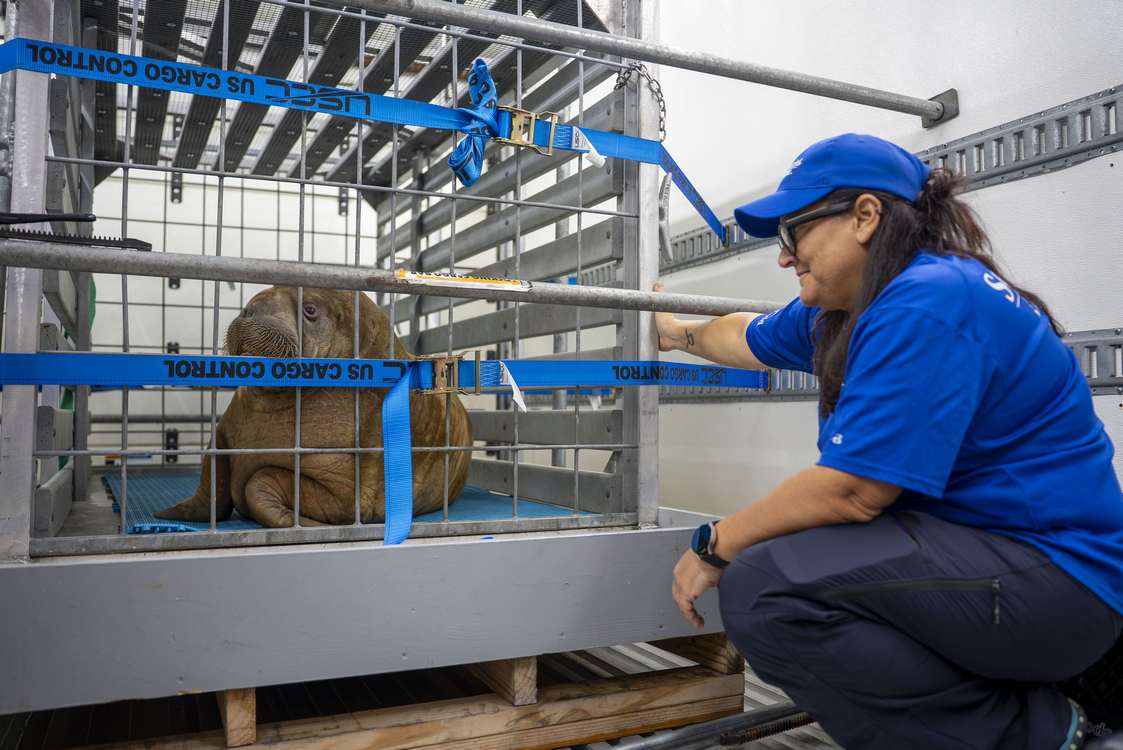
Upon arriving in Central Florida, Annautaq was placed into a standard, rigorous 30-day quarantine protocol designed to safeguard the health of the resident animal population while allowing veterinary staff to monitor his adjustment closely. During this quarantine period, the calf receives up to six bottle feedings daily, specialized nutritional formulas, around-the-clock monitoring, and customized veterinary support.
Jim Kinsler, a curator at SeaWorld Orlando, outlined the careful process of integrating the new arrival into the existing social structure of the park’s walrus habitat. “As he settles in, we’ll make introductions to Garfield, Kaboodle and Uki at his pace,” Kinsler explained. He noted that the existing herd provides an ideal environment for a young, developing calf. In particular, Kaboodle brings extensive experience in helping care for rescued calves, while two-year-old Uki—who is herself a rescued walrus—offers a compatible peer group. Together, this established herd provides a promising setting for Annautaq to learn, build social relationships, and continue his physical growth.
As he acclimates to his new surroundings and completes his health evaluations, Annautaq is expected to join Uki in serving as an ambassador for his species. Zoologists note that animals in human care play a vital role in connecting the public to marine conservation issues, helping educate visitors on the environmental pressures, habitat shifts, and climate-related challenges that Pacific walruses encounter in their native Arctic ranges.
Park officials emphasize that Annautaq’s journey—from a vulnerable orphan stranded on a remote Alaskan beach to a protected resident in Florida—underscores the broader mission of professional zoological parks to rescue distressed wildlife, advance scientific understanding, and inspire public action toward the preservation of marine life across the globe.