For decades, the stock market has consistently managed to surprise everyday investors and financial analysts alike. Whenever a major market crash occurs, individuals naturally experience anxiety as they watch the value of their retirement portfolios shrink. However, even when the market surges to record levels and climbs toward unprecedented valuations, a different kind of worry emerges. Investors begin to wonder if an even larger correction is looming, particularly when the current market boom is fueled by something as high-paced and frenzied as the ongoing artificial intelligence boom.

For those who have managed to tune out the daily market drama to simply enjoy their lives, such tranquility is well-deserved. Yet, for anyone attempting to make sense of the current economic landscape, the prevailing story surrounding artificial intelligence is familiar. Investors worry that while AI is undeniably a major technological advancement, the intense speculation and market mania surrounding it are moving too fast. This dynamic leads many to fear that the world is heading toward a magnified version of the dot-com crash experienced in the early 2000s—a historical period that happened to coincide with the early career path of this writer, nearly derailing both a job and a citizenship application when the inevitable correction arrived.
As an internet financial commentator with over two decades of retirement under my belt, questions regarding the current investment cycle are a regular occurrence, much like the inquiries fielded during past booms and busts. To address these concerns systematically, recent speaking engagements at events such as Camp FI Midwest and upcoming appearances at the Bogleheads conference have provided a platform to unpack the psychology of market fears. Examining how modern anxiety mirrors past economic panics offers a clearer perspective on whether current market valuations pose a genuine threat to long-term financial security.

Will the AI Bubble Ruin Our Retirement?
Reaching 21 years of retirement brings a certain level of comfort with the lifestyle, yet occasional conversations with peers still manage to highlight deep-seated anxieties. A friend once asked a poignant question about how anyone could remain retired and sleep peacefully at night given the state of the world, wondering how it was possible not to constantly worry. For an avid consumer of the daily news, the list of potential catastrophes is virtually endless. Contemporary worries often include volatile geopolitical figures threatening global stability, inflation eroding purchasing power, the looming AI bubble, mounting national debt, and ongoing conflicts in the Middle East and Eastern Europe that threaten to spark broader destruction.
Interestingly, that exact question was posed more than 20 years ago, back in 2006. At that time, the cast of characters and specific headlines were different, but the underlying anxieties were remarkably similar. Back then, the world worried about political leaders like George W. Bush, Saddam Hussein, and Osama Bin Laden. The ongoing war was in Iraq rather than Iran, and public discourse was dominated by anxieties over national debt, inflation, and an overvalued housing market rather than an artificial intelligence bubble. Instead of artificial intelligence taking over white-collar jobs, public concern focused heavily on the outsourcing of labor to India and China.

Furthermore, the mid-2000s featured intense public debates over "Peak Oil," a theory suggesting that global fossil fuel consumption would inevitably outstrip dwindling supplies, dooming modern civilization. As history subsequently demonstrated, technological innovation and shifting market dynamics produced the exact opposite outcome.
Following the widespread anxiety of 2006, the global financial system did indeed experience the Great Financial Crisis—a severe economic downturn triggered by irrational exuberance over rising real estate prices combined with excessive and complex financial leverage embedded in mortgage-backed securities. It marked the most significant market crash since the Great Depression. Yet, when viewed through the lens of a long-term investment horizon, even that unprecedented crisis appears modest. A hundred-thousand-dollar investment made prior to the crash still managed to grow substantially over the subsequent two decades, successfully absorbing subsequent shocks, including the pandemic-induced market drop of 2020.

Simultaneously, broader global indicators showed massive improvements over the same twenty-year period. The percentage of the global population living in extreme poverty dropped from 20% in 2005 to roughly 8% two decades later. Childhood mortality rates during the first year of life were cut in half. Clean energy transitioned from a fringe concept into a dominant market force as the cost of solar panels plummeted, allowing solar generation to outpace almost all other forms of new capacity additions globally. Meanwhile, sales of purely electric vehicles surged from negligible levels to claim a significant share of worldwide auto sales.
Reflecting on these historical shifts raises a fundamental question: is the current economic environment genuinely different this time around? Skeptics argue that the towering United States national debt could finally trigger systemic instability, or that the AI bubble is so massive that recovery will be impossible. Others express fears that artificial intelligence might evolve into an uncontrolled superintelligence. While financial media outlets thrive on producing compelling, fear-inducing narratives, these pessimistic forecasts consistently overlook a foundational economic reality: true prosperity does not originate from the financial system or abstract stock market ticker symbols, which ultimately represent numerical abstractions tracked on computers.

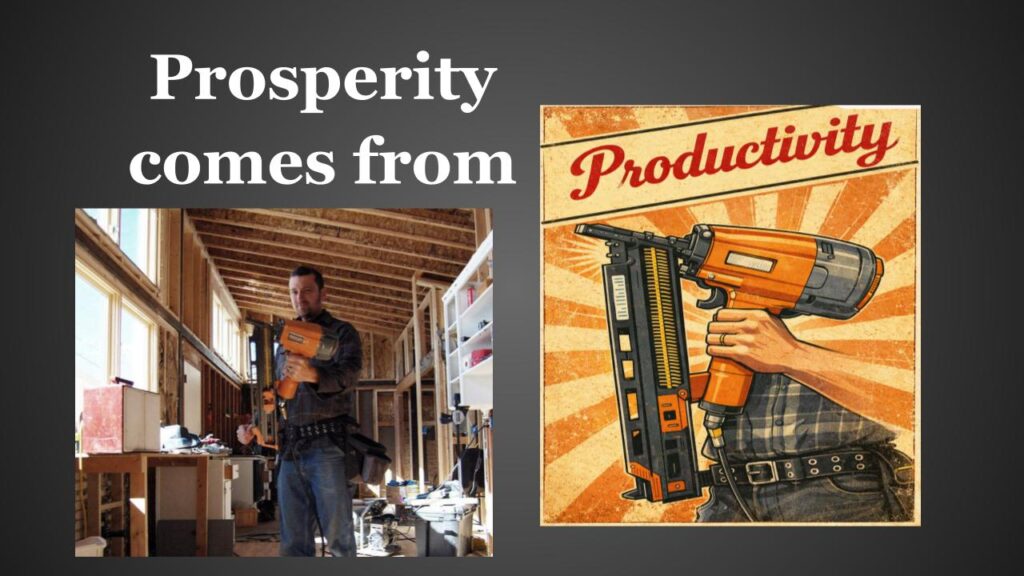
Prosperity Comes From Productivity
The core driver of economic well-being has always been productivity. While the capitalist system is inherently volatile and prone to wild psychological swings, looking beneath the turbulent surface reveals real people performing genuine work and developing tangible inventions. The very concept of an economy or a financial framework is a human-made construct. If a financial system experiences a catastrophic failure because market participants dislike the numerical values displayed on their screens, society possesses the capacity to establish new numerical frameworks and resume productive labor—a mechanism successfully employed during the 2008 financial crisis and numerous historical precedents.
Meanwhile, society retains every tool ever invented to enhance human productivity. Higher productivity directly correlates with elevated standards of living, sustained economic growth, and the feasibility of achieving early financial independence. However, once a society achieves a stable, comfortable standard of living, human happiness tends to plateau along the material dimension. Developed nations surpassed those baseline requirements decades ago, prompting individuals to seek alternative factors to maximize overall life satisfaction. Ultimately, most people simply want to lead the most fulfilling and contented life possible within their personal circumstances.

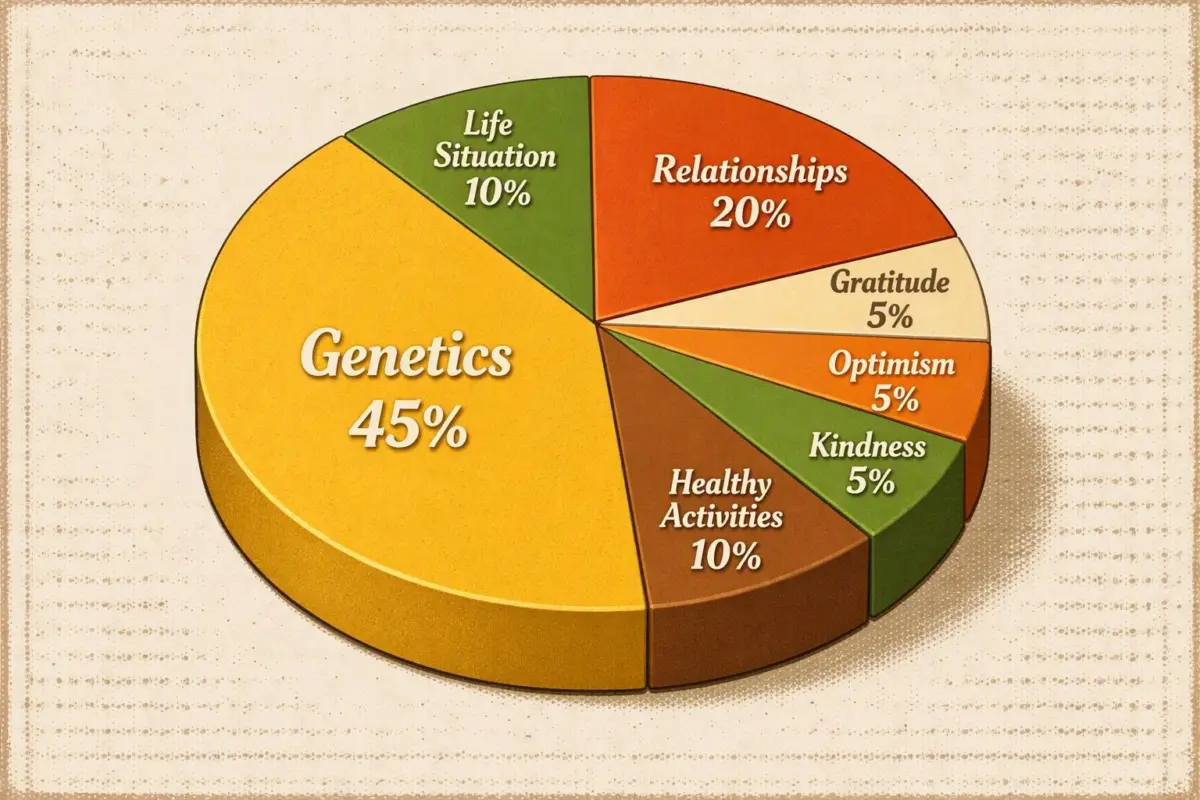
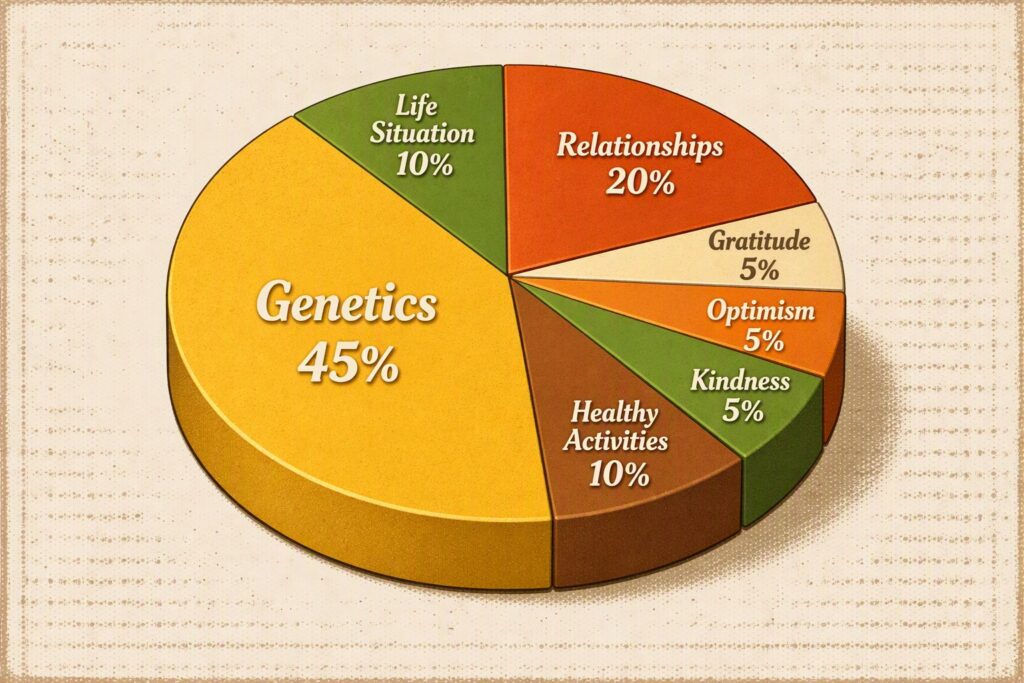
From a psychological perspective, individual wealth represents only a fraction of a broader life situation. While scientific research suggests that genetic predispositions account for a significant portion of baseline happiness, a substantial number of happiness-promoting factors remain entirely within an individual’s personal control. Cultivating strong personal relationships, practicing daily gratitude, maintaining an optimistic philosophy, and incorporating consistent outdoor physical activity into daily routines play a much larger role in long-term well-being than portfolio balances.
Despite these established principles, background anxiety remains pervasive, driven largely by the human evolutionary heritage as danger-detection machinery. Humans evolved constant alertness to protect themselves from environmental threats. However, a peculiar quirk of this neurological machinery is that when immediate physical dangers are resolved, the brain continues scanning the horizon for new threats. Once predators and disease are mitigated, anxiety shifts toward securing food supplies, maintaining social acceptance within a tribe, or managing financial resources.

As financial security increases and upper-middle-class comfort is attained, anxiety frequently migrates toward trivial concerns, such as neighborhood aesthetic standards, tax optimization strategies, or navigating mandatory government distribution rules for retirement accounts. Fortunately, individuals can actively counteract pervasive fear through self-awareness and rational evaluation.
The first step in combating chronic anxiety involves understanding personal history and identifying the root causes of worry, whether stemming from childhood environments, generational scarcity mindsets, or historical trauma. Recognizing that these fears are often echoes of the past rather than objective assessments of the present helps neutralize their emotional grip. Articulating specific fears and examining realistic worst-case scenarios frequently reveals that potential outcomes are far less catastrophic than imagined.
Taking decisive action serves as a powerful antidote to fear, transforming the unfamiliar into the familiar and building genuine personal resilience. Furthermore, consciously curating one’s daily information diet by reducing exposure to sensationalized news media helps eliminate unnecessary psychological toxins. Humans are built to solve physical and mental problems through active engagement with the world rather than passive consumption of alarming headlines. Aligning daily habits with natural human needs—such as regular physical movement, continuous learning, and spending time outdoors—naturally diminishes baseline anxiety.
Everything Is an Experiment
Adopting an experimental mindset provides a constructive framework for navigating unfamiliar challenges, whether making minor household changes, transitioning to a new career, or executing an early retirement. When applied to the current era of artificial intelligence, this perspective reframes technological disruption from a source of existential dread into an area of immense intellectual fascination.
Rather than succumbing to doom-scrolling and pessimistic news coverage, examining why technologists and economists are enthusiastic about artificial intelligence reveals a different narrative. AI functions essentially as a cognitive tool designed to boost human efficiency, expand overall productivity, and drive long-term economic prosperity by making advanced problem-solving capabilities accessible at minimal cost.
Naturally, disruptive technologies inevitably displace certain workers, a pattern repeated throughout the history of industrial automation. Entry-level office roles, software tasks, and transportation sectors are already experiencing transitional shifts. However, historical precedent shows that such technological revolutions simultaneously lower the cost of essential services and catalyze the creation of entirely new industries, much like the widespread adoption of the internet and mobile computing devices.

While productivity gains ultimately benefit corporate shareholders and broader investor portfolios, the rapid integration of artificial intelligence presents individuals with personal choices. Rather than viewing emerging innovations through a lens of fear, people can choose to treat them as catalysts for ongoing learning, adaptation, and purposeful living. Recognizing that every meaningful advancement in life lies just beyond the boundary of fear remains a guiding principle for navigating an uncertain future with confidence and resilience.