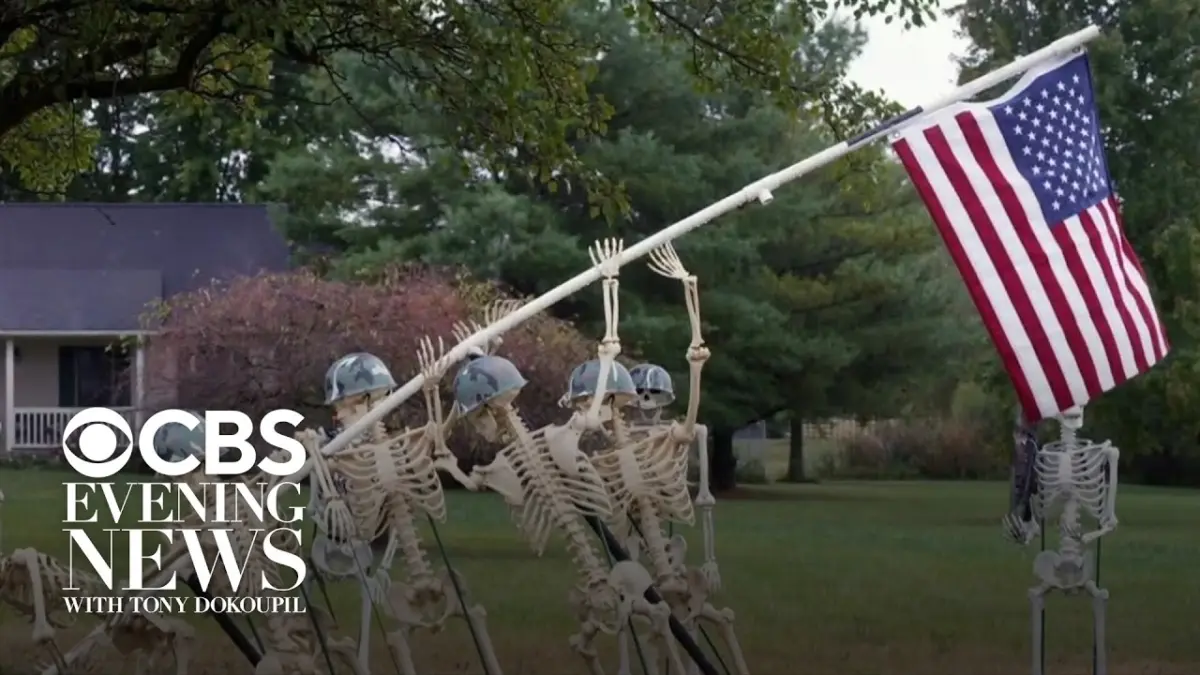
Yet, despite the lighthearted artistry and the joy the display brought to many in the neighborhood, Pyle’s annual tradition had a dark side. For years, the homeowner received a steady stream of hate mail in his mailbox during the weeks leading up to Halloween. The anonymous letters accused him of devil worship, promised his expedient arrival in hell, and offered other harsh condemnations for celebrating the spooky holiday with anatomical models. While a front yard covered in skeletons might serve to remind some people of their own mortality, most viewers simply marveled at the creativity with which Pyle arranged his decorations. Still, the vitriol arrived year after year, a persistent shadow over a hobby meant to spark amusement.
That dynamic shifted dramatically on one fateful day when Pyle opened a piece of correspondence that stopped him dead in his tracks. Among the usual complaints or potential criticisms, this envelope contained a handwritten letter of profound gratitude from a local woman named Tammy Wyche, transforming Pyle’s perspective on his seasonal installation.
Wyche’s daily commute to medical appointments had become intrinsically linked to Pyle’s front lawn display. In her heartfelt letter, she explained how the skeletons had provided an unexpected lifeline during one of the most challenging periods of her life.
“I have been driving past your house daily for the past 19 days on my way to radiation treatments. A highlight of my journey has been checking to see who else has joined the bone family & what they are up to,” Wyche wrote in her message. She went on to share a milestone date, noting, “Thankfully, Wed. Sept 11th is my final radiation treatment, though I may need to continue to drive by once in a while to see what’s new. Thanks for the diversion.”
For Pyle, reading those words was an emotional experience that instantly overshadowed years of harsh criticism. Remembering the first time he read the letter for an interview with CBS News’ “On the Road” with Steve Hartman, Pyle admitted that the note deeply moved him. “Tears came to my eyes,” Pyle said. “It really touched my heart.”
Knowing the exact date of her final radiation treatment, Pyle decided to roll the bones and organize a special surprise for his dedicated admirer. He wanted to ensure that her final journey past the display acknowledged her strength and brought a tangible sense of celebration to an otherwise clinical and exhausting routine.
When Wyche drove past the Bone Family on that significant Wednesday morning, her routine drive took an unforgettable turn. Looking to the right as she passed the property, she saw a whole skeleton crew cheering her on with custom signs that celebrated her final treatment milestone. The display had been temporarily reconfigured to honor her personal victory against cancer, transforming the yard from a passive artistic diversion into an active, supportive community gesture.
“It was very touching to think that somebody would go to that effort for a stranger,” Wyche reflected on the moment, moved by the empathy and care embedded in the elaborate surprise.
The touching exchange eventually caught the attention of national media, bringing widespread attention to the quiet bond forged between the homeowner and the cancer patient. Since the story of Wyche’s brush with death and her connection to Pyle’s house became public, the negative feedback has been entirely overwhelmed by an influx of positive support. For every one person who previously had a bone to pick with Pyle over his Halloween hobby, there are now roughly 30 supporters—reaching out from locations as far away as Australia—sending messages of appreciation that encourage him to keep creating and displaying his skeletons for the community to enjoy.