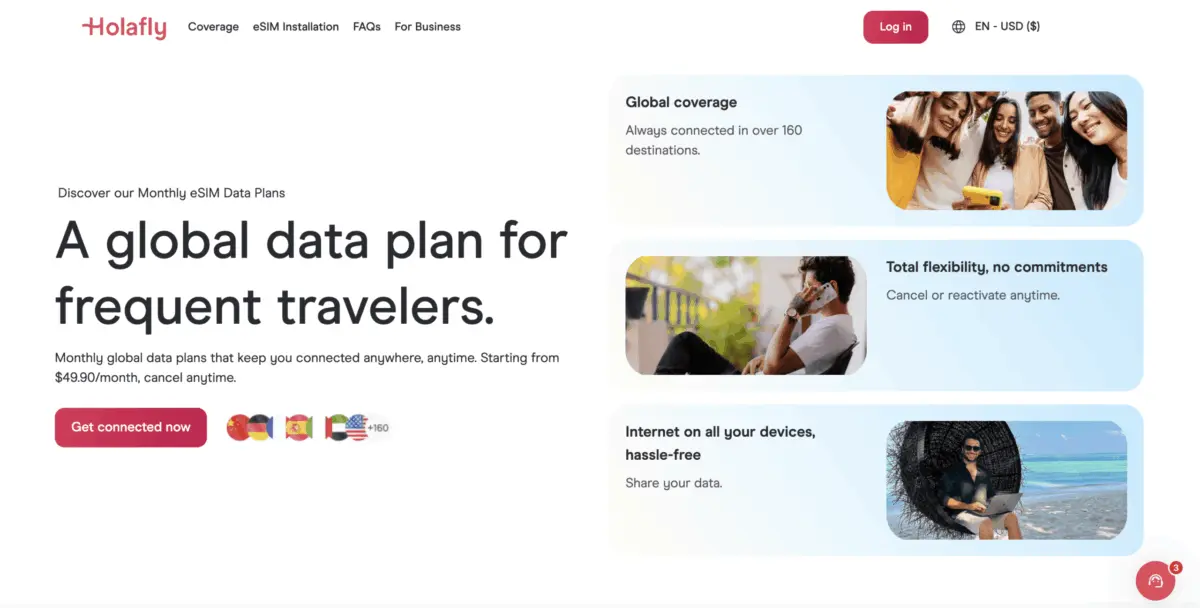
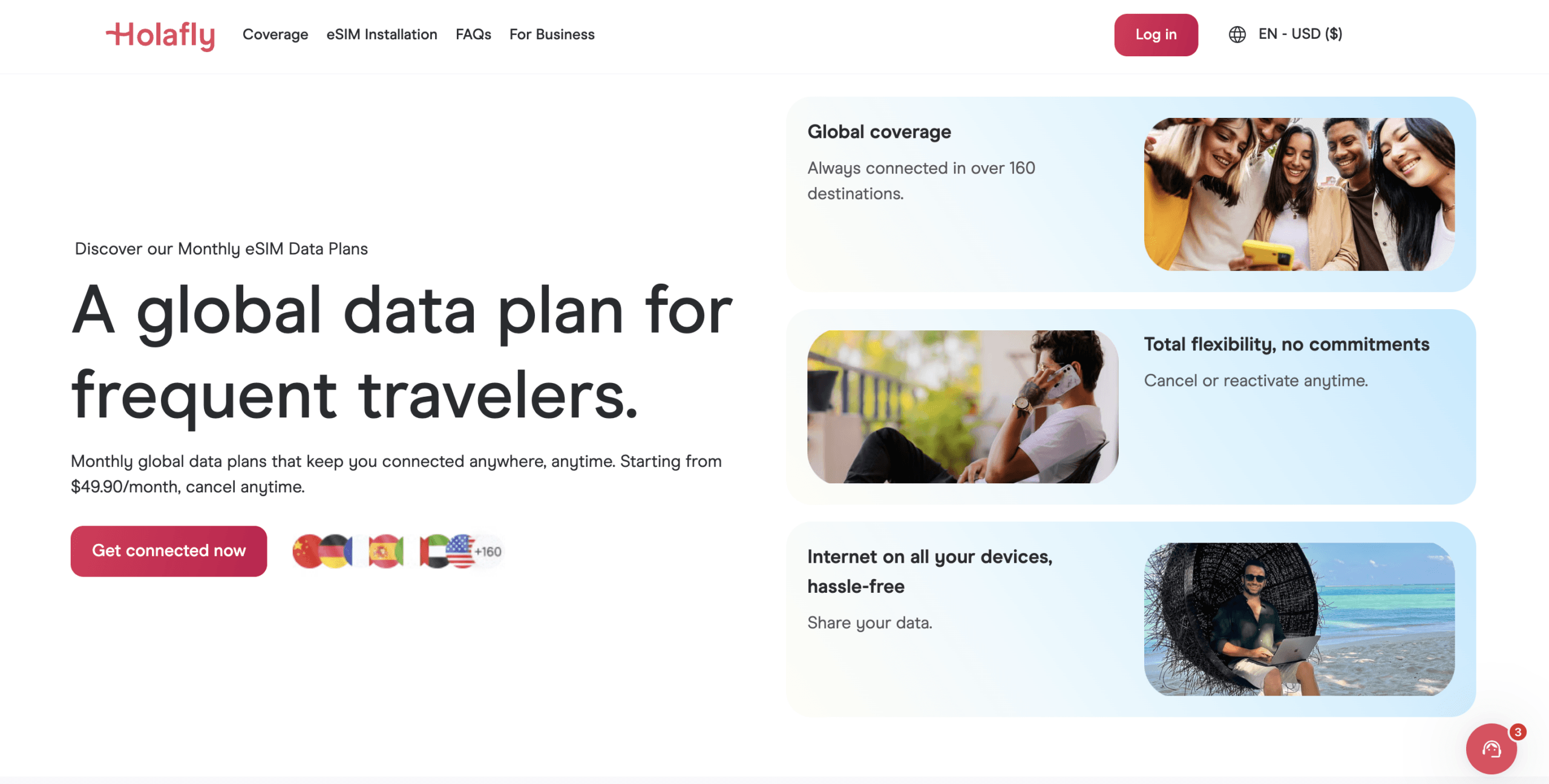
Addressing this ongoing logistical challenge for long-term travelers and digital nomads, travel eSIM provider Holafly has launched a new product line called Holafly Plans. Designed to function as a single, ongoing global subscription rather than a series of one-off purchases, the new service spans more than 160 destinations worldwide. Industry observers note that the introduction of an ongoing, multi-country subscription model represents a notable shift in the consumer travel tech market, moving away from fragmented regional packages toward a unified carrier-like experience tailored specifically for individuals who are constantly on the move.
What are Holafly Plans?
At its core, Holafly Plans operates as a singular global eSIM profile that remains active across international borders without requiring the user to swap SIMs, redownload software profiles, or purchase new QR codes every time they touch down in a different country. When a subscriber lands at a new destination within the covered network of over 160 countries, the device automatically reconnects to local partner networks.

The service is structured similarly to a traditional mobile network carrier subscription, but with significantly lower price points and greater international flexibility. Consumers can opt for either monthly or annual billing cycles, and the service operates without long-term annual contracts, allowing users to cancel at any time. Holafly has split the subscription offering into two distinct tiers: a Light Plan and an Unlimited Plan, both of which maintain the same broad geographic coverage.
The Unlimited Plan is aimed at heavy data users, digital nomads, and professionals who require constant connectivity for tasks such as uploading large video files, conducting high-definition video calls, or tethering other devices. It features no data caps and includes unrestricted mobile hotspot functionality. Additionally, subscribers to the Unlimited tier receive a local phone number originating from the United States, the United Kingdom, or Canada, enabling them to receive standard SMS messages while abroad.
For travelers with more moderate data needs—such as navigating unfamiliar cities, using messaging applications, and casual web browsing—the Light Plan offers 25 gigabytes of data per month. Like the unlimited tier, the Light Plan includes mobile hotspot capabilities and the full suite of international destinations. Furthermore, both tiers include an Always On backup feature, which provides subscribers with one gigabyte of backup data every month automatically, a benefit that persists even if the user eventually cancels their primary subscription.
Pricing structures for the plans vary depending on the chosen billing cycle and regional currency, with quarterly plans offering an approximate 10-percent discount and annual plans providing savings of around 15 percent. As a baseline comparison, the unlimited subscription tier is priced at approximately $55 USD per month when purchased on an annual plan. This rate stands in stark contrast to traditional major carrier international roaming passes in markets like the United States, which typically charge daily add-on rates that quickly accumulate into hundreds of dollars per month, or traditional carrier plans that throttle high-speed data allotments overseas.
Classic eSIMs vs Plans
To understand where the new offering fits into the broader market, industry analysts compare it against traditional, single-trip destination eSIMs. Classic Holafly eSIMs remain engineered for specific, short-term journeys. A traveler visiting a single country, such as Portugal, for a two-week vacation benefits more from a classic destination eSIM, which functions as a straightforward, one-and-done purchase tailored to a specific geographic area and timeframe. For travelers who take only one or two international trips per year, the traditional model remains the simpler and more cost-effective choice.
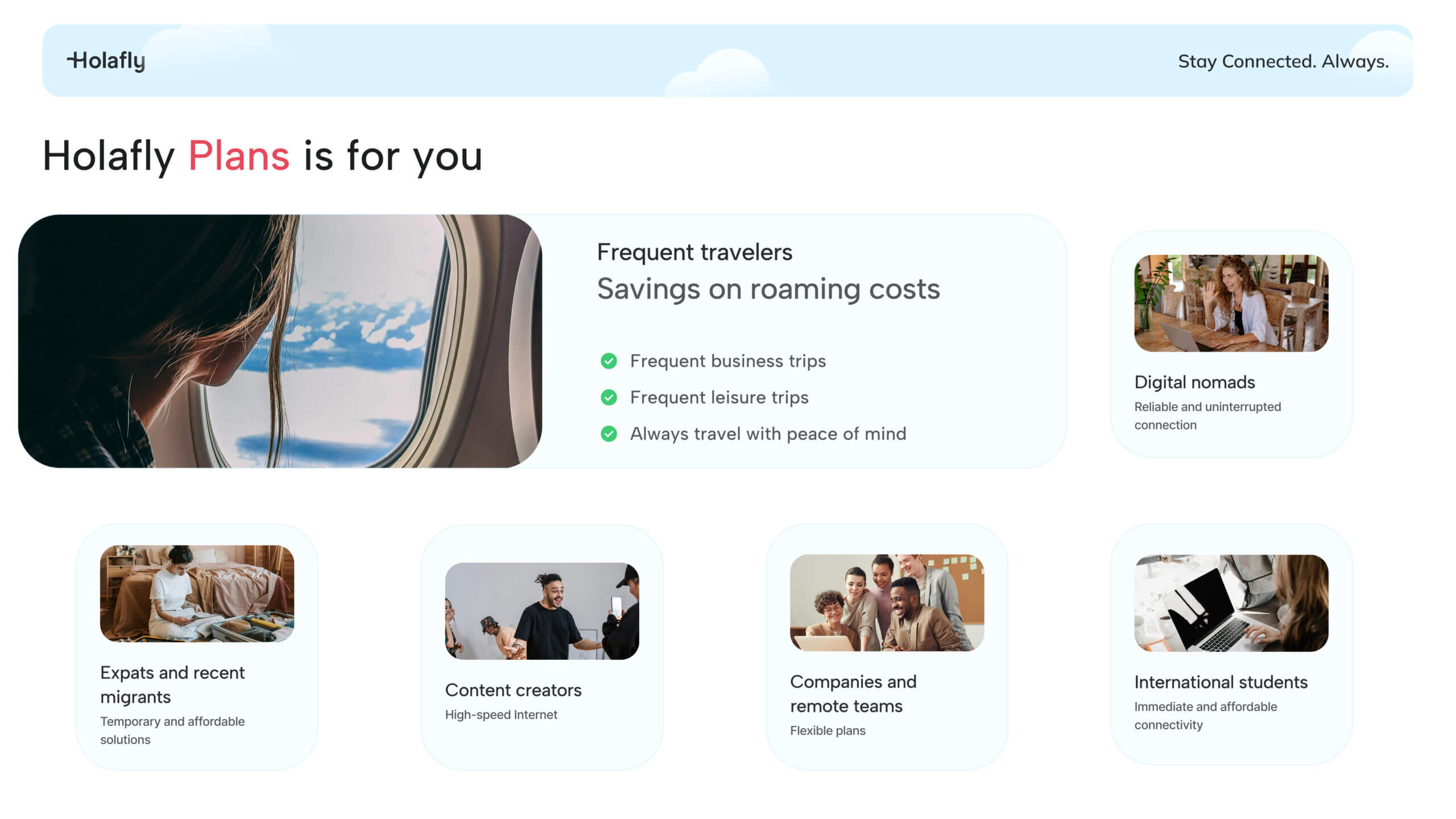
Conversely, Holafly Plans targets a different demographic: long-term travelers, expatriates, and digital nomads who spend the majority of the year outside their home countries and frequently transition between different nations. For these users, a standing global subscription eliminates the friction of managing multiple regional eSIMs and continually updating itineraries. Instead of tracking separate expiration dates and purchasing new data packages at every border crossing, subscribers maintain a single connection, a single phone number, and a consolidated billing structure that follows them indefinitely.
When stacked against major carrier international roaming passes, the subscription model presents distinct financial and operational advantages. While major US carriers offer international roaming features, they frequently cap high-speed data allocations or require daily fees that can push monthly bills past the $100 to $300 range. Holafly Plans delivers higher data allowances, native hotspot support across multiple devices, and broader multi-country integration at a fraction of that cost, all while eliminating the border-crossing connection drops often associated with relying strictly on local physical SIM cards.
Market Reception and Accessibility
Initial consumer response to the launch has highlighted the product’s appeal to remote workers and global professionals who require reliable, ongoing connectivity without the administrative burden of managing multiple telecommunications providers across different continents. The inclusion of a 24/7 customer support infrastructure ensures that users experiencing technical difficulties during setup or transit can receive immediate assistance regardless of their current time zone.
While the subscription model is not optimized for brief, occasional vacations, it fills a notable gap in the modern travel technology ecosystem by bridging the convenience of digital eSIM architecture with the seamless, continuous coverage traditionally reserved for domestic carrier contracts. As remote work and international mobility continue to shape global travel trends, services that reduce the friction of cross-border digital life are expected to play an increasingly central role in how travelers manage their connectivity needs abroad.