For those who have tuned out financial media and are simply enjoying their daily lives, this detachment is often a recipe for peace of mind. However, understanding the current narrative provides valuable context. The contemporary artificial intelligence story centers on rapid technological acceleration, massive capital expenditure by major technology conglomerates, and profound speculation regarding how automated systems will reshape the global workforce and corporate profitability.

The core concern among wary investors is that while artificial intelligence is unquestionably a major technological breakthrough, the financial mania surrounding it is happening too fast and scaling too aggressively. Many fear a replay—or an even more severe version—of the dot-com crash of the early 2000s. That historical parallel resonates deeply with early retirement advocates who entered the workforce during the turn-of-the-century tech boom, an era that initially accelerated careers before an ensuing market correction nearly destabilized employment and financial security.
As financial commentators and early retirement advocates reflect on successive investment cycles, recurring questions emerge regarding how to maintain financial stability amid ongoing market volatility. Public discussions on these themes, such as presentations delivered at financial independence gatherings and upcoming investment conferences, continue to explore the intersection of macroeconomics and personal psychology. The central inquiry remains urgent for millions of savers and retirees: Will the artificial intelligence bubble ruin retirement security, or is the widespread panic simply a modern manifestation of historical market anxieties?

Will the AI Bubble Ruin Our Retirement?
Achieving decades of retirement brings a comfortable familiarity with market cycles, yet the fundamental anxieties voiced by observers and peers remain remarkably consistent over time. Conversations with friends and colleagues often circle back to a recurring theme: how an individual can remain retired, financially secure, and sleep soundly at night given the seemingly endless stream of global crises.
A retrospective glance at public anxiety reveals that the specific catalysts of worry change dramatically from decade to decade, while the underlying emotional response remains identical. Looking back to the mid-2000s, public discourse was dominated by an entirely different set of existential threats. In 2006, society worried about corrupt or dangerous geopolitical leaders, ongoing conflicts in the Middle East, escalating national debt, and rising inflation.

At that time, investors also agonized over an overvalued stock market, though the anxiety was driven by a raging housing bubble rather than an artificial intelligence boom. Instead of artificial intelligence threatening white-collar employment, the prevailing fear was that jobs would be permanently outsourced overseas to India and China. There was also intense debate over peak oil, with widespread concern that increasing fossil fuel consumption against finite supplies would plunge industrial civilization into scarcity.
Yet, looking at the two decades that followed 2006 reveals a vastly different reality. While the global financial crisis did materialize—sparked by irrational exuberance over housing prices and excessive financial leverage—and represented the largest economic contraction since the Great Depression, its long-term impact on diversified investors was ultimately temporary. Broad market indices absorbed the shock, demonstrating that over multi-decade horizons, historical market corrections appear as minor fluctuations within a larger upward trajectory.

Concurrently, the broader world experienced remarkable structural improvements. Global extreme poverty rates dropped significantly over a twenty-year span, and infant mortality rates were drastically reduced. Clean energy transitions accelerated as solar technology became exponentially cheaper, transforming solar generation into a dominant source of new electrical capacity worldwide. Meanwhile, electric vehicle adoption shifted from a theoretical concept into a major commercial reality.
Examining these historical patterns raises a fundamental question about whether human energy is better spent worrying about an uncertain future or focusing on productivity and adaptability. The financial media consistently constructs compelling, fear-driven narratives around emerging risks, whether discussing national debt levels, housing valuations, or artificial intelligence. However, these pessimistic projections often overlook a foundational economic truth: genuine prosperity originates from productivity rather than abstract numbers tracked within financial systems.

The Core Driver of Prosperity and the Trap of Fear
Economic prosperity is fundamentally anchored in human productivity. The broader capitalist framework experiences frequent volatility and cyclical swings, but beneath the surface turbulence, real people continue to perform tangible work and develop practical inventions. The concept of an economy or a financial system is ultimately a human construct. If financial systems experience severe corrections due to shifting market sentiment, societies have historically adapted by restructuring financial mechanisms and returning to productive labor.
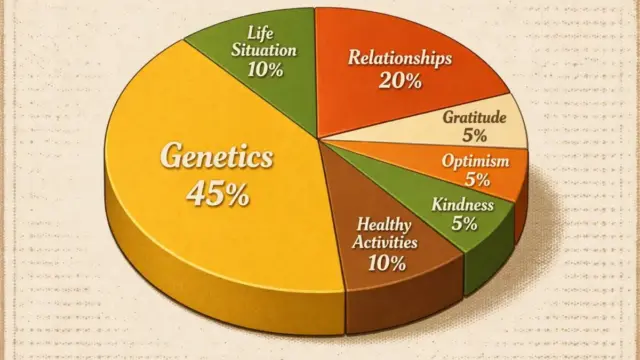
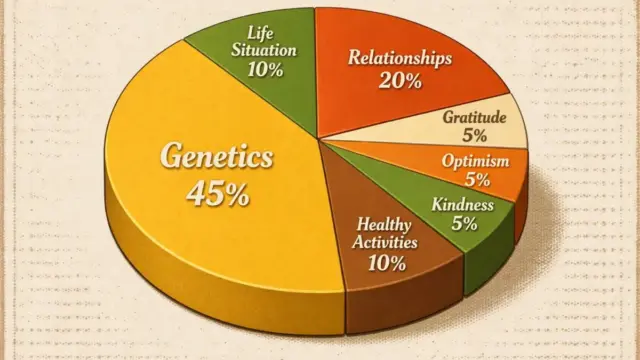
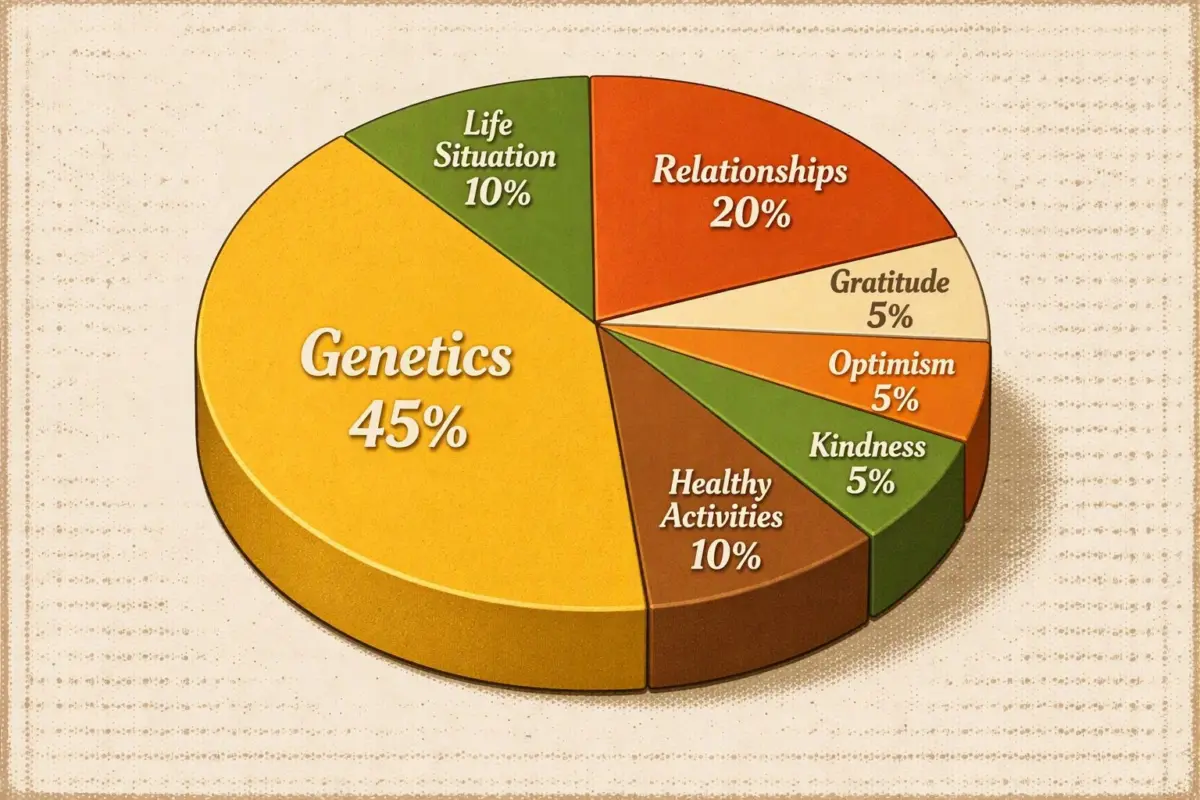
Standard of living, economic growth, and the feasibility of early retirement are directly tied to high productivity. Beyond baseline economic requirements, however, human happiness is largely driven by factors unrelated to absolute wealth. Once a society achieves a stable standard of living, additional financial accumulation yields diminishing returns regarding overall well-being. Factors such as strong personal relationships, community connection, physical health, and optimistic personal philosophies play a far more significant role in determining individual happiness.

Despite these principles, pervasive background anxiety remains common even among financially independent individuals. This persistent worry stems from human evolutionary biology. Humans function effectively as danger-detection machines, having evolved specialized psychological traits to protect against physical threats and scarcity. However, a byproduct of this evolutionary wiring is that when immediate physical dangers are resolved, the human mind often continues scanning the environment for new problems to solve or threats to anticipate.
As basic survival needs are met, human anxiety frequently shifts upward into more abstract domains. People transition from worrying about immediate scarcity to evaluating social standing within their communities, managing complex tax strategies, or navigating administrative regulations. This continuous upward shifting of worry means that fear rarely disappears on its own; instead, it continually moves the goalposts.

Overcoming this pervasive cycle requires self-awareness and rational evaluation. Understanding personal history and recognizing how early life experiences or familial attitudes toward scarcity influence modern financial anxieties can help decouple current emotional responses from objective reality. Identifying specific fears, analyzing worst-case scenarios, and taking deliberate actions are proven methods for dismantling abstract worries. Action converts the unfamiliar into the familiar, fostering resilience and the adaptability required to navigate shifting environments.
Furthermore, managing exposure to sensationalized daily news cycles helps mitigate unnecessary psychological distress. Continuous consumption of fear-driven media often distracts individuals from constructive personal behaviors. Aligning daily routines with physical health, outdoor activity, and constructive problem-solving naturally improves mental well-being and reduces generalized anxiety. Surrounding oneself with optimistic, productive peers further reinforces a balanced perspective on the future.

Viewing Technological Shifts Through the Lens of Experimentation
Adopting an experimental mindset toward major life changes—whether career transitions, housing adjustments, or broader societal developments—allows individuals to approach uncertainty with curiosity rather than dread. This perspective is particularly relevant when evaluating the ongoing integration of artificial intelligence into the global economy.
Rather than succumbing to pessimistic doom-scrolling, examining artificial intelligence through the framework of technological evolution reveals both significant potential and clear economic implications. AI functions fundamentally as a powerful cognitive tool designed to enhance efficiency and productivity. By lowering the cost of complex cognitive processing, it accelerates innovation across numerous sectors.

At the same time, technological advancements inevitably cause labor displacement, automating specific routine tasks in administrative, technical, and logistical fields. Historically, however, technological revolutions—from the advent of personal computing to the proliferation of mobile internet applications—have consistently streamlined existing processes while giving rise to entirely new industries and economic opportunities.
The distribution of rewards generated by new technologies typically favors asset owners and capital allocators, mirroring previous industrial transitions. For everyday investors participating in public equity markets, these efficiency gains frequently translate into broader economic participation through portfolio growth.

Ultimately, artificial intelligence represents another major evolution in human productivity and problem-solving. Approaching such innovations as opportunities for continuous learning, rather than sources of existential fear, aligns with a long-term philosophy of resilience. By addressing the root causes of anxiety and focusing on meaningful human engagement, individuals can successfully navigate the complexities of modern financial markets and technological change.