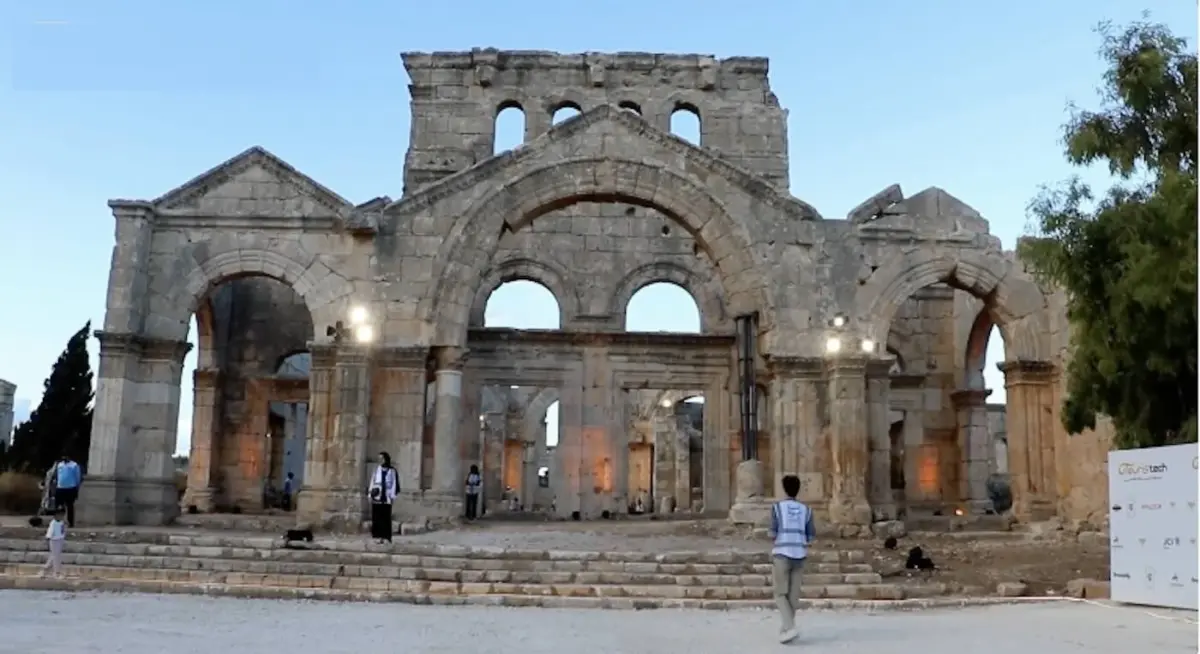
Syria’s Directorate-General of Antiquities and Museums inaugurated the renewed Saint Simeon church complex on October 2 with a formal ceremony, welcoming the public back to the historic mountaintop location after 14 years of closure. The site, which holds a prominent place in early Christian history and Byzantine architecture, had suffered significant damage during the Syrian civil war—including a targeted airstrike in 2016—and sustained further structural blows during the devastating regional earthquake of 2023.
The comprehensive restoration project undertaken by cultural preservation authorities required a vast array of specialized engineering and safety measures. Before visitors could safely return, teams had to systematically clear the surrounding landmines left behind by years of conflict. Following the demining process, conservationists focused on reinforcing fragile archways and walls, repairing severely damaged masonry, and restoring the surrounding visitor facilities to accommodate incoming travelers and pilgrims.
The reopening of the Saint Simeon complex is a key component of a broader government initiative designed to highlight the exceptionally rich history and diverse religious heritage of Syria. Cultural tourism officials aim to revitalize the sector, drawing international travelers along historic routes stretching "from Damascus to Palmyra."
The Legend and Legacy of Saint Simeon Stylites
The sprawling complex was originally constructed in the late fifth century to honor Saint Simeon Stylites, a deeply devoted Christian ascetic who sought absolute spiritual isolation by stationing himself atop a narrow stone pillar. For 37 years, until his death in 459 AD, Simeon remained on his elevated perch day and night, enduring extreme weather conditions in the belief that physical deprivation brought him closer to God.
Simeon’s daily survival relied entirely on the assistance of his followers and disciples. Devotees brought him food and water using a ladder attached to the stone column, and they similarly managed the delicate task of removing the saint’s human waste in a bucket hoisted up and down the stone pillar.
Despite his desire for solitude, Simeon’s extreme asceticism drew massive crowds. Over time, the hermit began preaching twice a day to the pilgrims, the curious, and the devoted who gathered around the base of his column to witness the legendary spectacle of self-mortification. The ladder attached to the pillar also served as a vital communication conduit, allowing messengers to deliver written notes to Simeon and retrieve letters of spiritual guidance that he authored for his followers.
Following his death in 459 AD, the site immediately transformed into one of the most prominent pilgrimage destinations in the Christian world. To accommodate the thousands of believers flocking from across the Byzantine Empire to seek blessings and witness the holy site, Byzantine Emperor Zeno commissioned the construction of a massive, magnificent sanctuary. Built between 476 and 490 AD, the complex became an architectural marvel of its era.
Architectural Significance and the Great Rotunda
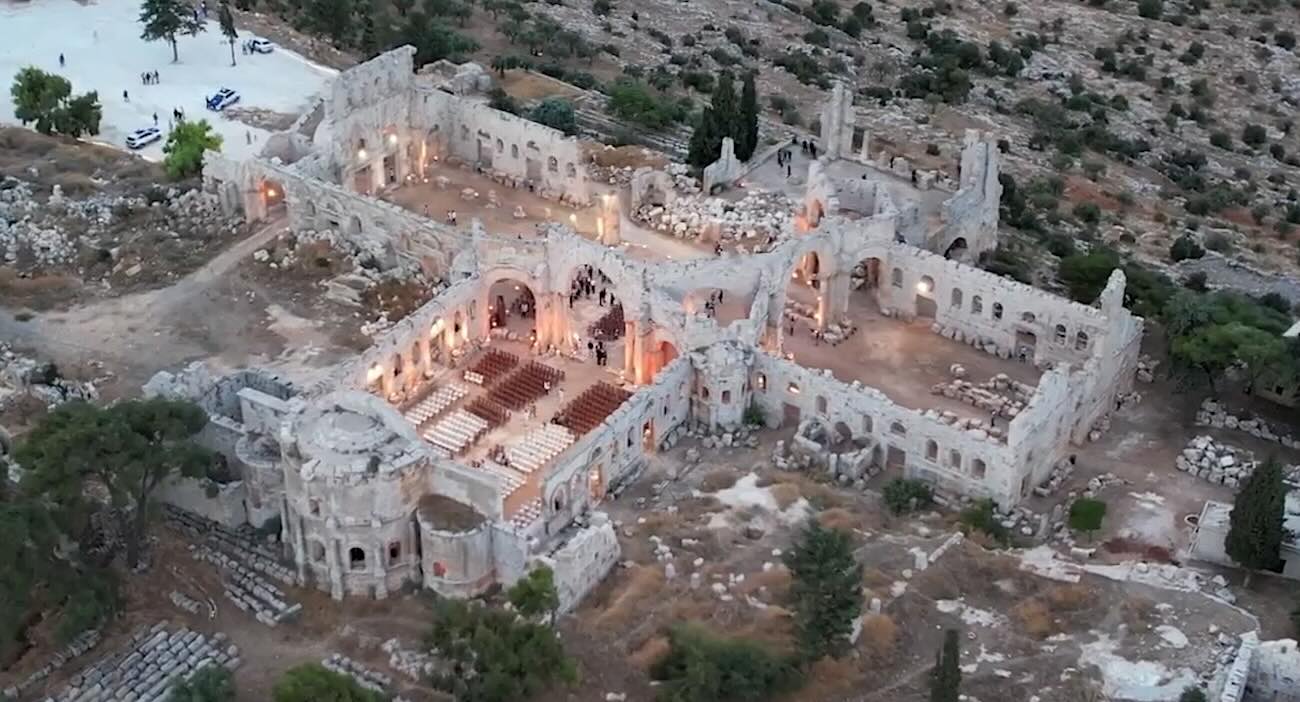
At the dead center of the massive octagonal rotunda sits the boulder-like base of Saint Simeon’s original column, the focal point of the entire architectural layout. Over subsequent centuries, zealous medieval pilgrims frequently chiseled away pieces of the historic pillar to take home as sacred relics. This continuous chipping drastically reduced the column from its original reported height of 15 meters, or roughly 49 feet, down to a surviving three-meter stone stub.
The architectural scale of the complex is historic in its own right. As part of the UNESCO World Heritage-listed collection known as the Ancient Villages of Northern Syria, the Saint Simeon church complex stands as one of the oldest surviving monumental church complexes in existence. Upon its completion in the late fifth century, its immense size and grandeur were unmatched across Christendom, remaining unsurpassed until the construction of the Hagia Sophia was finalized in Constantinople in 537 AD.
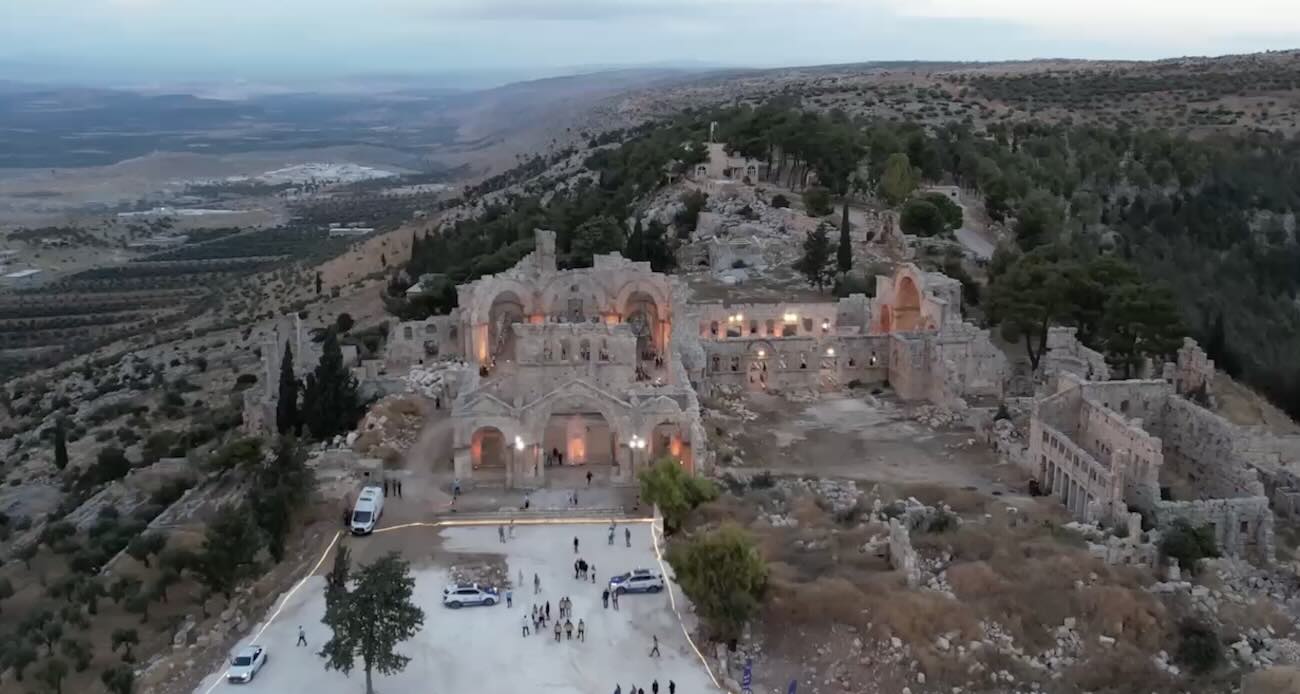
To facilitate the return of tourism and religious travel following the recent restoration efforts, authorities have established new pilgrimage routes leading up to the mountaintop complex, allowing modern visitors to retrace the historic pathways once traversed by ancient travelers.
Early Life and Rise of the Ascetic Saint
Born in a modest mountain village, Simeon entered a local monastery at the tender age of 16. However, his tenure within the monastic community was brief. Fellow monks judged him to be unsuited for traditional communal monastic life due to his extravagantly severe approach to the denial of physical pleasures and bodily comfort.
Seeking an environment where he could push his spiritual boundaries without restriction, Simeon attempted to live as a hermit ascetic in the harsh wilderness. Instead of finding obscurity, his intense feats of physical endurance and rigorous self-denial inadvertently attracted a new wave of attention. Religious seekers arrived constantly, looking for spiritual instruction, while others became devoted followers drawn to his unwavering discipline.
Determined to escape these earthly distractions and find true isolation, Simeon conceived the radical idea of living on a small platform constructed atop a standing stone column. As the years passed and the crowds of onlookers and pilgrims grew larger, the height of the column was progressively raised, eventually reaching a staggering 18 meters. From this elevated platform, high above the crowds, he continued his life of prayer, preaching, and correspondence until the end of his days.
With the completion of the extensive restoration project, the clearance of wartime hazards, and the opening of newly established routes to the mountaintop, the historic site is once again accessible, offering visitors and scholars a rare glimpse into the architectural and spiritual world of early Byzantine Christianity.