To begin this exploration, it is fitting to turn the spotlight toward the contemporary literary landscape and examine the work of Ed Park, a writer whose output is consistently smart, ambitious, and structurally challenging. Park’s literary sensibilities are well-documented; his fascination with experimental narrative structures is evident in his celebrated admiration for H.S. Keeler’s intricate web-work. His more recent contributions to fiction, including the novel Three Tenses and his Pulitzer Prize finalist Same Bed Different Dreams, demonstrate a rare capacity for complexity. Notably, Park achieves this depth without resorting to superficial gimmicks or cheap obfuscation designed merely to imply a profound nature. Instead, he emerges as a genuinely creative writer who continually challenges himself to venture into uncharted artistic territory.
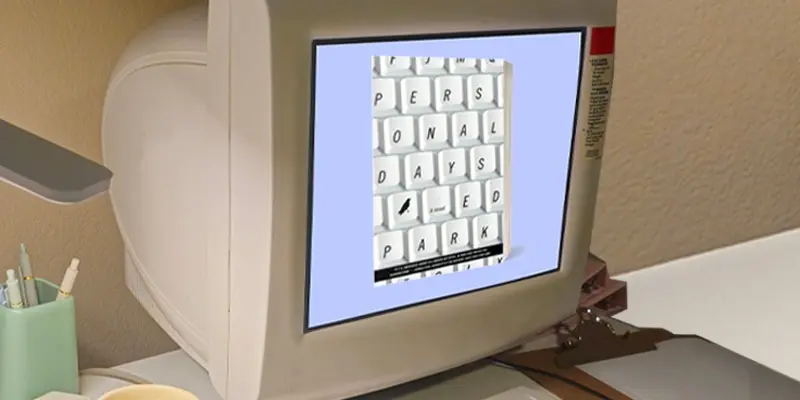
Beyond his structural ambitions, Park’s writing possesses a tremendous and often underappreciated capacity for humor. Some of Park’s sharpest comedic writing can be found in his collection of short pieces, An Oral History of Atlantis. However, it is his debut novel, Personal Days, that stands out as one of the most remarkable comic novels in recent memory, establishing a high watermark for contemporary workplace satire.
Personal Days unfolds within the confines of a Manhattan office space, following a tight-knit group of corporate employees who spend their days toiling away for a mysterious company with thoroughly murky goals. Despite being at their desks, little actual work seems to get accomplished. Instead, the employees are entirely consumed by an intricate ecosystem of office gossip, mutual crushes, and profound confusion regarding their coworkers, their distant superiors, and the various shadowy figures who occasionally lurk in the corridors of their building.
While the overarching plot loosely follows a central mystery concerning the true nature and purpose of the company, the book’s enduring memorability stems primarily from its relentless commitment to comedy. Park is unmistakably going for the jokes. Personal Days is saturated with inventive wordplay, dry sociological observations, and bizarrely specific details, none of which ever feel tacked on or artificially forced. Coworkers regularly spin up wildly absurd conspiracy theories about one another, capitalizing on the unique ecosystem of the modern office. By treating the workplace as the most fertile breeding ground for corporate speculation, Park allows his narrative absurdities to bend the limits of plausibility without ever completely breaking them.
The wordplay throughout the novel is especially well-executed, a characteristic that will surprise no one familiar with Park’s broader body of work. His uniquely funny turns of phrase and memorable character names consistently generate immediate laughs, yet they are simultaneously operating on a much deeper literary level. Homonyms, misunderstandings, and linguistic slips are cleverly folded directly into the plot, which turns at several crucial instances on intricate wordplay and puns.
True to the traits shared by all great comedic writers, Park displays a meticulous attentiveness to form, utilizing structural shifts, custom headers, and formal variations to land subtle jokes and precisely control the narrative pacing. Without spoiling the specifics, the novel executes a brilliant structural pivot in its final section, employing a genuinely fun formal constraint. The result is a wonderful hybrid aesthetic that feels akin to a collision between a classic workplace sitcom and the experimental literary constraints of the Oulipo movement.
Perhaps the most compelling aspect of the novel, and the quality that elevates it above standard satirical fare, is that it is funny in ways that only written literature can be. Too often, contemporary humorous novels attempt to find their comedy by slavishly mimicking the conventions of film and television, resulting in prose that frequently reads like little more than direct transcriptions from a screen. Park deliberately takes a completely different route, relying instead on jokes, situations, and linguistic mechanics that can only ever happen on the printed page. It is this dedication to the unique capabilities of the medium that ultimately makes Personal Days such a singularly special novel within the broader landscape of comic literature.